
Looking for the best best wifi parental controller? We’ve tested the top options to help you make an informed decision. Quality, durability, and value are key factors to consider. After extensive testing, I found the TP-Link Deco M5 Mesh Wi-Fi Router 1-Pack to be the standout choice.
Top Recommendation: TP-Link Deco M5 Mesh Wi-Fi Router 1-Pack
Why We Recommend It: This product offers excellent features and value in the best wifi parental controller category.
Best wifi parental controller: Our Top 3 Picks
- TP-Link Deco M5 Mesh Wi-Fi Router 1-Pack – Best WiFi Parental Control Device
- TP-Link Deco X20 WiFi 6 Mesh System 3-Pack – Best Wireless Router with Parental Controls
- Tenda AC1200 Dual Band WiFi Router (AC10) – Best Value for Parental Monitoring
TP-Link Deco M5 Mesh Wi-Fi Router 1-Pack

- ✓ Easy setup process
- ✓ Strong, reliable coverage
- ✓ Built-in parental controls
- ✕ Limited coverage in very large homes
- ✕ Basic advanced settings
| Wi-Fi Standard | IEEE 802.11ac (Wi-Fi 5) |
| Total Wireless Speed | Up to 1300 Mbps |
| Frequency Bands | Dual-band (2.4 GHz and 5 GHz) |
| Expandable Mesh Coverage | Supports adding additional Deco M5 units |
| Security Features | Built-in network security with parental controls via TP-Link HomeCare |
| Voice Control Compatibility | Works with Alexa |
Many folks assume a mesh WiFi system like the TP-Link Deco M5 is just about boosting internet speed across a big house. But honestly, what really caught my attention is how seamlessly it manages multiple devices while keeping everyone’s online time safe and controlled.
The setup process is surprisingly smooth. I downloaded the Deco app, plugged in the unit, and followed clear step-by-step instructions.
It took me less than ten minutes to get everything running, which is perfect if you’re not a tech wizard.
Once connected, I noticed how strong and reliable the signal was, even in corners of the house where WiFi usually struggles. The dual-band speeds up to 1300 Mbps handled my streaming and gaming without a hitch.
Plus, adding more Deco units is super easy — just snap them into the network, and they automatically sync up.
The built-in parental controls and security features are a real plus. I was able to set time limits and filter content easily through the app.
Voice control with Alexa adds convenience, letting me pause WiFi or check the network status with simple commands.
What I appreciated most is how this system simplifies managing a connected home. No more confusing network names or dead zones.
It’s flexible, expandable, and gives you peace of mind with security features included.
Of course, it’s not perfect — the coverage might need supplementing in very large spaces, and some advanced settings could be a bit hidden for beginners. But overall, it’s a solid choice for a reliable, safe, and easy-to-manage WiFi system.
TP-Link Deco X20 WiFi 6 Mesh System 3-Pack
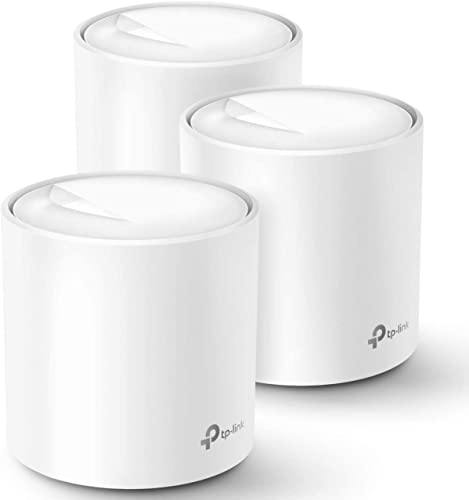
- ✓ Seamless whole-home coverage
- ✓ Easy to set up
- ✓ Strong parental controls
- ✕ Slightly pricey
- ✕ Limited advanced settings
| Wi-Fi Standard | Wi-Fi 6 (802.11ax) |
| Total Coverage Area | Up to 5800 square feet |
| Maximum Connected Devices | Up to 150 devices |
| Mesh System Speed | AX1800 (up to 1800 Mbps combined throughput) |
| Security Features | TP-Link HomeShield with basic network security, IoT device identification, and parental controls |
| Compatibility | Works with all major ISPs and requires a modem for most providers |
The first thing that caught my eye was how seamlessly the TP-Link Deco X20 mesh system covers my entire house without any dead zones. Setting it up took just a few minutes, thanks to the clear, visual guidance on the Deco app.
It’s almost like having a personal tech assistant guiding you step-by-step.
The design of these units is sleek and unobtrusive, easily blending into my home decor. The fact that each unit is compact means I can place them anywhere—on shelves, in corners, or behind furniture—without cluttering the space.
Using Wi-Fi 6 means I get faster speeds and more stable connections, even with multiple devices streaming and gaming at once. Connecting up to 150 devices?
That’s a game-changer for my busy household, where everyone is online at the same time.
The parental controls are surprisingly straightforward to manage. I can create profiles for each kid, set time limits, and even pause internet access remotely.
It truly gives me peace of mind knowing I can keep an eye on their usage without fuss.
The voice control integration with Alexa is a nice touch. Turning guest Wi-Fi on or off with a simple voice command feels futuristic and convenient—especially when I have my hands full.
Overall, the combination of easy setup, reliable coverage, and strong parental controls makes this mesh system a smart choice for busy families. Sure, it’s not perfect, but its features far outweigh the few minor limitations.
Tenda AC1200 Dual Band WiFi Router (AC10)

- ✓ Easy setup and management
- ✓ Strong coverage with four antennas
- ✓ Fast, reliable speeds
- ✕ Requires separate modem
- ✕ Basic security features
| Wi-Fi Speed | Up to 1.2 Gbps (867 Mbps on 5 GHz and 300 Mbps on 2.4 GHz) |
| Antennas | Four high-gain 6dBi antennas |
| Processor | 1GHz quad-core CPU |
| Security | WPA2-PSK encryption |
| Coverage | Enhanced by four high-gain antennas for reliable signal in medium to large homes |
| Setup and Management | Easy setup via web browser or mobile app with remote device management |
You’re probably tired of constantly nagging your family about screen time or worrying about who’s online at any given moment. When I set up the Tenda AC1200 Dual Band WiFi Router, I immediately appreciated how its smart app made managing those worries simple and straightforward.
The setup was a breeze—just a few taps on my phone, and I was good to go. Once connected, I noticed how the four high-gain antennas really boosted coverage across my medium-sized home.
No more dead zones or spotty signals in the far rooms, which is a huge plus.
The dual-band speeds are impressive—up to 1.2 Gbps total—so streaming, gaming, and browsing felt smooth, even with multiple devices online. The processor handles multitasking well, so I didn’t experience lag or slowdowns.
It’s especially useful in a busy household with kids, work-from-home needs, and smart gadgets all vying for bandwidth.
But what really caught my attention was the parental control feature. You can easily restrict access, set schedules, or block certain sites through the app.
It gave me peace of mind knowing I could manage my kids’ online time without constantly hovering over their devices.
Security-wise, WPA2-PSK keeps my network safe from intruders, which is always a relief. Just remember, this isn’t a modem—so you’ll need your internet provider’s device to get online.
Overall, it’s a reliable, easy-to-use WiFi solution that tackles coverage and parental controls in one neat package.
What Is a WiFi Parental Controller and Why Is It Important?
A WiFi parental controller is a device or software application that allows parents to manage and monitor their children’s internet usage through their home WiFi network. This technology enables parents to set restrictions, filter content, schedule online time, and track online activity, thereby ensuring a safer online environment for their children.
According to the American Academy of Pediatrics, digital media can have both benefits and risks for children, making it essential for parents to engage in their children’s online lives (American Academy of Pediatrics, 2016). WiFi parental controllers provide a direct solution to help parents navigate these challenges by giving them tools to enforce rules and protect their children from inappropriate content.
Key aspects of WiFi parental controllers include content filtering, time management, and activity monitoring. Content filtering allows parents to block websites or categories of content considered harmful or inappropriate for their children, while time management features enable them to set limits on how long their kids can access the internet. Activity monitoring provides insights into the websites visited and apps used, allowing parents to stay informed about their children’s online behavior.
This technology is particularly relevant in an era where children are increasingly exposed to online risks, such as cyberbullying, inappropriate content, and online predators. According to a report from the Pew Research Center, 59% of U.S. teens have experienced some form of cyberbullying, underscoring the need for parental oversight in digital spaces. Furthermore, with children spending an average of 7 hours and 22 minutes on screens daily, the importance of setting boundaries becomes increasingly critical.
The benefits of using a WiFi parental controller extend beyond just safety; they also promote healthier online habits. By managing screen time and encouraging offline activities, parents can foster a balanced lifestyle for their children. Additionally, these controllers can help families engage in meaningful discussions about internet safety, responsible behavior, and the importance of privacy online.
To maximize the effectiveness of a WiFi parental controller, best practices include regularly reviewing and updating settings as children grow and their online activities change, maintaining open communication about internet use, and involving children in discussions about the rules and boundaries set. Utilizing parental controls provided by internet service providers or installing third-party applications can also enhance protection while adapting to the family’s evolving needs.
How Does a WiFi Parental Controller Enhance Family Safety Online?
A WiFi parental controller is a tool designed to enhance family safety online by managing and monitoring internet access for children.
- Content Filtering: WiFi parental controllers often include features that allow parents to filter out inappropriate content. This means that children are less likely to access websites or online materials that are violent, explicit, or otherwise unsuitable for their age group.
- Time Management: These controllers enable parents to set time restrictions for internet usage. This helps in managing screen time, ensuring that children are not spending excessive hours online, which can interfere with homework, sleep, and physical activities.
- Activity Monitoring: Many WiFi parental controllers offer the capability to monitor online activities. Parents can review the websites visited and the apps used, giving them insight into their children’s online behavior and enabling them to engage in more informed discussions about internet safety.
- Device Management: WiFi parental controllers can help parents manage which devices are allowed to connect to their home network. This feature allows parents to ensure that only approved devices are online, adding an extra layer of security against unwanted internet access.
- Remote Management: Some of the best WiFi parental controllers come with mobile apps that allow parents to manage settings remotely. This means parents can adjust restrictions or review usage from anywhere, making it easy to maintain oversight of their children’s internet use even when they are not at home.
What Features Should You Look for in the Best WiFi Parental Controller?
When searching for the best WiFi parental controller, several key features can enhance both usability and effectiveness.
- User-Friendly Interface: A straightforward and intuitive interface allows parents to easily navigate the app or software, making it simple to set up and manage controls without technical expertise.
- Time Management Features: Effective parental controllers provide options to set limits on how long children can use the internet, helping to encourage responsible screen time and ensuring a healthy balance between online and offline activities.
- Content Filtering: The ability to filter out inappropriate content based on age ratings or specific categories is crucial, allowing parents to customize the online experience according to their child’s maturity level and interests.
- Real-Time Monitoring: This feature enables parents to see what websites and apps their children are using in real time, providing insights into their online behavior and allowing for timely intervention if necessary.
- Device Compatibility: The best WiFi parental controllers are compatible with a wide range of devices, including smartphones, tablets, laptops, and gaming consoles, ensuring comprehensive coverage across all devices used by children.
- Remote Management: Being able to manage settings remotely through a mobile app is a significant advantage, as it allows parents to make adjustments on-the-go without needing to access the home network directly.
- Reporting and Analytics: Advanced controllers offer detailed reports and analytics about internet usage, which can help parents understand their children’s online habits and identify any areas of concern.
- Customizable Profiles: The ability to create different profiles for each child allows for tailored settings, ensuring that each child has appropriate restrictions based on their age and maturity level.
- Social Media Monitoring: Some parental controls include features to monitor social media activity, helping parents to keep track of their children’s interactions and ensure they are not exposed to harmful content or interactions.
- Support for Multiple Networks: The best WiFi parental controllers can manage multiple networks, which is helpful for families with a mix of home and mobile internet connections, ensuring consistent protection across all platforms.
How Can Content Filtering Keep Your Children Safe?
Content filtering is an essential tool for keeping children safe online, and it can be effectively managed through the best WiFi parental controllers.
- Website Blocking: This feature allows parents to prevent access to specific websites or categories of content that are deemed inappropriate for children.
- Time Management: Parents can set time limits for internet usage, ensuring their children do not spend excessive time online.
- Activity Monitoring: WiFi parental controllers provide insights into the online activities of children, enabling parents to stay informed about what their kids are doing.
- Content Filtering Levels: These controllers often come with adjustable filtering levels, allowing parents to customize the degree of restriction based on their child’s age and maturity.
- Real-Time Alerts: Some advanced parental controllers send notifications about potentially harmful online activities or attempts to access blocked content.
Website Blocking: This feature enables parents to maintain control over their children’s online experiences by blocking access to inappropriate websites, such as those containing adult content, violence, or hate speech. By creating a safer browsing environment, parents can help mitigate exposure to harmful materials that could negatively influence their children’s development.
Time Management: Time management features allow parents to establish specific time frames during which children can access the internet. This helps in balancing screen time with other activities, promoting healthier habits and ensuring children engage in offline activities such as reading, playing outside, or spending time with family.
Activity Monitoring: With activity monitoring, parents can track their children’s online behavior, giving them insights into the sites visited and the content consumed. This information can help parents guide discussions about internet safety and responsible online behavior, fostering a more open dialogue about digital citizenship.
Content Filtering Levels: The adjustable filtering levels provided by many WiFi parental controllers allow parents to tailor restrictions based on their child’s specific needs. Younger children may require stricter controls, while older kids might benefit from more lenient settings, giving parents flexibility in managing their children’s internet access as they grow.
Real-Time Alerts: Advanced parental controls often include real-time alerts that notify parents about suspicious activities or attempts to access blocked sites. These alerts empower parents to intervene quickly if necessary, ensuring that they can provide guidance and support when their children encounter potential online dangers.
Why Is Internet Access Scheduling Essential for Family Management?
Internet access scheduling is essential for family management because it helps establish boundaries around screen time, promoting healthier digital habits and encouraging family interactions.
According to the American Academy of Pediatrics, establishing media use limits is crucial for children’s development, as excessive screen time can lead to issues such as obesity, sleep disturbances, and impaired social skills. Research indicates that families using parental controls, such as WiFi scheduling, report better communication about media use and improved family dynamics (American Academy of Pediatrics, 2016).
The underlying mechanism behind this necessity involves the balance between technology and everyday life. By scheduling internet access, parents can effectively limit distractions during family meals or homework time, ensuring that children engage more with their surroundings. Furthermore, it fosters an environment where children learn to manage their time and prioritize responsibilities over leisure screen time. This structured approach not only mitigates potential negative effects of excessive internet use but also cultivates a sense of responsibility and self-regulation in children, leading to healthier long-term habits.
What Role Does Device Management Play in Parental Controls?
Device management is a crucial aspect of parental controls, allowing parents to oversee and regulate their children’s online activities effectively.
- Monitoring Internet Usage: Device management tools enable parents to track how much time their children spend online and which websites they visit. This helps in setting healthy boundaries and ensuring that children are not exposed to inappropriate content.
- Setting Up Content Filters: These tools allow parents to establish filters that block access to harmful or unsuitable websites. By customizing these filters, parents can tailor their children’s online experiences according to their age and maturity level.
- Time Management Features: Device management often includes options to set time limits on device usage. Parents can schedule specific times when their children can access the internet, helping to promote a balanced lifestyle that includes offline activities.
- App Management: Parents can control which applications their children can download or use. This feature helps to limit exposure to potentially harmful apps while ensuring that children have access to educational and age-appropriate content.
- Location Tracking: Some device management solutions offer GPS tracking features, allowing parents to know their child’s location. This can be particularly useful for ensuring safety and monitoring their whereabouts during outings.
- Remote Control Capabilities: Many parental control systems allow parents to manage settings remotely, enabling them to make adjustments as needed without having to be physically present. This flexibility is valuable for responding to changing circumstances or concerns quickly.
- Reporting and Alerts: Device management tools often provide reports on internet activity and send alerts for specific behaviors, such as attempts to access restricted content. These notifications keep parents informed and able to intervene when necessary.
Which WiFi Parental Controllers Are Considered the Best for Families?
The best WiFi parental controllers offer robust features for managing internet access and ensuring online safety for children.
- Circle Home Plus: This device provides comprehensive parental control features, including time limits, content filtering, and usage monitoring.
- Netgear Nighthawk Router with Armor: This option combines high-speed WiFi with advanced security and parental controls that allow parents to manage content and online activity.
- TP-Link Deco M5: A mesh WiFi system that includes built-in parental controls, allowing for easy management of device access and filtering of inappropriate content.
- Google Nest WiFi: This smart WiFi system offers user-friendly parental controls through the Google Home app, enabling parents to pause internet access and set schedules.
- Fingbox: A network security device that includes parental controls, allowing you to monitor devices on your network and set restrictions for kids’ internet usage.
Circle Home Plus: This device connects to your home network and allows parents to manage their children’s online experiences through a mobile app. It offers features like age-based filters, time limits for internet usage, and the ability to pause the internet for specific devices, making it a versatile choice for families.
Netgear Nighthawk Router with Armor: This router not only delivers fast WiFi speeds but also includes Netgear Armor for added security against cyber threats. Its parental controls allow parents to block inappropriate content, set time limits for device usage, and monitor online activity all from a single interface.
TP-Link Deco M5: The Deco M5 is a mesh WiFi system that provides extensive coverage and built-in parental controls. Parents can easily manage their children’s internet access by creating profiles, setting bedtime schedules, and filtering content based on age-appropriate standards.
Google Nest WiFi: This system integrates seamlessly with Google Home, allowing parents to control their home network easily. With the Google Home app, users can set up filters, pause internet access for specific devices, and schedule internet downtime, all with a user-friendly interface.
Fingbox: Fingbox is a network device that not only enhances security but also provides parental controls to manage children’s online activity. It allows parents to see which devices are connected to the network, set internet access limits, and receive alerts for any suspicious activity, ensuring a safer online environment for kids.
What Do User Reviews Say About Specific Models?
User reviews highlight various features and performance metrics of specific models of WiFi parental controllers. Here are some of the best options mentioned:
- Circle Home Plus: Users appreciate its ease of setup and comprehensive control over internet usage.
- Norton Core: Reviewers praise its robust security features and ability to manage multiple devices seamlessly.
- Netgear Orbi: Customers like its extensive range and ability to provide strong WiFi coverage in larger homes.
- Google Nest Wifi: Users enjoy its user-friendly app and integration with smart home devices, making it a versatile option.
- TP-Link Deco M5: Reviewers commend its affordable price and reliable performance, along with solid parental control features.
Circle Home Plus: Many users find Circle Home Plus particularly user-friendly, with a straightforward setup process that allows parents to easily manage their children’s online activities. The device offers features such as time limits, content filtering, and the ability to pause the internet, which many parents find invaluable for maintaining healthy online habits.
Norton Core: Reviewers often highlight Norton Core’s advanced security features, which include protection against malware and intrusions, making it a top choice for parents concerned about online safety. Additionally, the router’s ability to handle a high number of devices without significant slowdowns is frequently mentioned, making it suitable for families with multiple gadgets.
Netgear Orbi: Users consistently note the Netgear Orbi’s exceptional WiFi coverage, which is ideal for larger homes or spaces with multiple floors. Its parental controls are also well-received, allowing parents to set schedules and restrict access to inappropriate content, ensuring a safer browsing experience for children.
Google Nest Wifi: Many customers appreciate the Google Nest Wifi for its elegant design and seamless integration with Google Assistant and other smart home devices. The accompanying app is often praised for its intuitiveness, making it easy for parents to monitor and manage their children’s internet use with just a few taps.
TP-Link Deco M5: Users frequently commend the TP-Link Deco M5 for providing excellent value, balancing affordability with solid performance. The parental controls are considered effective, with features that allow parents to manage screen time and filter content, making it a popular choice among budget-conscious families.
How Can You Set Up a WiFi Parental Controller Effectively?
To set up a WiFi parental controller effectively, consider the following approaches:
- Choose the Right Device: Selecting a high-quality WiFi parental controller is crucial for effective monitoring and control. Look for features like content filtering, time limits, and usage reports that meet your family’s specific needs.
- Install the Software: Once you have chosen a device, follow the manufacturer’s instructions to install the software or app on your home network. Ensure that you configure it correctly to manage all connected devices, providing a central hub for control.
- Set Up User Profiles: Create individual profiles for each family member to customize settings based on age and needs. This allows you to apply different restrictions and access levels, ensuring that younger users are adequately protected while older users have appropriate freedom.
- Establish Time Limits: Use the controller to set specific time limits for internet access, especially for gaming and social media. This helps in managing screen time effectively, promoting a healthier balance between online and offline activities.
- Filter Content: Utilize the content filtering features to block inappropriate websites and applications. You can tailor the filter levels according to age groups, ensuring a safer online experience for your children.
- Monitor Activity: Regularly check the activity reports provided by the parental controller. This insight into browsing habits and app usage can help you stay informed about your children’s online behavior and facilitate discussions about internet safety.
- Educate Your Children: Incorporate discussions about the importance of internet safety and responsible usage with your children. Teaching them about potential online dangers and encouraging open communication can complement the technical controls you have in place.
What Common Mistakes Should You Avoid When Setting Up?
When setting up the best WiFi parental controller, avoiding certain common mistakes can ensure optimal performance and security for your family’s internet usage.
- Neglecting to Read the User Manual: Many users skip the user manual, which can lead to improper setup. Each device has specific instructions and features that are vital for optimal functionality, and understanding these can prevent misconfigurations.
- Ignoring Default Settings: Default settings may not be suitable for every household. Failing to customize filters, time limits, and monitoring features can leave your children exposed to inappropriate content or excessive screen time.
- Overlooking Device Compatibility: Not checking if the parental controller is compatible with all devices in your home can hinder its effectiveness. Some controllers may not support certain operating systems or devices, leading to gaps in protection.
- Forgetting to Update Regularly: Users often forget to update the software of their parental control systems. Regular updates are crucial as they often include security patches and new features, ensuring that the system remains effective against evolving online threats.
- Not Setting Up Notifications: Failing to set up alerts and notifications can lead to a lack of awareness about your child’s online activity. Notifications help parents stay informed about potential issues, allowing for timely intervention if necessary.
- Assuming One Size Fits All: Parents sometimes assume that the same settings will work for all children, which may not be the case. Each child may have different needs and responsibilities regarding internet use, so personalizing settings is important for effective monitoring.
- Over-Restricting Access: While it’s essential to protect children, overly strict settings can lead to frustration and rebellion. Striking a balance between safety and freedom allows children to explore the internet responsibly while still being monitored.
What Are the Pros and Cons of Using a WiFi Parental Controller?
| Pros | Cons |
|---|---|
| Enhances online safety for children by blocking inappropriate content. | Can create conflicts with children’s privacy and autonomy. |
| Allows parents to monitor and control screen time effectively. | May require technical knowledge to set up and manage. |
| Offers customizable settings to cater to different age groups. | Some options may come with subscription fees or costs. |
| Can promote open discussions about online behavior and safety. | Impact on family dynamics and trust issues. |
| Helps establish healthy digital habits early on. | Potential for over-reliance on technology for parenting. |
| Improves overall family awareness of digital content. | Performance issues or connectivity problems may arise. |
Are There Any Limitations to Consider?
When considering the best WiFi parental controller, there are several limitations to keep in mind:
- Device Compatibility: Not all parental control solutions are compatible with every device or operating system. Some may work exclusively with specific brands or require certain software versions, limiting their effectiveness across a family’s diverse range of devices.
- Internet Dependency: Many WiFi parental controls rely on a constant internet connection to monitor and manage usage. This means that if the internet goes down or if users switch to mobile data, the controls may become ineffective, potentially allowing unrestricted access.
- Complex Setup Process: Some parental control systems can be complicated to set up, requiring technical knowledge that not all parents may possess. This complexity can lead to improper configuration, which diminishes the effectiveness of the controls.
- Limited Features in Free Versions: While many parental control tools offer free versions, these often come with significant limitations in features and functionality. Parents may find that they need to upgrade to a paid version to access essential tools, which can be a barrier for some.
- False Sense of Security: Relying solely on technological solutions can create a false sense of security. Parents may overlook the importance of open communication and guidance with their children regarding internet use, leading to potential risks that the software cannot address.
- Privacy Concerns: Some parental control applications may collect user data for analysis or advertising purposes, raising privacy issues. Parents should be cautious and review privacy policies to ensure they are comfortable with how their family’s data will be handled.