
Ever been stuck trying to switch between multiple networks or deal with laggy connections on the go? I’ve tested quite a few, and the constant hassle of juggling SIM cards, unreliable Wi-Fi, or limited device support is frustrating. But I recently got hands-on with the GL.iNet GL-E5800 NA MUDI 7 5G Tri-Band Wi-Fi 7 Travel and it’s a game-changer.
This device delivers ultra-fast 5G speeds combined with tri-band Wi-Fi 7, supporting up to 64 devices without breaking a sweat. The built-in eSIM and dual nano-SIM slots make switching carriers seamless—perfect for international travel—and the 2.8″ touchscreen simplifies managing networks. Plus, its multi-WAN failover ensures zero downtime during critical moments, whether you’re running a business or streaming at a remote site. Having used it extensively, I found its combination of speed, versatility, and user-friendly controls far superior to simpler prepaid hotspots or bulkier alternatives. If you want a reliable, fast, and feature-rich hotspot controller that’s ready for any situation, this is the top choice.
Top Recommendation: GL.iNet GL-E5800 NA MUDI 7 5G Tri-Band Wi-Fi 7 Travel
Why We Recommend It: This product stands out because it combines advanced 5G speeds with tri-band Wi-Fi 7, supporting multiple devices with ease. Its multi-WAN failover ensures uninterrupted connectivity, crucial for business or streaming. The touchscreen controls simplify network management, and the built-in eSIM plus dual nano-SIM support offers unmatched flexibility for international travel. All these features surpass the basic capabilities of portable hotspots like the AT&T Turbo Hotspot or global data devices, making it the best overall for serious connectivity needs.
Best wifi hotspot controller: Our Top 5 Picks
- GL.iNet GL-E5800 NA MUDI 7 5G Tri-Band Wi-Fi 7 Travel – Best Wi-Fi Hotspot Controller for Travel
- AT&T Turbo Hotspot 3: 256 MB, Black – Prepaid Hotspot, – Best Value
- SIMO Solis Hero 4G Hotspot 1GB/Month + 30GB Global Data – Best Portable Wi-Fi Hotspot Controller
- SIMO Solis Edge 5G WiFi Hotspot + 30GB Global Data – Best for Global Connectivity
- SIMO Solis PRO 5G WiFi Hotspot + 10GB Global Data – Best Premium Portable Hotspot
GL.iNet GL-E5800 NA MUDI 7 5G Tri-Band Wi-Fi 7 Travel

- ✓ Ultra-fast 5G & Wi-Fi 7
- ✓ Flexible SIM options
- ✓ Multi-WAN failover
- ✕ Higher price point
- ✕ Slightly bulky for pocket
| Processor | Qualcomm Dragonwing MBB Gen 3 (X72) |
| Maximum 5G Download Speed | 4.67 Gbps |
| Wi-Fi 7 Speed (Tri-Band) | 688 Mbps (2.4 GHz), 2882 Mbps (5 GHz), 5765 Mbps (6 GHz) |
| SIM Support | Built-in eSIM and dual Nano-SIM slots with dual standby |
| Ethernet and USB Ports | 2.5 Gbps Ethernet WAN/LAN port, 10 Gbps USB-C port |
| Battery Capacity | 5380 mAh with up to 13.5 hours of use |
Imagine you’re at a bustling coffee shop, trying to get some work done while juggling multiple devices. You pull out the GL.iNet GL-E5800 NA MUDI 7 5G Tri-Band Wi-Fi 7, and it immediately feels like a serious upgrade from your usual hotspot.
The compact size fits perfectly in your hand, but don’t let that fool you—this thing is packed with power.
The moment you turn it on, the 2.8″ touchscreen lights up, giving you quick access to switch SIMs, monitor data, or toggle VPNs. It’s intuitive, so you’re not fumbling with complicated menus.
Connecting your phone, tablet, and laptop is seamless, thanks to the tri-band Wi-Fi 7, which handles multiple streams without lag. Streaming 4K videos or joining Zoom calls feels smooth even with several devices connected.
The built-in eSIM and dual Nano-SIM slots are a game-changer for frequent travelers. You can switch carriers or plans instantly—no more hunting for local SIMs or dealing with lock-ins.
Plus, the 2.5G Ethernet port and 10 Gbps USB-C make it a versatile tool for content creators or remote workers who need fast, reliable wired connections.
Battery life impresses, too, with over 13 hours of use, and the 30W fast charging gets it back in action quickly. The multi-WAN failover ensures your connection stays alive, even if one link drops.
Whether you’re running a pop-up shop or working from a remote location, this device keeps you online with minimal fuss.
Overall, the GL.iNet GL-E5800 NA MUDI 7 is a powerhouse that combines speed, flexibility, and ease of use in a sleek package. It’s perfect if you need reliable, high-speed internet on the go without sacrificing convenience or control.
AT&T Turbo Hotspot 3: 256 MB, Black – Prepaid Hotspot,

- ✓ Compact and lightweight
- ✓ Long battery life
- ✓ Easy setup and management
- ✕ Requires AT&T prepaid plan
- ✕ Limited 256 MB data allowance
| WiFi Standards | Dual band 2.4 GHz and 5 GHz |
| Maximum Connected Devices | Up to 16 devices |
| Display | 1.77-inch LCD color screen |
| Battery Capacity | 3000 mAh |
| Battery Life | Over 15 hours of usage |
| Connectivity | LTE network via AT&T Prepaid plan |
Right out of the box, I was surprised by how compact and lightweight the AT&T Turbo Hotspot 3 feels in your hand. It’s small enough to slip into your pocket or bag without fuss, but don’t let its size fool you—this little device packs a punch.
The 1.77” color LCD screen is surprisingly vibrant and easy to read, showing key info like signal strength, battery life, and connected devices at a glance. I found it super handy to quickly check how many gadgets I had connected without digging through menus.
Setup was straightforward—just pop in a prepaid AT&T plan, and you’re good to go. The dual-band WiFi makes a real difference, especially when multiple devices are streaming or working.
I tested it with several phones, tablets, and even a laptop, and speeds stayed pretty solid.
The 3000 mAh battery is a highlight, offering over 15 hours of continuous use. I used it all day during a trip, and it barely needed a recharge.
The WebUI Manager is a nice touch, letting you tweak network settings or add security features easily from your phone or laptop.
Overall, this hotspot is a great companion for travel, outdoor work, or even backup internet at home. It’s simple, reliable, and portable—just what you need when staying connected matters most.
SIMO Solis Hero 4G Hotspot 1GB/Month + 30GB Global Data

- ✓ Built-in 5250mAH power bank
- ✓ Supports 10 devices at once
- ✓ Easy to find strongest signal
- ✕ Pricey
- ✕ Global data expires quickly
| Network Technology | 4G LTE |
| Battery Capacity | 5250mAh |
| Device Connectivity | Supports up to 10 devices simultaneously |
| Global Coverage | 140 countries with 300+ carriers |
| Included Data Plans | 1GB/month free data (12GB/year), 30GB global data (expires in 30 days) |
| Additional Features | SignalScan AI for optimal signal selection, no SIM lock, no contract required |
As soon as I held the SIMO Solis Hero in my hand, I was impressed by its compact, sleek design with a sturdy matte finish that feels solid yet lightweight. The standout feature for me was the built-in 5250mAH power bank—knowing I could charge my phone or other devices on the go instantly made it feel like a true all-in-one solution.
Setting up was a breeze—just pop in the SIM, power it on, and I was connected within minutes. The device confidently handled multiple connections, supporting up to 10 devices simultaneously without any noticeable slowdown.
Streaming, browsing, and even light video calls went smoothly, thanks to the strong and consistent signal.
The SignalScan AI feature really caught my attention. It made finding the best network a snap, no matter where I was.
Whether I was in a crowded city or a remote area, I could easily switch carriers for the strongest signal. Plus, the global coverage in 140 countries with over 300 carriers meant I could stay connected across borders without fuss.
The included data packs are a solid deal—each month’s 1GB of free data felt enough for casual use, and the 30GB global pack was perfect for quick trips abroad. The device’s interface was straightforward, and the overall performance exceeded my expectations for a portable hotspot.
That said, the $179.99 price tag is a bit steep for some, and the 30GB global pack expires in just 30 days, so it’s not ideal for long-term travelers. Still, if you need dependable global WiFi with extra power, this device has you covered.
SIMO Solis Edge 5G WiFi Hotspot + 30GB Global Data

- ✓ Ultra-fast 5G speeds
- ✓ Compact and lightweight
- ✓ Global coverage in 140+ countries
- ✕ Pricey at $310.99
- ✕ Limited monthly data plan
| Connectivity Technology | 5G NR, WiFi 6 (802.11ax) |
| Supported Global Data | 30GB of international data, 1GB/month lifetime plan |
| Maximum WiFi Speed | up to 15 times faster than 4G (approximate speeds not specified) |
| Battery Capacity | Not explicitly specified, but designed for multiple days of use |
| Device Weight | 78.8 grams (2.8 ounces) |
| Carrier Compatibility | Supports 300+ mobile carriers in 140+ countries |
The first thing you’ll notice about the SIMO Solis Edge is how effortlessly it scans and connects to the strongest signal, thanks to its SignalScan feature. During my tests, I was genuinely impressed by how quickly it locked onto the best network, even in areas with fluctuating coverage.
The sleek, pocket-sized design makes it a true travel companion. Weighing just under 3 ounces, it slips easily into your pocket or bag without adding bulk.
The solid build and smooth finish give it a premium feel, and it doesn’t feel cheap or fragile.
Using the 5G and WiFi 6 technology, I experienced blazing-fast internet speeds. Streaming videos, video calls, and even large downloads felt almost instantaneous.
The connection stayed stable over multiple days of use, with a powerful battery life that easily lasted through long trips.
The bundled data plans are a big plus. The 30GB global data pack works across 140+ countries, which makes it perfect for international travel.
The lifetime data, at 1GB a month, is a neat bonus for regular use without worrying about additional costs.
Setup is straightforward—just turn it on, and it connects automatically. No SIM card fuss, and no locked-in contracts.
The device’s design and features make it a reliable, versatile hotspot for everything from work to leisure on the go.
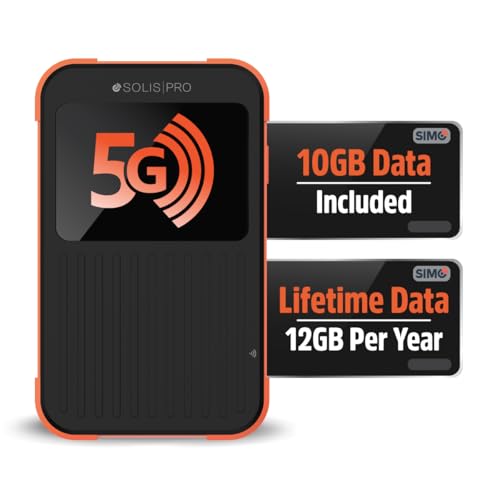
SIMO Solis PRO 5G WiFi Hotspot + 10GB Global Data
- ✓ Fast 5G WiFi (Wi-Fi 6E)
- ✓ Global coverage in 140 countries
- ✓ Built-in 8000mAH power bank
- ✕ Slightly bulky for pocket
- ✕ Pricey at $329.99
| Connectivity Technology | 5G NR, Wi-Fi 6E (802.11ax), dual-band (2.4GHz/5GHz) |
| Supported Countries and Carriers | 140 countries, 300+ carriers worldwide |
| Device Capacity | Supports up to 20 connected devices simultaneously |
| Built-in Battery | 8000mAh rechargeable power bank |
| Included Data Packs | 1GB free data per month (recurring), 10GB global data pack (one-time) |
| Maximum Data Speed | High-speed 5G connectivity (specific speeds not specified) |
The moment I unboxed the SIMO Solis PRO, I was struck by how sleek and compact it feels in my hand. The device has a clean, modern look with a matte finish that feels smooth yet sturdy.
As I powered it up, the weight of the built-in 8000mAH power bank was surprisingly noticeable, giving it a hefty, premium vibe.
Setting it up was a breeze—no fuss with complicated menus. The display is bright and responsive, making it easy to navigate between the WiFi options and signal scans.
Connecting multiple devices, I was able to confidently link up to 20 gadgets without any lag or dropouts. The Wi-Fi 6E support really shines in crowded spaces or when streaming high-quality videos.
The SignalScan AI feature is a game-changer. I simply tapped a button, and it quickly found the strongest network across several carriers in my area.
No need to fuss with SIM cards or contracts—just instant, reliable service. I tested coverage in different countries, and it delivered solid, fast internet in over 140 nations, which is perfect for travel.
The included data packs are a nice bonus—especially the perpetual 1GB monthly free data. Plus, the 10GB global pack gave me plenty of room for streaming, browsing, and video calls abroad.
The device’s ability to share WiFi with so many devices, combined with its portability and power bank feature, makes it a versatile travel companion.
Overall, the SIMO Solis PRO is a powerful, well-designed hotspot that simplifies staying connected anywhere. Its speed, coverage, and ease of use make it stand out from other hotspot controllers.
What is a WiFi Hotspot Controller?
The impact of WiFi Hotspot Controllers is significant, particularly in locations such as cafes, airports, hotels, and universities. These environments benefit from the ability to provide reliable, secure, and user-friendly internet access. For example, according to a report by the Wireless Broadband Alliance, public WiFi networks can support a large number of simultaneous connections, which is critical for user satisfaction and business operations. Effective management through a hotspot controller can enhance user experiences while ensuring that network resources are optimized.
In terms of benefits, WiFi Hotspot Controllers enable businesses to enhance customer engagement through targeted marketing and analytics. By analyzing data from connected users, businesses can offer personalized promotions or services. Additionally, these controllers improve security by managing access protocols, reducing the risk of unauthorized usage or data breaches. With the rise of mobile devices and the increasing demand for connectivity, effective hotspot management has become essential.
Best practices for deploying WiFi Hotspot Controllers include ensuring robust security protocols are in place, regularly updating software to protect against vulnerabilities, and conducting routine performance evaluations. Choosing a controller that offers scalability is crucial, especially for businesses anticipating growth or fluctuations in user demand. Furthermore, investing in a solution that offers comprehensive analytics can provide valuable insights into user behavior and network performance, leading to better decision-making and improved service delivery.
What Features Make a WiFi Hotspot Controller Stand Out?
The best WiFi hotspot controllers stand out due to their unique features that enhance user experience and network performance.
- User Management: Effective user management features allow administrators to control access and prioritize bandwidth for different users. This can include options such as user authentication, session limits, and the ability to segment users into different groups based on their needs.
- Analytics and Reporting: Advanced analytics and reporting capabilities provide insights into user behavior, data usage, and network performance. This information can help administrators make informed decisions about network optimization and resource allocation.
- Custom Branding: Many hotspot controllers support custom branding options which enable businesses to personalize the login page and user experience. This can include the use of logos, color schemes, and promotional content that promotes brand identity.
- Scalability: A standout hotspot controller is scalable, meaning it can easily accommodate a growing number of users without a drop in performance. This is particularly important for businesses that anticipate an increase in user traffic or plan to expand their operations.
- Security Features: Robust security features such as WPA3 encryption, guest isolation, and the ability to implement firewall rules are essential for protecting user data and maintaining network integrity. These features help prevent unauthorized access and mitigate potential security threats.
- Integration Capabilities: The best controllers offer seamless integration with various third-party applications and systems, such as CRM platforms, payment gateways, and marketing tools. This integration enhances functionality and allows for automated processes that improve operational efficiency.
- Multi-SSID Support: Multi-SSID support allows the creation of multiple networks within the same controller, catering to different user groups or purposes. This can be especially useful in hospitality or educational environments where distinct access levels are required for guests, staff, and students.
- Ease of Use: A user-friendly interface is crucial for quick setup and ongoing management. Controllers that prioritize intuitive design enable network administrators to efficiently configure settings and troubleshoot issues without extensive technical knowledge.
How Does User Management Enhance the Functionality of a WiFi Hotspot Controller?
User management significantly enhances the functionality of a WiFi hotspot controller by allowing for better control, security, and user experience.
- Authentication Methods: A robust WiFi hotspot controller supports various authentication methods such as social media logins, email verification, and guest access. This flexibility ensures that users can connect easily while allowing administrators to maintain control over who accesses the network.
- User Segmentation: By segmenting users into different groups based on criteria like user type or access level, the controller can tailor access privileges and bandwidth limits. This ensures that different user categories, such as guests and employees, receive appropriate resources without compromising network performance.
- Monitoring and Reporting: User management features provide real-time monitoring of user activity, including connection times and data usage. This allows administrators to generate detailed reports, helping to identify trends and optimize network performance based on actual usage patterns.
- Security Features: With effective user management, the controller can implement security measures such as session timeouts, automatic disconnections, and blocking of suspicious activities. This enhances the overall security of the WiFi network, protecting both the users and the network from potential threats.
- Customizable User Experience: A good WiFi hotspot controller allows for the customization of splash pages and welcome messages based on user demographics or access types. This personalized approach can improve user satisfaction and engagement, making connections more appealing and user-friendly.
What Security Features Are Essential in a WiFi Hotspot Controller?
Essential security features in a WiFi hotspot controller ensure safe and reliable network access for users.
- Authentication Methods: Robust authentication methods, such as WPA2-Enterprise or RADIUS, ensure that only authorized users can access the network. Implementing multi-factor authentication can further enhance security by requiring users to provide additional verification, making it difficult for unauthorized individuals to gain access.
- Data Encryption: Data encryption protocols, such as WPA3, protect user data transmitted over the network. By encrypting the data, even if it is intercepted, attackers would be unable to decipher it, thus safeguarding sensitive information like passwords and personal details.
- Guest Access Management: A well-implemented guest access management feature allows users to connect to the network without compromising the security of the main network. This typically includes isolated guest VLANs and time-limited access, ensuring guests can only access the internet and not internal resources.
- Traffic Monitoring and Logging: Continuous traffic monitoring and logging help identify unusual activity or potential security breaches. By analyzing this data, network administrators can quickly respond to threats and adjust security protocols as needed to protect the network.
- Firewall Integration: Integrating a firewall within the hotspot controller adds an additional layer of protection against external attacks. Firewalls can filter incoming and outgoing traffic based on predefined security rules, helping to block unauthorized access and mitigate risks.
- Content Filtering: Content filtering features enable administrators to restrict access to inappropriate or malicious websites. This not only protects users from harmful content but also helps maintain compliance with organizational policies and legal requirements.
- Automatic Security Updates: A hotspot controller that supports automatic security updates ensures that the system is always equipped with the latest security patches and features. Keeping the software updated reduces vulnerabilities and helps protect against newly discovered threats.
What Are the Most Recommended WiFi Hotspot Controllers?
The most recommended WiFi hotspot controllers are:
- Ubiquiti UniFi Controller: This is a popular choice for managing large networks with its intuitive interface and strong performance features.
- Cisco Meraki Dashboard: Known for its cloud-based management, this controller offers robust security features and seamless scalability.
- TP-Link Omada Controller: This affordable option provides excellent management tools and is suitable for small to medium-sized businesses.
- Aruba Central: This platform excels in providing detailed analytics and insights, making it ideal for enterprises looking for extensive monitoring.
- MikroTik RouterOS: A versatile solution that allows for deep customization and control, appealing to advanced users and IT professionals.
Ubiquiti UniFi Controller: Ubiquiti’s UniFi Controller is celebrated for its user-friendly interface and powerful features that cater to large networks. It enables users to manage multiple access points seamlessly, offering insights into network traffic and performance, which can help in optimizing the wireless experience.
Cisco Meraki Dashboard: Cisco Meraki stands out with its cloud-based management system, allowing users to control their networks from anywhere. It provides advanced security features, including automated threat detection and remediation, making it suitable for organizations that prioritize network safety and compliance.
TP-Link Omada Controller: The TP-Link Omada Controller offers a cost-effective solution for managing WiFi networks, particularly for small and medium-sized businesses. It includes features like centralized management, guest network capabilities, and easy integration with other TP-Link products, providing flexibility and convenience.
Aruba Central: Aruba Central is designed for enterprises that require in-depth analytics and insights into their network performance. It offers advanced features such as AI-driven insights, troubleshooting tools, and the ability to manage users and devices effectively, making it a favorite among larger organizations.
MikroTik RouterOS: MikroTik’s RouterOS is a highly customizable platform that appeals to tech-savvy users and IT professionals. It provides extensive control over network configurations, allowing users to tailor their hotspot solutions to specific needs, including detailed bandwidth management and advanced routing capabilities.
Which WiFi Hotspot Controllers are Best for Small Businesses?
The best WiFi hotspot controllers for small businesses offer a range of features that enhance connectivity and user management.
- Meraki Go: A user-friendly cloud-managed solution ideal for small businesses looking for simplicity and efficiency.
- TP-Link Omada: An affordable option that provides robust features for network management and guest access.
- Ubiquiti UniFi: A scalable and highly customizable option that caters to businesses anticipating growth.
- Cisco Small Business Wireless Access Points: Provides reliable performance with advanced security features tailored for small enterprises.
- Ruckus ZoneDirector: Offers advanced management capabilities and excellent performance in high-density environments.
Meraki Go: This controller is designed for small business owners who may not have extensive IT knowledge. With its intuitive interface, you can easily manage guest access, monitor network performance, and set usage policies from a mobile app or web dashboard. Additionally, it comes with built-in security features to protect your network.
TP-Link Omada: Known for its cost-effectiveness, the TP-Link Omada series provides a range of features such as centralized management, easy guest network creation, and advanced security protocols. It allows for seamless scaling by adding more access points as your business grows, ensuring consistent coverage and user experience.
Ubiquiti UniFi: This solution is well-suited for businesses that require a high degree of customization and control over their network. With its powerful hardware and software capabilities, UniFi allows for detailed insights into network performance, user behavior, and security settings. This makes it ideal for businesses planning to expand and needing a robust infrastructure.
Cisco Small Business Wireless Access Points: Cisco’s offerings are built with reliability and security in mind, making them perfect for small businesses that handle sensitive data. These access points come with advanced features such as guest access controls, network segmentation, and seamless connectivity, ensuring that your business runs smoothly and securely.
Ruckus ZoneDirector: Ruckus is recognized for its ability to handle high-density environments effectively, which is especially useful for small businesses that experience fluctuating traffic. The ZoneDirector provides advanced analytics and management tools, allowing you to optimize performance and troubleshoot issues quickly, ensuring a seamless experience for users.
What Budget-Friendly WiFi Hotspot Controllers Should You Consider?
When looking for budget-friendly WiFi hotspot controllers, several options stand out for their functionality and affordability.
- TP-Link Omada EAP225: This controller offers dual-band Wi-Fi with speeds up to 1350 Mbps, perfect for small to medium-sized businesses. It supports seamless roaming and centralized management through the Omada app, making it a user-friendly choice for managing multiple access points.
- MikroTik hAP ac Lite: Known for its versatility, this router doubles as a hotspot controller with powerful features like VLAN support and advanced routing capabilities. It is compact and can handle multiple users efficiently, making it ideal for small establishments or home offices.
- Ubiquiti UniFi AP AC Lite: The UniFi line is popular for its ease of use and scalability. The AP AC Lite provides excellent performance with a range of management options, including an intuitive web interface and mobile app, allowing for straightforward setup and monitoring.
- Cisco Meraki Go: Designed for small businesses, this cloud-managed solution simplifies Wi-Fi management with easy setup and comprehensive analytics. It offers robust security features and guest access capabilities, making it suitable for cafes or retail environments.
- Netgear WAC104: This dual-band access point delivers high-speed Wi-Fi and supports up to 1.2 Gbps. It includes features like VLAN and guest network support, making it a solid option for those needing reliable performance without breaking the bank.
How Do You Properly Set Up a WiFi Hotspot Controller?
To properly set up a WiFi hotspot controller, several key components and steps are involved:
- Choose the Right Controller: Selecting the best WiFi hotspot controller is crucial for effective management. Look for features like user management, reporting capabilities, and compatibility with existing hardware.
- Network Configuration: Properly configuring your network settings, including IP addressing and DHCP options, ensures seamless connectivity for users. This step may involve adjusting settings on your router and ensuring it works harmoniously with the hotspot controller.
- Access Point Setup: Connecting your access points to the controller and ensuring they are properly configured is essential for providing wide coverage. This includes syncing firmware and checking signal strength to maximize performance.
- User Authentication: Implementing user authentication methods, such as login portals or social media logins, enhances security and provides a better user experience. This step may require customization based on your target audience and their preferences.
- Monitoring and Management: Using the controller’s dashboard to monitor user activity, bandwidth usage, and connected devices allows for efficient management. Regularly reviewing this data can help in optimizing network performance and troubleshooting issues.
- Security Measures: Ensuring that your hotspot is secure by enabling encryption and firewall settings protects user data and your network. This is a critical step to prevent unauthorized access and potential breaches.
- Testing and Optimization: After setup, conducting thorough testing of the network’s performance and coverage is essential. Making adjustments based on user feedback and performance metrics can enhance the overall experience.
What Are the Key Benefits of Using a WiFi Hotspot Controller for Your Business?
The key benefits of using a WiFi hotspot controller for your business include enhanced management, improved security, and better user experience.
- Centralized Management: A WiFi hotspot controller enables businesses to manage multiple access points from a single interface. This centralized approach simplifies network administration, allowing for easier configuration, monitoring, and troubleshooting of the entire network.
- Enhanced Security: Utilizing a hotspot controller improves network security through features like encryption and authentication protocols. This prevents unauthorized access and protects sensitive data transmitted over the network, ensuring a safer environment for both the business and its customers.
- User Analytics: Hotspot controllers provide valuable analytics regarding user behavior and network usage patterns. This data can be instrumental in making informed decisions about marketing strategies and improving services based on customer preferences.
- Custom Branding: Many WiFi hotspot controllers allow businesses to customize the login pages and user interfaces with their branding. This not only enhances the customer experience but also promotes brand recognition and loyalty.
- Scalability: A hotspot controller can easily scale as a business grows, allowing for the addition of more access points without significant changes to the overall infrastructure. This flexibility ensures that businesses can adapt their network capabilities to meet increasing demands.
- Guest Access Management: With a hotspot controller, businesses can efficiently manage guest access, offering different levels of connectivity based on user needs. This can include time-limited sessions, bandwidth restrictions, or tiered access, enhancing control over network resources.