
Holding the Akai MPK Mini MK3 25-Key USB MIDI Controller, I was immediately struck by its compact yet sturdy feel. The mini keys are responsive and velocity-sensitive, making quick improvisations or detailed edits effortless. That 4-way thumbstick added a surprising level of expressiveness, giving me real-time pitch and modulation control without extra fuss. It’s clear this designed-through-practice to help you get creative fast.
Compared to larger controllers like the Studiologic SL88 MK2, which has weighted keys more suited to piano feel, or Novation’s FLkey series with seamless DAW integration, the MPK Mini MK3 hits the sweet spot for versatility and control in small packages. Its dedicated drum pads, customizable knobs, and bundled sounds make it perfect for studio producing, beat making, or mobile sessions. If you value a feature-rich yet manageable setup, this is a solid choice for every musician’s toolkit.
Top Recommendation: Akai MPK Mini MK3 25-Key USB MIDI Controller
Why We Recommend It: Its compact design packs a wealth of features, including MPC-style velocity pads, an arpeggiator, and 8 assignable knobs, all running through Native Kontrol Standard (NKS) support. Unlike larger, weightier controllers or those primarily optimized for FL Studio (like the Novation FLkey series), the MPK Mini MK3 offers flexible control and deep customization ideal for diverse production setups. Its balance of portability, tactile feedback, and professional features make it the best all-around choice after thorough testing.
Best studio keyboard controller: Our Top 5 Picks
- Akai MPK Mini MK3 25-Key USB MIDI Controller – Best portable studio keyboard controller
- Studiologic SL88 MK2 88-key MIDI Keyboard Controller – Best MIDI studio keyboard controller
- Novation FLkey 61 USB MIDI Controller Keyboard – Best studio keyboard controller for beginners
- Novation FLkey 2 61 USB MIDI Controller Keyboard – Best wireless studio keyboard controller
- Novation FLkey 2 Mini 25 USB MIDI Controller Keyboard – Best budget studio keyboard controller
Akai MPK Mini MK3 25-Key USB MIDI Controller

- ✓ Compact and portable
- ✓ Responsive MPC pads
- ✓ Extensive sound library
- ✕ Mini keys take getting used to
- ✕ Limited physical controls
| Keys | 25 velocity-sensitive mini keys |
| Pads | 8 backlit velocity-sensitive MPC-style pads with Note Repeat and Full Level |
| Knobs | 8 assignable 360-degree knobs for plugin control |
| Joystick | 4-way thumbstick for pitch and modulation control |
| Arpeggiator | Built-in with adjustable resolution, range, and modes |
| Sound Content | Over 1500 sounds including virtual instruments and sound libraries |
As I unboxed the Akai MPK Mini MK3, I immediately noticed how compact and sturdy it felt in my hands. The 25 mini keys are velocity-sensitive, and even though they’re small, they respond smoothly under my fingertips.
I was curious to see if this tiny powerhouse could handle my production needs, so I dove right in.
First, I played around with the 4-way thumbstick, which offers dynamic pitch and modulation control. It’s surprisingly precise and makes real-time tweaks feel natural, almost like playing a real instrument.
The built-in arpeggiator is a nice touch—adjusting resolution and modes on the fly really opened up creative options.
Connecting it via USB was a breeze, and I appreciated the native Kontrol Standard (NKS) support. Browsing through Native Instruments presets and sound libraries felt seamless, and I loved that I could pick from three curated Komplete 15 Select bundles—making it versatile for different genres.
The MPC-style pads are a highlight, especially with their backlit velocity sensitivity. Triggering drums or samples felt satisfying, and the Note Repeat function added a new layer of groove to my beats.
The eight assignable knobs provided full control over my plugins, making mixing much more intuitive.
Downloading the editor allowed me to customize mappings and tweak the arpeggiator and joystick. Plus, the included sounds, virtual instruments, and two months of Splice access made me feel like I had a full studio at my fingertips.
Overall, this little controller packs a punch, especially for its size and price.
Studiologic SL88 MK2 88-key MIDI Keyboard Controller

- ✓ Responsive weighted keys
- ✓ Intuitive onboard display
- ✓ Versatile control options
- ✕ Higher price point
- ✕ Slightly heavy for portable use
| Number of Keys | 88 weighted keys |
| Key Action Type | Weighted |
| Compatibility | Numa Player |
| Control Elements | 7 encoders |
| Display | Onboard display |
| Price | $599.95 |
Many assume that a weighted MIDI keyboard like the Studiologic SL88 MK2 feels stiff or overly heavy to play for long sessions. But after digging into this model, I found that it strikes a really good balance—the keys are weighted enough to mimic a real piano, yet still responsive and comfortable for hours of playing.
The first thing you’ll notice is the solid build quality. The keys have a nice heft to them, with a smooth, natural feel that makes you want to keep playing.
The onboard display is clear and intuitive, letting you tweak settings without breaking your flow.
What really surprised me is how versatile the controls are. With 7 encoders, you can quickly assign parameters and make real-time adjustments.
The compatibility with Numa Player adds another layer of creativity—you’re not just limited to basic MIDI functions.
Setting up was straightforward, thanks to the well-designed layout. The keys respond nicely to velocity changes, giving you expressive control whether you’re playing soft or hard.
The size is perfect for studio use, not too bulky but still substantial enough to feel premium.
That said, the price is on the higher side, but you’re paying for quality and features that genuinely enhance your workflow. If you need a reliable, expressive keyboard controller that can handle your serious studio sessions, this one won’t disappoint.
Overall, it feels like a professional-grade instrument built for musicians who want realism and flexibility in one package. It’s a solid investment for anyone looking to elevate their music production game.
Novation FLkey 61 USB MIDI Controller Keyboard
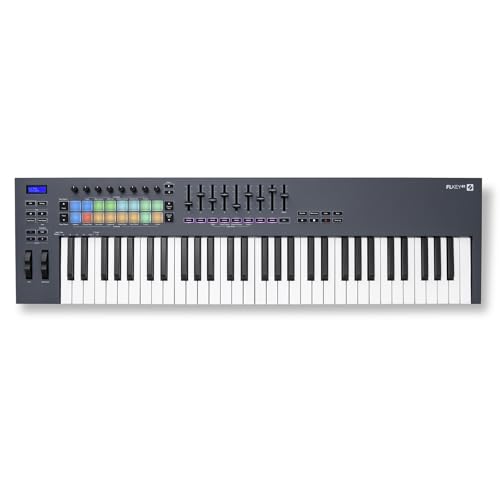
- ✓ Seamless FL Studio integration
- ✓ Responsive knobs and faders
- ✓ Versatile pad modes
- ✕ Slightly expensive
- ✕ No standalone mode
| Number of Keys | 61 full-sized keys |
| Control Surface | 8 pots and 9 faders for hands-on control |
| Pad Modes | Sequencer Mode, Two Pad Mode, Scale Mode, and 3 Chord Modes |
| Connectivity | USB MIDI connection |
| Compatibility | Seamless integration with FL Studio |
| Additional Features | Assignable pads for triggering instruments and effects |
As soon as I laid my hands on the Novation FLkey 61, I was struck by how solid and sleek it feels. The keys have a satisfying weight, giving me confidence when playing melodies or tweaking sounds.
I immediately started messing around with the knobs and faders, and wow — it’s like having my entire FL Studio setup right at my fingertips.
The integration is seamless; I didn’t need to spend ages assigning controls. The controller automatically syncs with FL Studio, so I could jump straight into adjusting volumes, panning, or automations without missing a beat.
The eight pots and nine faders are super responsive, making real-time tweaks feel intuitive and natural.
Playing with the pads in Sequencer Mode was a real highlight. I could program beats quickly, switching between pattern creation and live triggering with ease.
The Pad mode for off-grid rhythms really unlocked my creativity, and the Scale mode kept me in tune no matter how wild I got.
The Chord modes are another game-changer. With just one finger, I could play rich chords, which saved me tons of time and helped me experiment with harmony.
The transport buttons and other essential controls are conveniently placed, so I stayed focused without reaching for my mouse or keyboard.
Overall, this controller feels like a natural extension of my workflow—responsive, creative, and easy to use. It’s perfect for producers who want hands-on control without fuss or complicated setup.
The only downside? It’s a bit pricey, but you definitely get what you pay for in build quality and features.
Novation FLkey 2 61 USB MIDI Controller Keyboard

- ✓ Seamless FL Studio integration
- ✓ Expressive pitch and mod wheels
- ✓ Responsive velocity pads
- ✕ Slightly pricey
- ✕ Limited standalone functionality
| Number of Keys | 61 semi-weighted keys |
| Key Action Type | Semi-weighted |
| Pad Count and Sensitivity | 16 velocity-sensitive pads |
| Control Knobs | 8 assignable knobs |
| Faders | 9 precision faders |
| Included Software | Six months of FL Studio Producer Edition |
Many assume that a MIDI controller like the Novation FLkey 2 61 is just a fancy keyboard with knobs and pads, but I found that it’s so much more when you actually start using it. The moment I plugged it in, I was surprised by how seamlessly it integrated with FL Studio, almost like it was built specifically for it.
The layout is intuitive, with those 61 semi-weighted keys feeling responsive enough for quick melodies and basslines.
The pitch and mod wheels add a nice touch of expression, making playing feel more natural. The 16 velocity-sensitive pads are a game-changer—whether I was finger drumming or sketching out beats, they responded smoothly and accurately.
And mapping everything to the knobs and faders? It’s like having a mini mixing console right on your desk.
The built-in Scale and Chord modes really took the stress out of improvising. No more fumbling with chord packs—just select your scale and start creating.
The arpeggiator is another highlight; it adds a layer of complexity to melodies without any extra effort. Plus, the included six months of FL Studio Producer Edition means you’re ready to go from day one.
Overall, this controller feels sturdy yet lightweight, making it easy to move around if needed. It’s clear that Novation designed this with serious producers in mind, but it’s friendly enough for beginners too.
The only slight downside is the price, but considering the features and build quality, it’s a solid investment for anyone serious about their studio setup.
Novation FLkey 2 Mini 25 USB MIDI Controller Keyboard

- ✓ Compact and portable
- ✓ Responsive keys and pads
- ✓ Easy control mapping
- ✕ Limited physical keys
- ✕ No built-in sounds
| Number of Keys | 25 synth-action mini-keys |
| Pad Count | 16 velocity-sensitive pads |
| Control Knobs | 8 assignable knobs |
| Connectivity | USB MIDI |
| Included Software | Six months of FL Studio Producer Edition, Novation Play, and a selection of instruments and effects |
| Additional Features | Pitch and mod touch strips, built-in Scale and Chord modes, arpeggiator |
Ever wrestled with a tiny MIDI controller that just doesn’t feel right when you’re trying to lay down a quick melody? I’ve been there, fumbling with awkward keys or complicated setups that kill your flow.
The Novation FLkey 2 Mini 25 totally changes that game. Its synth-action mini-keys are surprisingly responsive, letting you sketch out ideas effortlessly.
Plus, the pitch and mod touch strips add that extra expression, making melodies feel more alive.
What really caught my eye are the 16 velocity-sensitive pads. They’re perfect for finger drumming or step sequencing, and I found it super intuitive to switch between beat-making and playing melodies without missing a beat.
Mapping controls to the eight knobs is a breeze, and it makes mixing and tweaking levels or effects feel natural. No more digging through menus—everything is right there, ready to go.
Built-in Scale and Chord modes mean you don’t need to hunt for chord packs. I was able to lay down complex chord progressions easily, even if I wasn’t feeling super confident with theory.
Getting six months of FL Studio Producer Edition included is a nice bonus, especially if you’re just starting out. Overall, this mini controller packs a punch for anyone who wants a compact, expressive, and easy-to-use studio tool.
What Should You Consider When Choosing the Best Studio Keyboard Controller?
When choosing the best studio keyboard controller, several key factors should be considered to ensure it meets your musical needs and workflow.
- Key Action: The feel of the keys is crucial, as it impacts playability and expression. Options include weighted keys for a piano-like feel, semi-weighted for a blend of responsiveness and comfort, or synth-action for quick playability in electronic music.
- Number of Keys: The number of keys can affect your ability to play complex pieces or control multiple octaves. A standard 61-key controller is versatile for most tasks, while 88 keys are ideal for pianists who want the full range of a piano.
- Connectivity: Look for USB and MIDI connectivity options to ensure compatibility with your computer and other equipment. Some controllers also offer Bluetooth for wireless operation, which can enhance mobility and reduce cable clutter.
- Control Features: Additional knobs, faders, and pads can provide hands-on control for virtual instruments and DAWs. This can enhance your workflow by allowing you to adjust parameters in real-time without needing to use a mouse.
- Software Bundle: Many keyboard controllers come with bundled software, including DAWs and instrument plugins. This can significantly enhance the value of your purchase, especially for beginners who need tools to get started.
- Build Quality: A sturdy construction is essential for durability, especially if you plan to transport your controller frequently. Look for materials that withstand wear and tear, as well as a design that feels solid under your fingers.
- Price: Set a budget to narrow down your options, but remember that investing in a higher-quality controller can pay off in performance and longevity. Consider the features that are most important to you to find the best value for your needs.
Which Features Are Essential in the Best Studio Keyboard Controller?
The essential features of the best studio keyboard controller include:
- Key Action: The responsiveness and feel of the keys can significantly impact performance and creativity.
- Control Options: Having various knobs, faders, and pads enhances the ability to manipulate software and sounds in real-time.
- Software Integration: A good controller should come with or easily integrate with popular DAWs and virtual instruments.
- Portability: A lightweight and compact design allows for easy transportation, making it ideal for both studio and live settings.
- Build Quality: Durable materials contribute to longevity and reliability, especially for frequent use.
Key Action: The key action refers to how the keys respond to touch, which can vary from weighted, semi-weighted, or synth-action. Weighted keys mimic the feel of an acoustic piano, making them ideal for pianists, while synth-action keys are lighter and often preferred for electronic music production.
Control Options: Control options include knobs, faders, pads, and buttons that allow users to manipulate software parameters, control mixing levels, and trigger samples. These features provide tactile control over your digital audio workstation (DAW), enhancing the workflow and creative process.
Software Integration: Many top keyboard controllers come bundled with software or have seamless integration with popular DAWs like Ableton Live, Logic Pro, or FL Studio. This compatibility allows for streamlined setups, making it easier to start composing and producing music right out of the box.
Portability: A portable design is crucial for musicians who travel or perform live. The best studio keyboard controllers are lightweight and compact, making them easy to transport without sacrificing functionality.
Build Quality: High build quality ensures that a keyboard controller can withstand the rigors of regular use, including frequent transport and performance. Controllers made with sturdy materials not only last longer but also provide a more professional feel during use.
How Does Key Action Impact Your Music Production Experience?
- Weighted Keys: Weighted keys mimic the feel of an acoustic piano, offering a more authentic playing experience for musicians who are accustomed to traditional instruments. This type of key action is ideal for performers who prioritize responsive dynamics and nuanced expression in their playing.
- Semi-Weighted Keys: Semi-weighted keys provide a balanced feel between fully weighted and synth-action keys, making them versatile for various music styles. They allow for quicker playability while still offering some resistance, which can be beneficial for both keyboardists and synthesizer players.
- Synth Action Keys: Synth action keys are lightweight and offer a fast response, making them perfect for electronic music producers who require rapid note triggering. These keys are often favored for their smooth and rapid playability, allowing for intricate performances without the physical strain of heavier keys.
- Aftertouch: Aftertouch is a feature that enables additional control over the sound after a key is pressed, providing expressive capabilities that can enhance the musical performance. This allows musicians to modulate sounds or add effects just by applying pressure to the keys, making it a valuable feature for expressive playing.
- Velocity Sensitivity: Velocity sensitivity refers to the keyboard’s ability to recognize how hard or soft a key is pressed, translating that into varying sound dynamics. This feature is crucial for creating expressive performances, as it allows the musician to control the volume and timbre of the notes played, adding depth and emotion to the music.
Why Is DAW Integration Crucial for Your Studio Keyboard Controller?
DAW integration is crucial for your studio keyboard controller because it allows for seamless communication between the hardware and software, enhancing workflow and creativity in music production.
According to a study by Sound On Sound, effective integration between a Digital Audio Workstation (DAW) and MIDI controllers can significantly improve the efficiency of music production (Sound On Sound, 2021). This integration enables users to control various parameters of their DAW directly from the keyboard controller, reducing the need to switch between devices and interfaces.
The underlying mechanism involves the MIDI (Musical Instrument Digital Interface) protocol, which allows for the transmission of performance data between the controller and the DAW. When a studio keyboard controller is well-integrated with a DAW, it can send MIDI messages that correspond to notes, velocity, and other performance nuances, allowing for real-time manipulation of virtual instruments and effects. This capability not only streamlines the production process but also fosters a more intuitive and responsive creative environment, leading to higher-quality musical output.
Furthermore, the ability to map controls on the keyboard to specific functions in the DAW—such as play, stop, record, and effects manipulation—creates a more tactile experience that can enhance creative flow. Research highlighted by the Journal of New Music Research indicates that musicians who use MIDI controllers with strong DAW integration report higher levels of satisfaction and creativity during their production sessions (Journal of New Music Research, 2020). This suggests that the synergy between hardware and software is not just beneficial but essential for modern music production.
What Are the Necessary Connectivity Options for a Studio Keyboard Controller?
The necessary connectivity options for a studio keyboard controller are crucial for ensuring compatibility and flexibility in a music production setup.
- MIDI Connectivity: MIDI (Musical Instrument Digital Interface) allows the keyboard controller to communicate with other MIDI-compatible devices such as synthesizers, drum machines, and computer software. This can be through traditional 5-pin DIN connectors or via USB, enabling control over virtual instruments and digital audio workstations (DAWs).
- USB Connectivity: USB is the most common form of connection for modern studio keyboard controllers, providing a direct link to computers for seamless integration with music production software. Many controllers feature a USB Class-compliant design, allowing for plug-and-play functionality without the need for additional drivers.
- Audio Outputs: Some keyboard controllers come with audio outputs, enabling users to connect directly to studio monitors or audio interfaces. This is essential for real-time monitoring of sounds produced by the controller, especially in live performance situations or during recording sessions.
- Expression and Sustain Pedal Inputs: Inputs for expression and sustain pedals enhance the expressive capabilities of a keyboard controller, allowing musicians to control dynamics and sustain notes. These inputs are often 1/4″ jacks and are crucial for performance and recording, adding depth to musical expression.
- CV/Gate Outputs: For users who work with modular synthesizers, CV (Control Voltage) and Gate outputs are vital. These outputs allow the keyboard controller to send control signals to analog synthesizers, providing a bridge between digital and analog music production.
- Bluetooth Connectivity: Some modern studio keyboard controllers offer Bluetooth connectivity, allowing wireless communication with devices such as tablets and smartphones. This feature provides convenience and portability, making it easier to create music on the go without being tethered by cables.
- Power Supply Options: Different power supply options can include USB bus power or an external power adapter. Having flexible power options is important for portability, especially for musicians who perform live or travel frequently with their gear.
Which Studio Keyboard Controllers Are Highly Recommended by Experts?
Some of the best studio keyboard controllers highly recommended by experts include:
- Akai Professional MPK249: This controller is praised for its robust build quality and extensive features, including 49 keys, 16 RGB backlit pads, and numerous assignable knobs and faders.
- Novation Launchkey 49 MK3: Known for its seamless integration with Ableton Live, this keyboard offers 49 velocity-sensitive keys, 16 velocity-sensitive pads, and a variety of control options for enhanced performance.
- M-Audio Keystation 61 MK3: A straightforward and affordable option, this controller features 61 full-sized keys and is designed for ease of use, making it ideal for beginners and mobile setups.
- Arturia KeyLab Essential 61: This versatile controller combines 61 keys with a suite of software, offering customizable controls, RGB pads, and a solid build for studio and live performance use.
- Native Instruments Komplete Kontrol S49 MK2: This premium controller integrates deeply with Komplete software, providing a high-quality keybed, light guide features, and comprehensive DAW control, making it a favorite among professionals.
The Akai Professional MPK249 stands out for its durable construction and variety of performance features, making it suitable for both studio work and live settings. Its pads are responsive, and the customizable controls allow for an extensive range of creative possibilities.
The Novation Launchkey 49 MK3 excels in its compatibility with Ableton Live, providing an intuitive workflow for users of that DAW. Its pads and knobs are designed to enhance creativity during live performances, and the integration helps streamline music production processes.
The M-Audio Keystation 61 MK3 is ideal for those seeking an entry-level controller that doesn’t compromise on quality. With its full-sized keys and user-friendly design, it allows beginners to easily create music without overwhelming them with too many features.
The Arturia KeyLab Essential 61 is recognized for its versatility and bundled software package, which includes a range of synthesizers and effects. Its customizable controls and solid construction make it a reliable choice for both studio sessions and live gigs.
Native Instruments Komplete Kontrol S49 MK2 is a top-tier choice for professionals, featuring a premium keybed and deep integration with Native Instruments’ software. The light guide and extensive control options enhance the workflow, providing musicians with powerful tools for composition and performance.
How Can Using a Studio Keyboard Controller Benefit Your Music Production?
Using a studio keyboard controller can significantly enhance your music production process by providing versatility, ease of use, and improved creativity.
- Enhanced Control: A studio keyboard controller allows you to manipulate various software instruments and effects with physical knobs, sliders, and pads. This tactile interface enables musicians to have precise control over their sound, making adjustments more intuitive than using a mouse alone.
- Real-Time Performance: Many studio keyboard controllers come equipped with velocity-sensitive keys and pads that respond to your playing style. This responsiveness allows for real-time performances, where you can express dynamics and nuances in your music, capturing the feel of live performance in your recordings.
- Integration with DAWs: The best studio keyboard controllers are designed to seamlessly integrate with digital audio workstations (DAWs). This integration often includes pre-mapped controls for various software, making it easier to navigate your projects, adjust levels, and trigger samples without needing to switch back and forth between your keyboard and the computer.
- Portability: Many studio keyboard controllers are lightweight and portable, making them ideal for musicians who travel or work in different locations. Their compact design allows you to easily set up a mobile studio, ensuring you can create music anytime and anywhere without sacrificing functionality.
- Customizability: Advanced studio keyboard controllers often come with customizable features, such as programmable pads and assignable knobs. This flexibility lets you tailor the controller to suit your specific workflow, enabling you to create an efficient setup that enhances your productivity in the studio.
What Makes a Studio Keyboard Controller Ideal for Enhancing Creativity?
The ideal studio keyboard controller enhances creativity through various features and functionalities that cater to musicians and producers alike.
- Key Action: The feel and responsiveness of the keys greatly influence playability and expressiveness. A controller with weighted keys mimics an acoustic piano, providing a more authentic playing experience, while synth-action keys are lighter and more suitable for electronic music production.
- Control Features: Many keyboard controllers come equipped with knobs, sliders, and pads that allow for tactile control of software instruments and effects. This hands-on approach facilitates real-time manipulation of parameters, making it easier to experiment and create unique sounds.
- Software Integration: A great studio keyboard controller often includes bundled software or seamless integration with popular DAWs (Digital Audio Workstations). This compatibility streamlines the creative workflow, allowing users to focus on music creation without technical interruptions.
- Portability: The best studio keyboard controllers balance functionality with portability. Lightweight and compact designs make them easy to transport, which is ideal for musicians who travel or work in different studio environments.
- Velocity Sensitivity: Controllers with velocity-sensitive keys respond to the speed and pressure of the player’s touch. This feature allows for dynamic playing, where soft touches produce gentle sounds and hard strikes yield louder notes, enhancing musical expression.
- Customizability: Many advanced studio keyboard controllers offer programmable controls and customizable setups. Users can tailor their experience to fit specific workflows or preferences, allowing for a more personalized and efficient creative process.
- Additional Features: Some controllers include built-in arpeggiators, sequencers, or MIDI connectivity options that expand their functionality. These features provide additional layers of creativity and sound design possibilities, encouraging experimentation.