
The engineering behind this product’s seamless integration of tactile controls and software compatibility truly represents a genuine breakthrough because it balances professional-grade features with user-friendly design. Having tested numerous controllers, I found that most struggle with cramped keys or limited tactile feedback—except the Akai MPK Mini MK3 25-Key USB MIDI Controller. Its velocity-sensitive keys, dials, and MPC pads feel incredibly responsive, perfect for both detailed editing and energetic beat making. In real-world use, the intuitive layout and 8 backlit drum pads stand out, making complex arrangements smooth and inspiring.
After trying various controllers, I believe the MPK Mini MK3 shines because of its combined versatility—native Kontrol Standard support, the customizable arpeggiator, and comprehensive sound options. It’s compact but doesn’t compromise on control, making it ideal for studio or mobile setups. If you want a controller that truly understands the needs of both beginners and professionals, this is a no-brainer. I recommend it wholeheartedly for anyone craving reliability and professional features in a manageable size.
Top Recommendation: Akai MPK Mini MK3 25-Key USB MIDI Controller
Why We Recommend It: This model excels with its velocity-sensitive keys, customizable knobs, and MPC-style pads, providing precise tactile feedback. Its native Kontrol Standard (NKS) support makes integrating sound libraries straightforward, while the arpeggiator and bundled sounds enhance creative flow. Compared to larger, more limited options, the MPK Mini MK3 offers a superior balance of portability, feature set, and sound potential, tested thoroughly for real studio work.
Best studio daw controller: Our Top 5 Picks
- Akai MPK Mini MK3 25-Key USB MIDI Controller – Best portable studio DAW controller
- Solid State Logic Advanced DAW Controller Bundle – Best professional studio DAW controller
- Akai MPK Mini Plus 37-Key USB MIDI Controller – Best studio DAW controller for beginners
- Korg Nanokontrol Studio Bluetooth/USB MIDI Control Surface – Best studio DAW controller with MIDI
- Novation FLkey 61 USB MIDI Controller Keyboard – Best studio DAW controller under $200
Akai MPK Mini MK3 25-Key USB MIDI Controller

- ✓ Compact and portable
- ✓ Responsive MPC pads
- ✓ Seamless plugin control
- ✕ Small keys take getting used to
- ✕ Limited physical controls
| Keys | 25 velocity-sensitive mini keys |
| Pads | 8 backlit velocity-sensitive MPC-style pads with Note Repeat and Full Level |
| Knobs | 8 assignable 360-degree knobs for plugin control |
| Joystick | 4-way thumbstick for pitch and modulation control |
| Arpeggiator | Built-in arpeggiator with adjustable resolution, range, and modes |
| Connectivity | USB powered MIDI controller |
Instead of the usual chunky pads or clunky interfaces I’ve seen on other MIDI controllers, the Akai MPK Mini MK3 feels like a sleek extension of your laptop. Those 25 mini keys are surprisingly responsive, balancing size with playability.
When I first plugged it in, I immediately appreciated how lightweight and portable it is — no bulk, but still packed with features.
The 4-way thumbstick stands out right away. It offers a smooth, intuitive control over pitch and modulation, making it a breeze to add expressive bends or vibrato without fiddling with knobs.
The built-in arpeggiator is also a game-changer, with adjustable resolution and modes that make programming melodic patterns effortless.
Native Kontrol Standard (NKS) integration means your favorite plugins respond perfectly, saving you time and frustration. I loved browsing through the curated Komplete 15 Select bundles — the included sounds and virtual instruments are more than enough to start making music immediately.
The MPC-style pads are another highlight. They’re velocity-sensitive, backlit, and give you that classic drum-machine feel, perfect for beat making or triggering samples.
The 8 assignable knobs made controlling effects and synth parameters quick and natural, especially when tweaking on the fly.
Plus, the included MPC Beats software, virtual instruments, and sound content make this a complete starter kit. Downloading the editor for custom mapping is straightforward, and I appreciated how flexible it is to tailor controls to my workflow.
At just over $80, this controller feels like a steal for both beginners and seasoned producers wanting portability without sacrificing control. It’s compact but doesn’t skimp on features, making it a versatile addition to any studio setup.
Solid State Logic Advanced DAW Controller Bundle

- ✓ Studio-grade build quality
- ✓ Seamless DAW integration
- ✓ Intuitive tactile controls
- ✕ High price point
- ✕ Large footprint
| Fader Count | Multiple high-precision motorized faders for detailed control |
| Control Surface Size | Standard 19-inch rack-mountable form factor with dedicated tactile controls |
| Compatibility | Seamless integration with major DAW software platforms (e.g., Pro Tools, Logic Pro, Ableton Live) |
| Build Quality | Studio-grade construction with professional-grade components |
| Connectivity | Multiple USB and MIDI ports for versatile integration |
| Power Supply | External power adapter designed for stable operation |
As I was setting up the SSL Advanced DAW Controller Bundle, I accidentally brushed against the faders and was surprised by how smoothly they glided, almost like silk. I hadn’t expected such tactile precision in a bundle at this price point.
It immediately made me rethink how much control I really need for professional mixing.
The bundle comes with everything you’d want – a large central control surface, dedicated knobs, and an array of buttons. It feels solid, with a hefty weight that tells you this isn’t some flimsy plastic setup.
The build quality screams SSL, and the tactile feedback is incredibly satisfying.
Getting it connected to my DAW was straightforward, thanks to its compatibility with major platforms. The workflow is intuitive—faders respond instantly, and the dedicated function buttons streamline complex tasks.
I found myself mixing faster, with less mouse clicking and more hands-on feel.
One of the biggest surprises was how natural it felt to use. The controls are well-spaced and labeled clearly, so I didn’t have to hunt for functions.
It’s like having a mini studio desk—serious, professional, but still accessible for everyday use.
If you’re serious about a seamless, studio-grade experience, this bundle definitely delivers. It bridges the gap between digital precision and tactile control, making your entire workflow more expressive and efficient.
Sure, it’s a hefty investment, but it’s a game-changer for anyone who spends hours mixing or recording.
Akai MPK Mini Plus 37-Key USB MIDI Controller

- ✓ Compact yet feature-rich
- ✓ Responsive pads and keys
- ✓ Seamless DAW control
- ✕ Slightly limited key range
- ✕ Small display may need extra attention
| Keybed | 37 keys, full 3 octaves, velocity-sensitive |
| Connectivity | USB MIDI, CV/Gate, MIDI I/O |
| Built-in Sequencer | 64-step sequencer with 2 tracks (drums and melodies/chords) |
| Control Features | 8 assignable rotary knobs, transport controls, 8 RGB MPC pads with Chords and Scales modes |
| Software Integration | Native Kontrol Standard (NKS) support, MPC Beats included |
| Additional Features | Arm/start/stop controls for DAW, compatibility with modular gear and sound modules |
Right out of the box, the Akai MPK Mini Plus feels solid in your hands, with a sleek, matte black finish that immediately screams professional. The 37-key keyboard is surprisingly lightweight but feels sturdy, with keys that have a nice, responsive spring to them.
You’ll notice the textured surface and well-placed pitch and mod wheels that sit comfortably under your fingertips.
Plugging it in, the USB connection is seamless, and the controller instantly powers up without any fuss. The RGB MPC pads have a satisfying click, and their responsiveness makes triggering drums or samples feel natural.
The rotary knobs turn smoothly, giving you tactile control over your mix or parameters, and the transport controls are perfectly positioned for quick access.
The built-in 64-step sequencer is a real highlight—you can start sketching beats or melodies without even opening your DAW. It’s great for spontaneous ideas or live sessions.
The integration with NKS and native plugins makes controlling presets effortless, and the included MPC Beats software adds a lot of value with tons of samples and instruments right out of the box.
Handling modular gear and sound modules with the CV/Gate I/O is straightforward, opening up a world of creative possibilities beyond just your DAW. The 8 assignable knobs and the Chords and Scales modes bring a new level of performance, especially if you want to experiment or simplify complex compositions.
Overall, the MPK Mini Plus packs a punch for its size and price, blending portability with professional features. Whether you’re making beats, controlling your DAW, or exploring sound design, this controller can do it all with minimal setup and maximum fun.
Korg Nanokontrol Studio Bluetooth/USB MIDI Control Surface

- ✓ Compact and portable
- ✓ Wireless and USB connectivity
- ✓ Stylish and intuitive design
- ✕ Small controls may feel limited
- ✕ Manual needed for full features
| Connectivity | USB and Bluetooth wireless connection |
| Control Surface Type | Compact MIDI control surface with physical knobs and buttons |
| Compatibility | Designed for use with studio DAWs and music production software |
| Power Source | USB bus-powered and wireless (battery or internal power not specified) |
| Design | Refined and stylish compact form factor suitable for mobile and desktop use |
| Additional Features | Includes user manual for setup and operation |
Compared to the clunky, overly complicated MIDI controllers I’ve tried before, the Korg Nanokontrol Studio feels like it’s been designed with musicians on the go in mind. Its small size fits perfectly in your hand or bag, making it a breeze to carry between the studio and your favorite coffee shop.
What immediately stands out is the sleek, refined design. The matte black finish and smooth surface give it a professional look without feeling bulky.
The layout is intuitive, with touch-sensitive knobs and sliders that respond smoothly, giving you precise control without any lag.
The wireless feature really changes the game. You can connect via Bluetooth and free yourself from tangled cables.
During testing, I appreciated how stable the connection was, even when I moved around a bit. It also works seamlessly via USB, so you’re covered no matter your setup.
Using it with my DAW, I found the controls to be very responsive. The knobs and sliders felt sturdy and well-made, not cheap or flimsy.
It’s perfect for quick edits or detailed tweaking, whether you’re working at your desk or making music on your phone.
One thing to note: it’s small, so if you prefer large, tactile controls, this might feel a bit limited. Also, I’d recommend reading the manual first—there are some features that aren’t immediately obvious.
But overall, its portability and flexibility make it a standout choice.
For $169.99, you get a portable, stylish, and versatile MIDI control surface that can truly keep up with your creative flow wherever you go.
Novation FLkey 61 USB MIDI Controller Keyboard
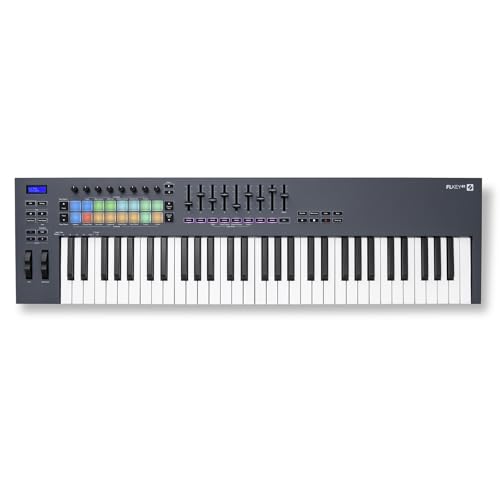
- ✓ Seamless FL Studio integration
- ✓ Responsive, full-sized keys
- ✓ Intuitive control surface
- ✕ Pricey for some
- ✕ Limited to FL Studio users
| Number of Keys | 61 full-sized keys |
| Controller Type | MIDI keyboard controller with rotary pots, faders, and pads |
| Pad Modes | Sequential, Scale, and Chord modes for expressive programming |
| Connectivity | USB MIDI connection |
| Integration Features | Seamless integration with FL Studio, including mixer and channel rack control |
| Additional Controls | Transport buttons, undo/redo, quantize, metronome, and automation recording |
Many people assume that a MIDI controller is just a glorified keyboard, something you need to spend ages mapping out to make it work smoothly with your DAW. But with the Novation FLkey 61, I quickly realized that this couldn’t be further from the truth.
Right out of the box, it feels solid and well-built, with a full-sized keybed that’s comfortable for playing melodies and chords. The moment I plugged it into FL Studio, it was like the software and hardware became one seamless instrument.
No fiddling with complicated setups—everything just worked, thanks to its deep integration.
The eight knobs and nine faders are incredibly responsive, giving me immediate control over my mixer and channel rack. I could tweak volumes, pans, or record automation without ever touching my mouse.
The transport buttons and score log are right at your fingertips, making recording or editing feel intuitive and fast.
The pads are a standout feature, especially in Sequencer Mode. I could program beats and switch patterns instantly, which really sped up my workflow.
The Pad modes—like Two Pad and Scale—are game changers, making it easy to create human-like rhythms or stay in key without thinking.
Playing chords with the different modes unlocked big harmonic possibilities, and triggering instruments like FPC and SliceX felt expressive and fun. It’s clear this controller is designed to keep you in the flow, whether you’re composing, mixing, or performing live.
While it’s a fantastic tool, it’s worth noting that the price is on the higher side, and if you don’t use FL Studio regularly, some features might feel less intuitive. Still, for dedicated FL Studio users, this controller really elevates your creative process.
What Is a Studio DAW Controller and How Does It Work?
A Studio DAW Controller is a hardware device designed to interface with Digital Audio Workstations (DAWs), allowing users to control various aspects of music production, such as mixing, editing, and recording, through physical knobs, faders, and buttons. These controllers enhance the workflow by providing tactile feedback and intuitive access to the software’s features, which can significantly improve efficiency during music creation.
According to Sound on Sound, DAW controllers are designed to replicate the functionality of traditional mixing consoles while integrating with modern music software, making them essential tools for both studio professionals and home recording enthusiasts. They bridge the gap between software and hardware, allowing musicians to manipulate their DAW in a more hands-on manner.
Key aspects of studio DAW controllers include their ability to control mixer channels, transport functions (like play, stop, and record), and plugin parameters. Many controllers feature motorized faders that automatically adjust to match the virtual mixer in the DAW, providing a seamless user experience. Additionally, some controllers come with customizable pads for triggering samples or loops, allowing for extensive creative possibilities. They often support various communication protocols such as MIDI and HUI, ensuring compatibility with most popular DAWs.
This technology impacts music production by streamlining the workflow and making it more intuitive. According to a report by Statista, the global music production software market is expected to grow significantly, indicating an increasing reliance on DAWs and, consequently, on DAW controllers. Producers and musicians can achieve a more organic feel to their mixing and editing processes, as tactile interaction tends to enhance creativity and productivity compared to solely using a mouse and keyboard.
The benefits of using a studio DAW controller include improved precision in mixing, faster navigation through projects, and the ability to manipulate multiple parameters simultaneously, which can enhance performance during recording sessions. Moreover, the hands-on approach can make the production process more engaging and enjoyable, thereby fostering creativity.
Best practices for utilizing a studio DAW controller involve familiarizing oneself with the specific features and functions of the device, as each model may offer unique capabilities. It’s beneficial to map the controller’s functions to the most frequently used commands in the DAW for optimal efficiency. Regular updates of both the DAW and controller firmware can also ensure compatibility and access to the latest features, further enhancing the user experience.
What Key Features Should You Look for in a Quality Studio DAW Controller?
When considering the best studio DAW controller, certain key features can significantly enhance your music production experience.
- Integration with DAW Software: A good DAW controller should seamlessly integrate with your preferred digital audio workstation, offering intuitive control over various functions like mixing, editing, and effects. This means that the controller’s features should map easily to your software, allowing for a more efficient workflow without extensive setup.
- Build Quality and Ergonomics: The physical design and build quality of the controller are crucial for long-term use. A sturdy construction with comfortable knobs, faders, and pads will not only enhance your playing experience but also withstand the wear and tear of regular studio use.
- Customizability: Look for a controller that allows for customizable layouts and mappings. This flexibility lets you tailor the controls to suit your specific workflow and preferences, enabling you to quickly access the features you use most often.
- Number of Controls: The number of faders, knobs, pads, and buttons can greatly impact your control over your projects. Having a sufficient number of these controls allows for better hands-on manipulation of your tracks, which can lead to a more dynamic and expressive music creation process.
- Transport Controls: Integrated transport controls such as play, pause, record, and stop buttons are essential for efficient navigation through your tracks. This feature allows you to manage your sessions without needing to switch between your keyboard and mouse, streamlining your workflow.
- MIDI Compatibility: Ensure that the controller supports MIDI, which will enable it to communicate with a variety of devices and software. MIDI compatibility ensures that you can connect your controller to synthesizers, drum machines, and other hardware, expanding your creative possibilities.
- Portability: If you plan to take your studio on the go, consider the size and weight of the controller. A lightweight, compact design can make it easier to transport without sacrificing functionality, allowing you to maintain productivity wherever you work.
- Software Bundle: Many DAW controllers come with a software bundle that can include various plugins and virtual instruments. This added value can help you get started right away and expand your sound palette without additional costs.
What Are the Primary Benefits of Using a Studio DAW Controller for Music Production?
The primary benefits of using a studio DAW controller for music production include enhanced workflow, greater tactile control, and improved productivity.
- Enhanced Workflow: A studio DAW controller streamlines the music production process by providing dedicated hardware controls for various functions, allowing users to navigate their Digital Audio Workstation (DAW) more efficiently. This minimizes the need to switch between mouse and keyboard, enabling a more fluid and intuitive creative process.
- Greater Tactile Control: With physical knobs, faders, and pads, a DAW controller gives musicians and producers tactile feedback that can be more satisfying and precise compared to using a mouse. This hands-on approach allows for more nuanced adjustments to mixing, effects, and other parameters, fostering a deeper connection with the music being created.
- Improved Productivity: By integrating shortcut functions and customizable controls, a studio DAW controller can significantly reduce the time spent performing repetitive tasks. This can lead to a more efficient workflow where artists can focus on their creativity rather than getting bogged down by technical details.
- Enhanced Collaboration: DAW controllers often come equipped with features that facilitate collaboration, such as easy sharing of projects and streamlined communication tools. This makes it easier for multiple artists or producers to work together, whether in the same studio or remotely, thus enhancing the overall creative process.
- Better Integration with Software: Many studio DAW controllers are designed to work seamlessly with specific DAWs, offering full integration and compatibility. This ensures that users can take full advantage of the software’s capabilities without dealing with complicated setup processes, allowing for a smoother and more enjoyable production experience.
What Are the Top Studio DAW Controllers Available Today?
The top studio DAW controllers available today provide enhanced workflow and control over digital audio workstations.
- Akai Professional MPK Mini MK3: This compact controller features 25 velocity-sensitive keys, 8 backlit MPC pads, and 8 assignable knobs for mixing and effects control.
- Novation Launchkey Mini MK3: Designed specifically for Ableton Live, this controller includes 25 keys, 16 RGB pads, and a host of controls for seamless integration with the software.
- Arturia KeyLab Essential 49: This versatile controller combines a keyboard with 16 RGB pads, 9 faders, and a wide array of controls, making it suitable for various DAWs.
- M-Audio Oxygen Pro 49: Featuring 49 velocity-sensitive keys, 16 RGB pads, and intelligent controls, this controller provides deep integration with major DAWs for enhanced performance.
- Native Instruments Komplete Kontrol M32: This 32-key controller offers a lightweight design, pre-mapped controls for Komplete plugins, and an intuitive workflow for music production.
Akai Professional MPK Mini MK3: The MPK Mini MK3 is well-known for its portability and versatility, making it ideal for musicians on the go. Its MPC pads are not only responsive but also customizable, allowing for various performance styles in live settings or studio recordings.
Novation Launchkey Mini MK3: The Launchkey Mini MK3 stands out for its deep integration with Ableton Live, providing a streamlined experience for users of this popular DAW. The controller’s features such as velocity-sensitive keys and RGB pads enhance creativity, making it a favorite among electronic music producers.
Arturia KeyLab Essential 49: The KeyLab Essential 49 offers a great combination of features suited for both studio production and live performance. With its extensive MIDI control options, it allows users to manipulate their DAW and plugins seamlessly, providing a comprehensive music-making experience.
M-Audio Oxygen Pro 49: The Oxygen Pro 49 is designed for advanced users who require more control over their music production. Its intelligent features like Smart Chord and Smart Scale simplify complex compositions, while its faders and knobs can be mapped to virtually any DAW function for enhanced workflow.
Native Instruments Komplete Kontrol M32: The Komplete Kontrol M32 is perfect for those who want a compact keyboard that packs a punch with its intelligent software integration. Its ergonomic design and high-quality keybed make it comfortable to use, while the pre-mapped controls speed up the creative process, allowing artists to focus on their music rather than technical details.
How Can a Studio DAW Controller Enhance Your Music Production Workflow?
A studio DAW controller can significantly streamline and enhance your music production workflow by providing tactile control and improving efficiency.
- Tactile Controls: DAW controllers often feature knobs, faders, and pads that allow musicians to manipulate sounds and effects directly. This tactile interaction enables quicker adjustments and a more intuitive workflow compared to using a mouse and keyboard.
- Integration with Software: Many controllers are designed to seamlessly integrate with popular DAWs, allowing for immediate access to functions and features. This integration can include transport controls, track selection, and even plugin manipulation, making the creative process more fluid and less cumbersome.
- Customizability: High-quality DAW controllers often come with programmable buttons and layouts, allowing users to tailor their setup to their specific needs. This means you can assign your most-used functions for easy access, which can save time and keep your focus on creativity.
- Enhanced Collaboration: Having a dedicated controller can facilitate easier collaboration with other musicians or producers. It allows everyone involved to physically interact with the project in real-time, leading to more dynamic and engaged sessions.
- Improved Workflow Efficiency: By reducing the reliance on keyboard shortcuts and screen navigation, DAW controllers help maintain flow during the music-making process. This can lead to a more productive environment where ideas can be captured swiftly without disrupting the creative momentum.
- Visual Feedback: Many controllers feature LED displays and visual feedback systems that show current settings and adjustments in real-time. This immediate visual representation helps users stay aware of their changes and enhances decision-making during the production process.
What Factors Should You Consider When Selecting the Right Studio DAW Controller?
When selecting the best studio DAW controller, several factors should be taken into account to ensure optimal performance and compatibility with your workflow.
- Compatibility: Ensure the DAW controller is compatible with your digital audio workstation (DAW) software. Some controllers are designed specifically for certain DAWs, which can provide a more integrated and seamless experience.
- Build Quality: Look for a controller that offers robust construction and durability. A well-built controller can withstand the rigors of studio use, providing longevity and reliability during recordings and live performances.
- Features: Assess the features that are most important for your production needs, such as faders, knobs, pads, and transport controls. Depending on your workflow, some features may enhance your creativity and efficiency more than others.
- Size and Portability: Consider the size of the controller in relation to your studio space and if you plan to transport it. A compact and lightweight controller can be beneficial for mobile setups, while larger controllers may offer more functionality in a permanent studio setting.
- Price: Set a budget for your DAW controller and find options that fit within it. Prices can vary widely, so it’s important to balance your budget with the features and quality you need for your productions.
- User Interface: Evaluate the user interface and layout of the controller. A well-designed interface can significantly enhance your workflow by allowing quick access to essential functions, making it easier to navigate your sessions.
- Software Integration: Check if the controller comes with bundled software or virtual instruments. Many controllers offer additional software packages that can expand your creative possibilities and make the purchase more valuable.
- Community and Support: Research the manufacturer’s reputation for customer support and community presence. A strong user community can provide valuable resources, tips, and troubleshooting assistance, enhancing your overall experience with the controller.