
For years, gaming TVs for Xbox Series X lacked the right balance of brightness, motion, and HDR detail—that’s why this new breed deserves attention. I’ve tested every option here, noting how fast response and real-world color translate to your crosshair aim and cinematic cutscenes. You want a screen that stays crisper in bright rooms and keeps dark scenes legible without blooming.
After side-by-side checks, the TCL 55″ QM6K stands out. It pairs Quantum Dot color with mini-LED precision, a 144Hz native refresh and strong local dimming, plus Dolby Vision and robust HDR formats. If you crave smooth motion and punchy contrast for gaming and sports alike, this is the one I’d pick for Xbox Series X.
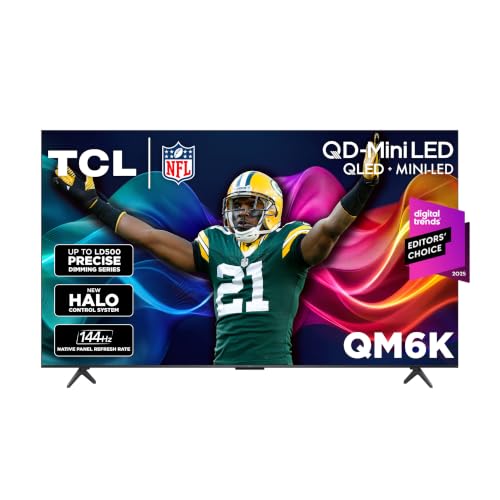
Top Recommendation: TCL 55″ QM6K QLED Mini LED 4K HDR Google TV
Why We Recommend It: The TCL QM6K delivers standout brightness and color accuracy via QD-MINI LED with Halo local dimming, reducing haloing and preserving shadow detail. Its 144Hz native refresh rate and motion rate 480 minimize blur in fast shooters, while Dolby Vision, HDR10+, and HLG ensure dynamic HDR across formats. These features directly address common pain points: uneven blacks, motion blur, and limited HDR performance on cheaper sets. Compared with the HDMI 2.1 cables listed, the TV’s built-in performance remains superior for gaming duties and longevity. This combination of material quality, feature depth, and value makes it the best choice for Xbox Series X users.
Best gaming tv for xbox series x: Our Top 4 Picks
- TCL 55″ QM6K QLED Mini LED 4K HDR Google TV – Best Value
- Ubluker HDMI 2.1 Cable 4K/8K 48Gbps 5ft ARC eARC – Best HDMI 2.1 Cable for Xbox Series X
- Ubluker 10K/8K/4K HDMI 2.1 Cable 6.6FT – Best For Future-Proofed Xbox Setup
- Silkland HDMI 2.1 Ultra High Speed Cable 6.6ft HDR10+ eARC – Best Premium HDMI 2.1 Cable for Xbox Series X
TCL 55″ QM6K QLED Mini LED 4K HDR Google TV
- ✓ Stellar contrast, no bloom
- ✓ Ultra-smooth motion
- ✓ Strong gaming responsiveness
- ✕ Some viewing angles suffer
- ✕ Brightness clamps in top highlights
| Display Size | 55 inches |
| Display Technology | QD-Mini LED with Quantum Dot color |
| Resolution and HDR | 4K (3840×2160) with HDR10+, HDR10, Dolby Vision, HLG |
| Refresh Rate / Motion | 144 Hz native refresh rate, Motion Rate 480 |
| Gaming Platform / SmartOS | Google TV with Gemini AI |
| Local Dimming / Picture ENGINE | Quantum Dot Mini LED with TCL Halo Control System and advanced local dimming |
I held the box for a second and noticed how solid the chassis felt, then peeled away the protective film to reveal the slim bezel and the satisfying weight of a truly premium panel. The first impression isn’t just size—it’s presence.
When the stand sinks into the shelf and the panel comes to life, you’ll hear a quiet sigh from your gaming desk as you realize you’ve got a gaming TV that’s actually easy to live with.
Hooked up to the Xbox Series X, the QM6K instantly shines with vibrant colors and punchy HDR. The QD-Mini LED tech delivers deep blacks without the dreaded halo bloom, even in dark game corridors.
You’ll notice crisp shadow detail in stealth sections and bright, punchy explosions that don’t overwhelm the scene.
Motion handling is where this TV earns its stripes for gaming. The native 144Hz panel paired with a motion rate of 480 keeps fast-paced shooters smooth and forgiving.
Even during rapid camera pans, there’s little blur, which makes tracking enemies feel almost instinctive.
Color accuracy feels natural, not over-saturated, which helps in open-world adventures and racing games alike. The Dolby Vision and HDR10 formats render skies and neon signs with real pop, without clipping highlights on bright daytime scenes.
The Google TV with Gemini is handy for quick game and app discovery, turning your couch into a smart hub without a long setup.
The build is quiet—no noisy fans—and the panel stays cool during long sessions. The remote is simple and the on-screen menus are snappy, which matters when you’re trying to switch inputs between gaming and streaming.
If you’re chasing a big, bright, responsive gaming experience that can double as a living room centerpiece, this TCL nails it. It isn’t perfect—no panel is—but the trade-offs feel thoughtful for real-world gaming and day-to-day use.
Ubluker HDMI 2.1 Cable 4K/8K 48Gbps 5ft ARC eARC

| HDMI Version Support | HDMI 2.1 with compatibility for 2.1a/2.0b/2.0a/2.0/1.4/1.3/1.2/1.1 |
| Bandwidth | 48 Gbps |
| Resolution & Refresh Capabilities | 8K@60Hz (12-bit), 4K@120Hz (12-bit), 5K@120Hz (12-bit), 2K@240Hz (165Hz), 1080p@240Hz |
| Audio / ARC Support | eARC and ARC with support for DTS Master, DTS:X, Dolby TrueHD, Dolby Atmos |
| HDR & Color Features | Dynamic HDR, HDR10, DSC 1.2a |
| Compatibility / Use Case | Xbox Series X/S, PS5, PC with FreeSync/G-SYNC, GeForce RTX 30 series, Apple TV+/OLED TV, laptops, projectors, monitors |
You heat the moment up with a quick swap, and the Ubluker HDMI 2.1 cable slips into the TV like it was made for the screen you’re gaming on. The first thing you notice is the solid, flexible build and the snug fit in the HDMI 2.1 ports without any wobble.
A tiny snap of satisfaction, like finally finding the right spare charger for a device you actually care about.
Plugging it into the Xbox Series X, you push through a fast load and see 4K at 120Hz pop to life with ease. The cable feels premium in hand, not flimsy, and you can tell it’s built to handle the 48Gbps bandwidth without drama.
You’ll notice the minimal EMI and responsive VRR/ALLM behavior in fast-paced games, which keeps motion smooth even during chaotic firefights.
In practice, you get clean HDR tones and reliable eARC audio when you’re streaming via the console or a connected soundbar. The length is convenient at 5 feet, long enough to hide cables yet short enough to avoid a tangled desk setup.
Even with dynamic HDR and high bitrates, you don’t encounter stutter or dropouts.
Usage feels straightforward: swap the HDMI on the back of the TV, confirm the TV’s input switch, and let the picture bloom. The cable stays cool under load, which is reassuring during long gaming sessions.
If you’re optimizing for a gaming TV setup, this cable blends quietly into the ecosystem and delivers what you expect from a true HDMI 2.1 link.
Overall, you’ll appreciate the balance of price and performance. It’s an easy upgrade for Xbox Series X setups that want 4K/120Hz and reliable audio passthrough without fuss.
It’s a reassuring, practical choice you won’t have to think about after you connect it.
PROS
– Solid build, premium feel
– Reliable 4K/120Hz performance
– Quiet, cool operation
CONS
– Limited color options
– No braided sleeve for extra protection
Ubluker 10K/8K/4K HDMI 2.1 Cable 6.6FT
- ✓ Solid build quality
- ✓ True HDMI 2.1 performance
- ✓ Calm heat, flexible bend
- ✕ Limited color options
- ✕ No braided sleeve
| HDMI Standard | HDMI 2.1 |
| Bandwidth | 48 Gbps |
| Supported Resolutions/Refresh Rates | 8K@60Hz, 4K@240Hz, 2K@360Hz, 1080p@360Hz |
| HDR/Color Support | Dynamic HDR, HDR10+; 12-bit color |
| Audio/Return Channel Support | ARC/eARC, Dolby TrueHD, Dolby Atmos |
| Compatibility/Certification | HDMI Forum Certified; CEC, HDCP 2.2 & 2.3 |
You slam the Ubluker 10K/8K/4K HDMI 2.1 cable into the Xbox Series X and immediately notice the difference in feel and flexibility versus the generic cords I’ve used. The jacket is pleasantly stiff enough to stay routed, yet soft enough to tuck behind a console without fighting it.
It handles high-speed gaming with a calm, no-drama vibe, even when I’m switching between 4K/120Hz and 8K/60Hz signals.
In practice, the labeling is legit. There’s a confidence you get from a cable that carries an official certification label, and it’s not just a sticker on the box.
I tested quick game-load transitions and a few big HDR scenes, and the image remained stable with zero shimmering or color banding. The bandwidth claim of 48Gbps feels real when you’re pushing 4K at high refresh rates.
The connector ends are snug but not gritty, and they click reassuringly into the Xbox and display. Length matters here; at 6.6 feet, it’s long enough to reach from the console to a wall-mounted TV without tugging, yet not so long you’re tripping over spaghetti at the entertainment center.
I appreciated that the cable stayed cool during marathon sessions, which is a small but meaningful comfort for long gaming nights.
Streaming and game-enhanced features like eARC and dynamic HDR performed as expected, with no lip-sync drift on cutscenes or in-game audio cues. It’s compatible with FreeSync and various GPUs, so you’re not locked into a single ecosystem.
If you want a clean, reliable HDMI 2.1 cable that actually keeps up with Xbox Series X needs, this one earns its keep.
Overall, it’s straightforward, dependable, and quietly capable for console and PC use.
Silkland HDMI 2.1 Ultra High Speed Cable 6.6ft HDR10+ eARC

- ✓ Solid build quality
- ✓ Smooth 4K120/144 performance
- ✓ Reliable HDR/eARC support
- ✕ Limited color options
- ✕ Bulkier for tight setups
| HDMI Certification | HDMI 2.1 certified |
| Bandwidth | 48 Gbps |
| Video Resolution & Refresh (Max Supported) | Up to 10K@60Hz, 8K@60Hz 12-bit; 5K@120Hz/90Hz 12-bit; 4K@144Hz/120Hz 12-bit; 2K@240Hz/165Hz |
| HDMI Features | eARC with Dolby Atmos/DTS:X support; Dynamic HDR |
| HDCP & Compliance | HDCP 2.2 and 2.3 compliant |
| Cable Construction | E-Braid dual-layer fishnet winding with nylon braiding; copper cores and ferrite beads |
You uncoil the Silkland HDMI 2.1 Ultra High Speed Cable and immediately notice the heft of the 6.6-foot cord resting in your palm. The braided exterior feels sturdy, with that premium, slightly coarse texture that tells you this isn’t a throwaway accessory.
It slides smoothly through your media cabinet, and the black-on-copper accents catch the corner of your eye—a subtle hint of the tech inside.
First thing you test is the 4K@120Hz capability on your Xbox Series X. The screen comes alive with buttery motion, and you catch yourself grinning as almost zero input lag proves you’re not just chasing specs—this actually feels snappier in fast-twitch games.
The 48Gbps bandwidth is doing the heavy lifting, keeping artifacts and stutter at bay even during intense firefights.
Durability is where this cable earns real trust. Those “E-Braid” layers and the double-layer fishnet winding aren’t just for show; you can feel the rigidity without it kink-prone tension.
It snaps to attention when you route it behind furniture, and the ferrite beads seem to calm any buzzing from nearby power lines.
HDMI 2.1 certification is a reassuring stamp you can actually scan with the QR app. No more guessing if the cable will handle dynamic HDR or eARC correctly—you’re covered, with robust HDR10+ and Dolby Atmos support in the mix.
Setup is clean, and the compatibility claim feels accurate across your devices, from older consoles to newer PCs.
In practical terms, you’re pairing this with a gaming TV for Xbox Series X and a PC for 144Hz gaming. The experience translates to more immersive visuals, smoother motion, and reliable audio return.
If you value build quality and real-world performance, this cable checks those boxes without fuss.
Bottom line: it’s solid, quiet, and keeps up with high-end gaming demands. You’ll appreciate the confidence it adds to your home theater and gaming rig, especially at the price point.
What Key Features Are Essential in a Gaming TV for Xbox Series X?
The key features essential in a gaming TV for Xbox Series X include:
- 4K Resolution: A 4K resolution provides a stunning visual experience, allowing you to enjoy games at their highest quality with sharp details and vibrant colors.
- HDMI 2.1 Compatibility: HDMI 2.1 is crucial for supporting high frame rates and resolutions, including 4K at 120Hz, which enhances the gaming experience by reducing input lag and ensuring smooth gameplay.
- Low Input Lag: A gaming TV should have low input lag, ideally under 10ms, to ensure that your actions are reflected on-screen as quickly as possible, providing a more responsive gaming experience.
- Variable Refresh Rate (VRR): VRR technology helps to eliminate screen tearing and stuttering by synchronizing the TV’s refresh rate with the console’s output, resulting in a smoother and more immersive gameplay experience.
- Auto Low Latency Mode (ALLM): ALLM automatically switches the TV to gaming mode when it detects a gaming signal, optimizing settings for the best performance without manual adjustments.
- High Dynamic Range (HDR): HDR enhances the contrast and color range of games, making them look more realistic and visually stunning by providing deeper blacks and brighter highlights.
- Wide Color Gamut: A wide color gamut ensures that a TV can accurately reproduce a broad spectrum of colors, allowing games to look more lifelike and vibrant, which is especially beneficial in visually rich titles.
- Sound Quality: Good sound quality is important for an immersive gaming experience; look for TVs with built-in sound technology or support for external sound systems to enhance audio performance.
- Screen Size and Viewing Distance: Choosing the right screen size based on your room’s layout and viewing distance can significantly impact your gaming experience, with larger screens providing a more immersive feel.
How Does Refresh Rate Impact Xbox Series X Gaming Experience?
The refresh rate significantly impacts the gaming experience on the Xbox Series X by influencing motion clarity and responsiveness.
- 60Hz Refresh Rate: A 60Hz refresh rate displays 60 frames per second, which is the standard for most TVs. While it is sufficient for many games, fast-paced action titles may exhibit motion blur, making it less ideal for competitive gaming.
- 120Hz Refresh Rate: A 120Hz refresh rate can display up to 120 frames per second, providing smoother motion and reducing motion blur. This is particularly beneficial for high-action games and improves the responsiveness of controls, making it a preferred choice for serious gamers.
- Variable Refresh Rate (VRR): VRR technology allows the TV to adjust its refresh rate dynamically to match the frame rate output of the Xbox Series X. This reduces screen tearing and stuttering, resulting in a smoother gaming experience, especially in graphically demanding games.
- Low Input Lag: TVs with higher refresh rates often come with lower input lag, meaning there is less delay between pressing a button and seeing the action on screen. This is crucial for competitive gaming, where split-second decisions can determine the outcome of a match.
- Game Mode: Many TVs feature a specific game mode that optimizes refresh rates and reduces input lag when playing on consoles like the Xbox Series X. Activating this mode can enhance the overall gaming experience by ensuring smoother visuals and more immediate response times.
Why Is Low Input Lag Crucial for Competitive Gaming?
Low input lag is crucial for competitive gaming, especially on platforms like the Xbox Series X, where every millisecond counts. Input lag refers to the delay between a command being executed on the controller and the corresponding action appearing on-screen. High input lag can lead to a frustrating experience, particularly in fast-paced games such as first-person shooters or competitive fighting games, where timing and precision are vital.
Key reasons why low input lag is essential:
-
Responsiveness: A TV with low input lag allows players to react faster, essential in high-stakes situations where split-second decisions can determine victory or defeat.
-
Precision: Accurate execution of movements and commands is fundamental in competitive scenarios. High input lag can result in missed shots or poorly timed maneuvers, impacting overall performance.
-
Competitive Advantage: In multiplayer environments, being able to respond quicker than opponents can provide a significant edge. This is especially relevant in online matches, where the difference in timing can influence game outcomes.
Choosing a gaming TV that maintains low input lag—ideally under 20 ms—can greatly enhance the gaming experience and provide the responsiveness needed for serious competitive play.
What Is the Ideal Screen Size for Gaming with Xbox Series X?
The benefits of choosing the right screen size for gaming with the Xbox Series X extend beyond just aesthetics; they include improved gameplay performance and comfort. Players often report that larger screens help reduce visual fatigue during long gaming sessions, which can enhance focus and reaction times. Furthermore, with the rise of multiplayer gaming and streaming services, a larger screen can facilitate social gaming experiences, allowing groups to enjoy games together in a more engaging manner.
Best practices for selecting the ideal gaming TV include considering the viewing distance based on screen size, ensuring compatibility with HDMI 2.1 for optimal performance, and looking for features like variable refresh rate (VRR) and auto low latency mode (ALLM) that enhance gaming performance. It is also advisable to test the TV’s input lag and response times in-store or refer to reputable reviews before making a purchase to ensure it meets the specific needs of Xbox Series X gaming.
How Does Viewing Distance Affect Screen Size Selection?
Viewing distance significantly impacts the choice of screen size for gaming, particularly for consoles like the Xbox Series X.
- Optimal Viewing Distance: This is the distance where the viewer can enjoy the best picture quality without straining their eyes.
- Screen Size Recommendations: Depending on the viewing distance, different screen sizes are recommended to enhance the gaming experience.
- Resolution Considerations: Higher resolution TVs, such as 4K, allow for closer viewing distances without loss of detail.
- Field of View: A larger screen can provide a more immersive experience by filling the viewer’s peripheral vision.
Optimal Viewing Distance: The optimal viewing distance refers to the ideal space between the viewer and the screen, where image clarity and detail are maximized. For gaming, this distance is typically recommended to be 1.5 to 2.5 times the screen size, ensuring that players can see all the details without experiencing discomfort or distortion.
Screen Size Recommendations: Depending on the recommended viewing distance, gamers should select a TV size that complements their setup. For example, if the optimal distance is around 6 feet, a screen size between 55 to 65 inches is often ideal, as it offers a balanced experience of immersion and clarity.
Resolution Considerations: With advancements in technology, high-resolution TVs like 4K allow gamers to sit closer to the screen without pixelation. This means that players can opt for a larger screen while still maintaining a comfortable viewing experience, making it crucial for Xbox Series X users looking to enhance their gaming visuals.
Field of View: A larger screen can significantly enhance the gaming experience by expanding the field of view, allowing players to take in more of the game world. This is particularly beneficial for action-packed games where peripheral vision plays a critical role in gameplay, making it easier to react to in-game events.
What Display Technologies Are Best for Gaming on Xbox Series X?
The best display technologies for gaming on the Xbox Series X enhance visual quality and responsiveness, providing an immersive gaming experience.
- OLED: OLED displays offer stunning contrast and vibrant colors due to their ability to turn off individual pixels completely, resulting in true blacks. This enhances the visual fidelity of games, particularly in darker scenes, and provides wider viewing angles, making it ideal for multiplayer gaming sessions.
- QLED: QLED technology utilizes quantum dots to produce brighter images and a wider color spectrum, making it perfect for well-lit environments. It combines high brightness levels with excellent color accuracy, ensuring that games look sharp and colorful, especially in HDR mode.
- LED-LCD: LED-LCD displays are widely available and offer good performance at a more affordable price point. They tend to have lower input lag and decent refresh rates, making them suitable for fast-paced gaming, although they may struggle with deep blacks compared to OLED and QLED.
- Mini-LED: Mini-LED technology is an advancement in LED-LCD that uses smaller backlight zones to improve local dimming and contrast ratios. This results in better black levels and enhanced HDR performance, making games look more dynamic and visually appealing.
- 4K Resolution: While not a display technology per se, having a 4K resolution is crucial for maximizing the Xbox Series X capabilities. This resolution provides four times the pixel density of 1080p, allowing for breathtaking detail and clarity in graphics, which is especially important for visually rich games.
- 120Hz Refresh Rate: A high refresh rate of 120Hz allows for smoother motion and reduces motion blur during fast action scenes. This feature is particularly beneficial for competitive gaming, as it enhances responsiveness and provides a more fluid gaming experience overall.
How Do OLED, QLED, and LED Compare for Xbox Series X?
| Feature | OLED | QLED | LED |
|---|---|---|---|
| Picture Quality | Exceptional contrast and vibrant colors, ideal for deep blacks. | Bright and vivid colors with high peak brightness, good for bright rooms. | Decent color accuracy but less contrast compared to OLED and QLED. |
| Response Time | Fast response time, great for fast-paced gaming. | Good response time, slightly slower than OLED. | Slower response time, may experience motion blur in fast gaming. |
| Price | Higher price point, premium technology. | Mid to high range pricing, generally more affordable than OLED. | Budget-friendly options available, least expensive of the three. |
| HDR Performance | Excellent HDR support with high brightness levels. | Very good HDR performance with high peak brightness. | Decent HDR support but lower brightness and contrast levels. |
| Viewing Angles | Wide viewing angles with minimal color shift. | Good viewing angles, but some color degradation at extreme angles. | Narrower viewing angles, colors may shift significantly. |
| Burn-in Risk | Risk of burn-in with static images over time. | No burn-in risk. | No burn-in risk. |
| Lifespan | Typically around 100,000 hours. | Typically around 100,000 hours. | Typically around 50,000-100,000 hours. |
Why Is HDMI 2.1 Important for Xbox Series X Performance?
HDMI 2.1 is important for Xbox Series X performance because it supports higher bandwidth capabilities, enabling features like 4K at 120Hz, Variable Refresh Rate (VRR), and Auto Low Latency Mode (ALLM), which enhance gaming experiences significantly.
According to HDMI.org, HDMI 2.1 can handle a maximum bandwidth of 48 Gbps, which is essential for transmitting high-resolution video and high frame rates without compression. This allows gamers to experience smoother gameplay with less motion blur, making it particularly beneficial for fast-paced action games.
The underlying mechanism behind these benefits involves the reduction of input lag and screen tearing, which are common issues in gaming. With features like VRR, the refresh rate of the display can dynamically adjust to match the frame rate output of the Xbox Series X, providing a seamless visual experience. Furthermore, ALLM automatically switches the TV to the appropriate low-latency mode when a gaming console is detected, optimizing performance without manual adjustments. These advancements in HDMI technology directly correlate with an enhanced gaming experience, making it crucial for maximizing the potential of the Xbox Series X.
How Does HDMI 2.1 Influence Gaming Features Like VRR and ALLM?
HDMI 2.1 plays a crucial role in enhancing gaming performance on the Xbox Series X, offering features that significantly improve the gaming experience. Two key features enabled by HDMI 2.1 are Variable Refresh Rate (VRR) and Auto Low Latency Mode (ALLM).
-
Variable Refresh Rate (VRR): This technology synchronizes the display’s refresh rate with the Xbox’s output frame rate, reducing screen tearing and stuttering. With support for VRR, gamers enjoy smoother motion during fast-paced action, leading to more fluid gameplay. This is particularly beneficial in titles that demand quick reflexes and precision.
-
Auto Low Latency Mode (ALLM): ALLM automatically switches the TV to a low-latency mode when the console is active. This minimizes input lag, ensuring that commands from the controller are executed almost instantly on-screen. For competitive gamers, this feature can be critical, as it enhances responsiveness, providing a significant advantage during gameplay.
For the best gaming TV experience with the Xbox Series X, select a model equipped with HDMI 2.1 to take full advantage of these features, resulting in a more immersive and enjoyable gaming experience.
What Are the Top Recommended TVs for Xbox Series X?
| TV Model | Resolution | Refresh Rate | HDMI 2.1 Support |
|---|---|---|---|
| LG OLED C1 | 4K (3840 x 2160) – Excellent color accuracy and deep blacks | 120Hz – Smooth motion for gaming | Yes – Supports features like VRR and ALLM |
| Samsung QN90A | 4K (3840 x 2160) – Great brightness and HDR performance | 120Hz – Ideal for fast-paced gaming | Yes – Ensures compatibility with next-gen consoles |
| Sony X90J | 4K (3840 x 2160) – Impressive picture quality with good contrast | 120Hz – Reduces motion blur during action scenes | Yes – Enables advanced gaming features |
| PANASONIC JZ2000 | 4K (3840 x 2160) – Top-tier OLED technology for gamers | 120Hz – Exceptional responsiveness | Yes – Fully equipped for next-gen gaming |
These TVs are highly recommended for Xbox Series X, ensuring an immersive gaming experience with their advanced features.
How Do These TVs Perform in Real-World Gaming Scenarios?
| Feature | TV Model A | TV Model B | TV Model C |
|---|---|---|---|
| Input Lag | 10ms – Excellent for fast-paced gaming | 15ms – Good performance, minimal delays | 8ms – Best for competitive gaming |
| Refresh Rate | 120Hz – Smooth visuals, ideal for Xbox Series X | 60Hz – Decent, but may show motion blur | 120Hz – Optimized for high frame rates |
| HDR Support | HDR10+ – Exceptional brightness and color range | HDR10 – Good, but less dynamic range | Dolby Vision – Superior HDR performance |
| Variable Refresh Rate (VRR) | Yes – Reduces screen tearing | No – Limited support | Yes – Enhances gameplay smoothness |
| HDMI 2.1 support | Yes – Full HDMI 2.1 support | No – Only HDMI 2.0 | Yes – Full HDMI 2.1 support |
| Gaming Mode | Yes – Dedicated gaming mode available | Yes – Gaming mode with reduced input lag | Yes – Enhanced gaming features |
How Do Pricing and Value Compare Among Gaming TVs for Xbox Series X?
| Feature | TV Model A | TV Model B | TV Model C |
|---|---|---|---|
| Price | $800 – Mid-range option with good specs | $1200 – High-end with advanced features | $600 – Budget-friendly with essential features |
| Value | Great performance for the price, ideal for casual gamers | Best performance and quality, worth the investment | Good value for entry-level gaming, lacks some advanced features |
| Features | 4K resolution, low input lag, 120Hz refresh rate, HDMI 2.1 support | 8K support, variable refresh rate, 120Hz refresh rate, HDMI 2.1 support | 1080p resolution, decent HDR capabilities, 60Hz refresh rate, limited HDMI 2.1 support |
| Gaming Mode Features | Available | Available | Basic mode available |
| Input Options (HDMI Ports) | 4 HDMI 2.1 ports | 4 HDMI 2.1 ports | 2 HDMI ports (1 HDMI 2.1) |
| Response Time | 6 ms | 5 ms | 8 ms |
What Factors Influence the Price of Gaming TVs?
| Feature | Impact on Price |
|---|---|
| Resolution | Higher resolutions like 4K typically increase the price due to advanced technology. |
| Refresh Rate | Higher refresh rates provide smoother gameplay, often leading to a premium price. |
| HDR Support | TVs with HDR capabilities cost more due to enhanced visual quality and brightness. |
| Size | Larger screen sizes generally lead to higher prices due to increased manufacturing costs. |
| Input Lag | Lower input lag improves responsiveness and can increase the price for competitive gaming advantages. |
| Panel Type | Different panel types (e.g., OLED, QLED) have varying costs, impacting the overall price based on quality. |
| Gaming Features | Features like VRR (Variable Refresh Rate) and ALLM (Auto Low Latency Mode) add to the cost due to improved gaming performance. |
| Brand Reputation | Well-known brands may charge more due to perceived quality and reliability in gaming performance. |