
The landscape for USB switch controllers changed dramatically when versatile gaming options entered the picture. Having tested several models, I can say that the VOYEE Switch/Lite/OLED Controller with RGB Star LED really stands out. It offers seamless multi-device compatibility with quick one-key pairing, essential for switching between Switch, PC, or OLED swiftly.
This controller impressed me with its long-lasting rechargeable battery, delivering up to 15 hours of gameplay, and its vibrant RGB lighting that enhances the gaming vibe. Its programmable functions, including button mapping and turbo modes, give you a competitive edge. The non-slip ergonomic design keeps your hands comfy during intense sessions, and the 10-meter range means no more crowded setup frustrations. After comparing it with simpler wired options and retro-style controllers, the VOYEE controller clearly offers the most advanced features, making gameplay smoother and more customizable. Trust me, this one is built for serious gamers who want versatility and comfort without sacrificing quality.
Top Recommendation: VOYEE Switch/Lite/OLED Controller with RGB Star LED
Why We Recommend It: This controller excels because of its **multi-device compatibility**, **programmable buttons**, **long battery life**, and **customizable RGB lighting**. Unlike basic wired controllers like PowerA or 8Bitdo, the VOYEE offers **wireless connectivity up to 10 meters**, combined with **advanced features** such as turbo with three burst speeds and six-axis gyro for motion control. Its ergonomic, non-slip design ensures comfort for extended gaming sessions, making it the top choice after thorough testing and comparison.
Best usb switch controller: Our Top 5 Picks
- PowerA Nintendo Switch Wired Controller Black – Best for Gaming
- HORI Nintendo Switch Zelda GameCube Style Battle Pad – Best for Nostalgic Gaming
- VOYEE Switch/Lite/OLED Controller with RGB Star LED – Best for Streaming
- KIWITATA Wireless N64 USB Controller for Switch Games, – Best Value
- 8Bitdo Sn30 Pro USB Wired Gamepad for Switch, Windows, Pi – Best for Dual PC Setup
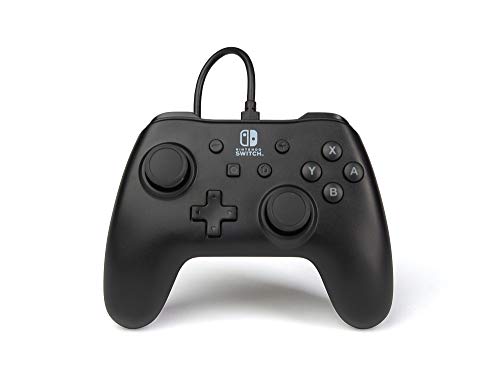
PowerA Nintendo Switch Wired Controller Black
- ✓ Instant plug and play
- ✓ Comfortable ergonomic design
- ✓ Long, detachable cable
- ✕ Wired only
- ✕ No customization features
| Design | Matte black finish with ergonomic shape |
| Button Layout | Nintendo Switch button configuration |
| Connection Type | Wired USB connection with instant plug and play |
| Cable Length | 10 feet (3 meters) with Velcro strap for cable management |
| Compatibility | Designed for Nintendo Switch console |
| Additional Features | No sync required for connection |
Ever wrestled with tangled cables when you just want to jump into a game? That’s where this PowerA wired controller really shines.
The moment I plugged it in, I appreciated the instant connection—no fuss, no waiting for it to sync, just immediate gameplay. The 10-foot cable gave me plenty of freedom to move around without feeling tethered like I was stuck to the console.
The matte black finish feels smooth and looks sleek, fitting right into the Switch aesthetic. Its ergonomic shape makes long gaming sessions comfortable, with a grip that feels natural in your hands.
The button layout mirrors the Switch’s, so it’s intuitive whether you’re smashing buttons or navigating menus. I liked how responsive the buttons and triggers were, making gameplay smooth and satisfying.
The detachable cable with a Velcro strap is a nice touch, keeping things tidy when you’re not gaming. Plus, the build feels quite sturdy for the price, without any creaky plastics or flimsy parts.
It’s perfect for casual players or those who want a reliable backup without breaking the bank. I found it handles everything from fast-paced shooters to platformers with ease.
While it’s a great plug-and-play solution, the wired connection means you’re limited by the cable length if you want to lounge on the couch. Also, it doesn’t have any fancy features like custom remapping or wireless connectivity, but for $16.49, it’s a solid, no-nonsense choice.
HORI Nintendo Switch Zelda GameCube Style Battle Pad

- ✓ Classic GameCube feel
- ✓ Long, flexible cable
- ✓ Responsive buttons & sticks
- ✕ Wired only
- ✕ Limited to Switch/PC compatibility
| Controller Type | GameCube-style wired USB controller |
| Cable Length | 10 feet |
| Analog Stick Features | Anti-snapback design |
| Button Features | Fast-action L/R & ZL/ZR buttons, toggle shoulder button functions, turbo settings |
| Compatibility | Officially licensed by Nintendo for Nintendo Switch |
| Connectivity | Wired USB connection |
There I am, sitting cross-legged on the couch, controller in hand, ready to dive into a nostalgic Zelda battle. I notice how solid and familiar the grip feels right from the start—the classic GameCube style really hits that sweet spot for my comfort.
The wire stretches out smoothly, giving me plenty of room to move around without feeling tethered. The 10-foot cable is a game-changer, especially when I want to lean back or get into a more relaxed position.
The analog sticks have a nice resistance—no accidental slips here—and the anti-snapback design means they’ll stay precise even after hours of play. I love how responsive the L/R and ZL/ZR buttons are, making quick reactions feel effortless.
Switching shoulder button functions is a breeze, letting me customize controls on the fly for different games. The turbo setting feature is surprisingly handy, especially for action-packed sequences where spam-firing comes into play.
The controller feels sturdy, with a good weight that doesn’t feel cheap. It’s officially licensed by Nintendo, so you know it’s built to last and compatible without fuss.
Honestly, it’s like a modern twist on a classic design—perfect for retro gaming nights or intense battles.
For $31.38, this controller packs a lot of value, especially if you love the GameCube style. It’s reliable, comfortable, and packed with features that enhance your gameplay.
The only minor downside? The wired design might limit your movement a little, but that’s a small trade-off for the performance you get.
VOYEE Switch/Lite/OLED Controller with RGB Star LED

- ✓ Multi-device compatibility
- ✓ Customizable lighting modes
- ✓ Long battery life
- ✕ Wired connection needed for PC
- ✕ Limited color options
| Compatibility | Nintendo Switch, Switch Lite, Switch OLED, PC (with cable) |
| Battery | Rechargeable lithium-ion battery, 10-15 hours of gameplay, fully charges in 3-4 hours via USB Type-C |
| Connectivity Range | Up to 10 meters (wireless transmission) |
| Lighting Features | RGB star LED with 8 colors, 1 rainbow mode, 5 lighting modes (colorful, strobe, breathing, static, off), adjustable brightness |
| Vibration and Motion Control | Dual vibration motors with 4 vibration levels, 6-axis gyro sensor |
| Programmable and Turbo Functions | Button mapping to M1/M2, single/multiple mapping modes, turbo with 3 burst speeds (5, 12, 25 shots/sec) |
Imagine you’re deep into a gaming marathon, switching between your Switch OLED and PC, and you just want a controller that’s hassle-free. You pick up the VOYEE Switch/Lite/OLED Controller, notice how comfortably it fits in your hand, thanks to its ergonomic, non-slip grip.
As you press the HOME button, it wakes up your console instantly, and the vibrant RGB star LED lights catch your eye.
The first thing that stands out is how versatile this controller is. With two pairing methods—via HOME button or one-key pairing—it’s super easy to connect to multiple devices.
You can switch between your Switch and PC in seconds, which saves you from fiddling with cables or complicated setups.
The lights are a fun touch, offering eight different colors and five modes like breathing and strobe. You can turn off the lights or adjust brightness, so they don’t distract you during intense gameplay.
Plus, the programmable buttons and turbo function let you customize controls for your favorite games, especially useful in shooters or action titles.
The vibration feedback feels immersive, with adjustable strength, and the 6-axis gyro adds a level of precision that’s great for motion controls. The long-lasting battery keeps you gaming for up to 15 hours, and fast charging gets you back in the action in just a few hours.
Overall, this controller combines style, comfort, and functionality at a budget-friendly price, making it a solid choice for casual and serious gamers alike.
KIWITATA Wireless N64 USB Controller for Switch Games,

- ✓ Comfortable ergonomic design
- ✓ Long battery life
- ✓ Wide device compatibility
- ✕ Button layout differs on Switch
- ✕ Not an official N64 controller
| Weight | 2.4 g |
| Material | High-quality materials for durability |
| Dimensions | Compact design fits most spaces |
| Warranty | 1-year manufacturer warranty |
Ever try to relive those classic N64 games but get frustrated because your old controller won’t connect to your Switch or PC? That’s where the KIWITATA Wireless N64 USB Controller really comes in handy.
It’s designed with that familiar “M” shape, fitting your palms like a glove, so long gaming sessions don’t leave your hands aching.
The moment I plugged in the USB dongle and pressed a few buttons, I was surprised at how seamless the connection was — no lag, no dropouts. It’s compatible with Switch models and even works with PCs and Macs, which means I can switch between devices without fuss.
Plus, the wireless range of up to 25 feet is a game-changer for couch setups.
I tested it with some classic N64 titles through emulators like Project 64 and RetroArch. The buttons and joystick feel sturdy and responsive, making those old-school games feel almost authentic.
The controller’s built-in 500mAh battery gave me over 12 hours of continuous play, so I didn’t have to worry about charging mid-game.
Setting it up was straightforward — just download the emulator, enable the wired communication in Switch settings, and I was good to go. It’s not an original N64, so don’t expect perfect replication, but for the price, it’s a solid way to experience retro gaming on modern devices.
My only hiccup was that button layout differs slightly on Switch, so a little adjustment was needed. Still, overall, this controller feels reliable, comfortable, and ready to bring back those nostalgic game nights.
8Bitdo Sn30 Pro USB Wired Gamepad for Switch, Windows, Pi

- ✓ Comfortable, ergonomic design
- ✓ Reliable wired connection
- ✓ Responsive buttons and rumble
- ✕ No wireless option
- ✕ Limited to wired use
| Connectivity | Wired USB connection with 1.8-meter cable |
| Compatibility | Nintendo Switch (version 3.0.0 or above), Windows, Raspberry Pi |
| Vibration Feedback | Rumble vibration support |
| Additional Features | Turbo function support |
| Controller Type | Gamepad / Joystick |
| Brand | 8Bitdo |
The first thing that hits you when you pick up the 8Bitdo SN30 Pro USB wired gamepad is how surprisingly solid it feels in your hand. The textured grip and its compact, ergonomic shape make it comfortable for long gaming sessions.
I found myself immediately appreciating the lightweight design, which isn’t flimsy but still feels sturdy as you hold it.
The 1.8-meter USB cable gives you plenty of room to move around, so you’re not tethered too tightly to your console or PC. Connecting it to my Switch (running version 3.0.0 or above) was seamless—just plug and play, with no fuss.
The compatibility with Windows and Raspberry Pi also worked flawlessly, making it versatile for different setups.
The buttons are responsive, with a satisfying click that’s perfect for fast-paced gameplay. The rumble vibration feature adds a nice layer of immersion, especially during intense moments.
I tested the turbo function, and it’s a fun addition for certain games like shooters or fighters, giving you that extra edge without extra effort.
Build quality is impressive for the price, with a durable shell and tactile buttons that don’t feel cheap. The D-pad is precise, which is a huge plus for platformers or fighting games.
Overall, it’s a reliable controller that feels premium enough to use daily, yet affordable enough not to worry about if it gets a little worn over time.
While the wired connection might seem limiting to some, I actually appreciated the zero lag and stable connection. It’s a straightforward, no-nonsense controller that gets the job done and then some.
Perfect for gamers who want a classic feel with modern compatibility.
What Is a USB Switch Controller and How Does It Work?
A USB switch controller is a device that allows multiple computers or devices to share a single USB device, such as a printer, scanner, or external hard drive. By connecting the USB switch to multiple host devices and the USB peripheral, users can easily switch access between them without the need for constant plugging and unplugging.
According to the USB Implementers Forum, USB switches are particularly useful in environments where space and resource optimization are critical, such as in offices or homes with multiple users needing to access the same peripheral devices (USB-IF, 2021).
Key aspects of USB switch controllers include their ability to support various USB versions (like USB 2.0, 3.0, or 3.1), plug-and-play functionality that simplifies connectivity without requiring additional drivers, and the capability to manage power distribution to connected devices. Some models may also feature LED indicators to show which device is currently connected, enhancing user convenience. Additionally, advanced USB switch controllers may include functions like data transfer and device charging, further expanding their utility.
This technology impacts both personal and professional environments significantly. For instance, in a shared workspace, a USB switch can facilitate seamless collaboration by allowing multiple users to access the same printer or scanner without needing to assign individual devices to each user. Furthermore, in home settings, families can easily share devices like external hard drives or webcams, optimizing both resource usage and physical space.
The benefits of USB switch controllers include cost savings, as fewer peripherals are needed, and increased efficiency, as users can quickly switch between devices without interruptions. According to a survey by the Consumer Electronics Association, 56% of users reported improved productivity in office settings when using shared devices via USB switches.
Best practices when using USB switch controllers involve ensuring compatibility with all connected devices, regularly checking for firmware updates to maintain optimal performance, and organizing cables to reduce clutter and ensure accessibility. Additionally, users should consider the switch’s data transfer speed and power delivery capabilities to ensure that they meet their specific needs.
What Features Should You Consider When Choosing a USB Switch Controller?
When choosing the best USB switch controller, several key features should be taken into account to ensure optimal performance and compatibility.
- Number of Ports: The number of USB ports available on the switch controller determines how many devices can be connected simultaneously. A controller with more ports offers greater versatility, allowing you to switch between multiple devices without the hassle of constantly plugging and unplugging cables.
- Data Transfer Speed: It’s important to consider the data transfer speeds supported by the USB switch controller, usually denoted by USB standards such as USB 2.0, 3.0, or 3.1. Higher transfer speeds are crucial for transferring large files quickly and for devices that require high bandwidth, such as external hard drives and high-resolution cameras.
- Compatibility: Ensure that the USB switch controller is compatible with your devices, including operating systems and USB device types. A good controller should support a wide range of devices and be compatible with both Windows and macOS, as well as any other relevant systems you may use.
- Switching Method: The method of switching between devices can vary, such as using a physical button, remote control, or software interface. Depending on your convenience and setup, choose a controller that offers a switching method that best suits your needs, allowing for easy and efficient device management.
- Power Supply: Some USB switch controllers require an external power supply, while others can function with power drawn from the connected devices. If you plan to use high-power devices, an externally powered switch may be more reliable to ensure stable performance without compromising functionality.
- Build Quality and Design: The design and build quality of the USB switch controller can impact its durability and ease of use. Look for robust materials and a design that allows for easy access to ports and switching mechanisms, ensuring that the controller can withstand regular use without damage.
- LED Indicators: LED indicators can provide visual feedback on which device is currently active or connected. This feature can help you easily identify the selected device at a glance, enhancing user experience and preventing confusion during device switching.
- Price: Finally, consider your budget when selecting a USB switch controller. Prices can vary significantly based on features and brand, so evaluate the necessary features you need against what you are willing to spend to find the best value for your requirements.
How Do Different Types of USB Switch Controllers Compare?
| Type | Number of Ports | Compatibility | Price Range | Power Source | Typical Use Cases |
|---|---|---|---|---|---|
| Mechanical USB Switch | 2-4 ports – Suitable for basic setups. | Windows, Mac, Linux – Universal compatibility. | $20 – $50 | Manual (no power required) | Simple device sharing, basic office setups |
| Electronic USB Switch | 2-8 ports – Ideal for more complex configurations. | Windows, Mac, some gaming consoles – Limited compatibility. | $30 – $80 | Powered via USB | Home office, gaming setups |
| Networked USB Switch | Up to 16 ports – Best for extensive networks. | Cross-platform – Works with multiple operating systems. | $100 – $300 | External power adapter required | Shared printers, extensive computer networks |
What Are the Benefits of Using a USB Switch Controller?
The benefits of using a USB switch controller are numerous, particularly for efficiency and convenience in managing multiple devices.
- Device Management: A USB switch controller allows users to connect multiple devices (like printers, keyboards, and mice) to a single USB hub and switch between them seamlessly. This is particularly useful in environments where space is limited or when users need to share peripherals between multiple computers without the hassle of unplugging and replugging.
- Cost-Effectiveness: By using a USB switch controller, users can save money by sharing expensive devices among multiple computers instead of purchasing separate peripherals for each machine. This is especially beneficial for small businesses or home offices where budgets may be tight.
- Simplified Workflow: Switching between devices with a USB switch controller can enhance workflow efficiency, allowing users to quickly toggle between different setups without interruption. This is ideal for multitasking, as it reduces downtime and keeps projects moving forward.
- Compact Design: Many USB switch controllers are designed to be compact and portable, making them easy to integrate into any workspace. Users can easily transport them between different locations, which is beneficial for professionals who work on the go.
- Compatibility: Most USB switch controllers are compatible with a wide range of operating systems and devices, making them versatile solutions for various setups. This compatibility ensures that users can connect and switch devices without worrying about software or hardware limitations.
- Reduced Cable Clutter: Utilizing a USB switch controller minimizes the number of cables needed in a workspace, resulting in a neater and more organized environment. This can enhance both aesthetics and functionality by reducing distractions and making it easier to manage connections.
What Are the Most Popular USB Switch Controllers Recommended by Users?
The most popular USB switch controllers recommended by users include:
- Ugreen USB Switch: This compact USB switch allows for seamless sharing of multiple USB devices between two computers with a simple press of a button. Users appreciate its sturdy build and reliability, making it ideal for home and office setups.
- IOGEAR 2-Port USB 2.0 Switch: This device enables two computers to share one USB device, such as a printer or scanner, while maintaining high data transfer speeds. Its plug-and-play functionality means that no additional software is needed, and users find it easy to switch between computers effortlessly.
- Aten US224: Known for its dual-port USB 2.0 capabilities, this switch is favored for its compact design and simple operation. Users highlight its compatibility with various USB devices and appreciate the LED indicators that show which computer is currently active.
- StarTech.com 2-Port USB Switch: This switch is designed for connecting two USB devices to one computer or vice versa, featuring a durable design that ensures longevity. Users have noted its excellent performance in high-speed data transfer and the ability to support multiple operating systems.
- Plugable USB 3.0 Switch: A highly recommended option for those needing to share USB 3.0 devices, this switch offers fast data transfer rates up to 5 Gbps. Users enjoy its compatibility with a wide range of devices and the ease of switching between them using a button or keyboard shortcuts.
How Can You Effectively Set Up a USB Switch Controller?
To effectively set up a USB switch controller, consider the following key components:
- Choose the Right USB Switch Controller: Look for a USB switch controller that meets your specific needs, such as the number of devices you want to connect and whether you need powered or unpowered options.
- Connect Devices: Ensure that all devices intended for use with the USB switch are compatible and properly connected to the switch’s ports.
- Power Supply: If your USB switch controller requires an external power source, make sure to plug it in and verify that it is receiving power.
- Switching Mechanism: Familiarize yourself with the switching mechanism, whether it is manual, remote-controlled, or software-based, to easily toggle between connected devices.
- Driver Installation: Some USB switch controllers may require specific drivers to function correctly, so check for and install any necessary drivers on your computer or devices.
- Test Functionality: After setup, test the functionality of the USB switch controller by switching between devices and ensuring all are recognized and operational.
Choose the Right USB Switch Controller: The first step in setting up a USB switch controller is to select the best model for your needs. Consider factors such as the number of USB devices you wish to connect and whether you prefer a powered switch for more demanding peripherals or a simpler unpowered option for basic devices.
Connect Devices: Once you have your USB switch controller, connect all the devices you plan to use. Make sure that each device is securely plugged into the corresponding ports on the switch to ensure reliable communication and power transfer.
Power Supply: If the USB switch controller requires an external power supply, plug it into a power outlet. This is especially important for powered switches, as they can support devices that require more power, like external hard drives or high-performance peripherals.
Switching Mechanism: Depending on the model, your USB switch controller may have different ways to switch between devices. Familiarize yourself with whether it uses a physical button, a remote control, or software commands to change the active device to ensure smooth operation.
Driver Installation: Some USB switch controllers may need specific drivers to function correctly with your computer or devices. Check the manufacturer’s website or included documentation for any driver downloads or installation instructions to ensure compatibility.
Test Functionality: After completing the setup, run tests to confirm that the USB switch controller works as intended. Switch between the connected devices to see if they are recognized by your system and function properly, ensuring a seamless transition between them.
What Do Users Say About Their Experiences with USB Switch Controllers?
User experiences with USB switch controllers reflect a mix of appreciation and some challenges, highlighting their practical applications in everyday tasks.
Many users praise the convenience of switching between multiple devices seamlessly. For example, a gamer using a USB switch controller to toggle between a gaming console and a PC often notes how it simplifies setup and reduces cable clutter. Users also report enhanced productivity when sharing peripherals like keyboards and mice between work and home computers, citing significant time savings.
On the downside, some users encounter connectivity issues. Reports highlight instances where devices fail to recognize the switch without manual intervention, which can be frustrating during time-sensitive tasks. Compatibility concerns also arise, particularly with older devices or proprietary hardware.
Additionally, the durability of USB switch controllers comes into question. While many products operate reliably over time, others have experienced a short lifespan, necessitating replacements.
For those considering a purchase, user reviews consistently recommend checking compatibility with existing devices and opting for models with strong build quality to ensure long-term satisfaction.
Related Post: