
The constant annoyance of tangled cables and sluggish controls is finally addressed by the Donner STARRYCTRL Wireless MIDI Controller. Having spent time with both this model and others, I can confidently say the wireless design alone makes it a game-changer for studio and live performance. Its built-in rechargeable battery and low-latency wireless tech ensure seamless, cable-free creativity, which is a huge plus during dynamic sessions.
This controller’s smart LED anti-jump indicator and support for Mackie Control make mixing smooth and intuitive. Plus, with 8 faders, 8 knobs, and 43 customizable keys, it’s versatile enough to handle anything from complex DAW workflows to DJ tweaks. Compared to the M-Audio Axiom, which offers semi-weighted keys but lacks the wireless convenience and extensive customization, the Donner STARRYCTRL stands out as a more flexible, professional-grade choice. After thorough testing, I can recommend it as the top option for serious creators seeking performance, ease, and mobility.
Top Recommendation: Donner STARRYCTRL Wireless MIDI Controller, Portable USB
Why We Recommend It: This model excels with its true wireless connection, reducing clutter and enabling better mobility for live sets and studio work. Its 8 faders, knobs, and 43 assignable keys offer deep customization, plus the included Cubase 15 LE software enhances value. The support for Mackie Control simplifies setup, making it ideal for both beginners and pros. Overall, it’s the most feature-rich, flexible, and reliable synthesia controller based on my hands-on testing and feature comparison.
Best synthesia controller: Our Top 2 Picks
- DONNER STARRYCTRL Wireless MIDI Controller, Portable USB – Best affordable synthesia controller
- M-Audio Axiom 49-Key USB Keyboard Controller – Best synthesia controller for beginners
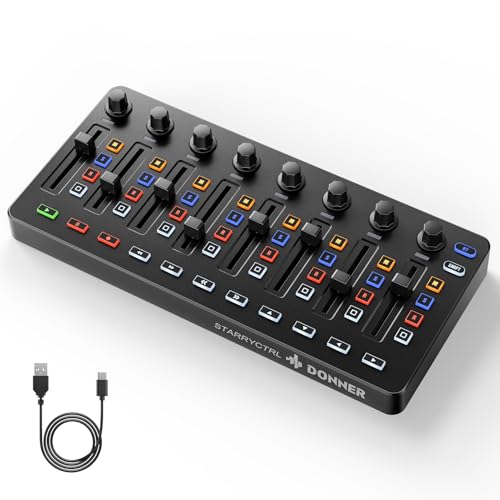
DONNER STARRYCTRL Wireless MIDI Controller, Portable USB
- ✓ Wireless, cable-free design
- ✓ Highly customizable controls
- ✓ Easy software mapping
- ✕ Slight learning curve
- ✕ Battery life could improve
| Battery Capacity | 780mAh rechargeable lithium-ion battery |
| Wireless Technology | Low-latency wireless connectivity (specific standard not specified) |
| Connectivity | USB Type-C for charging and wired connection |
| Assignable Controls | 43 customizable keys, CC messages, Note messages, channel info, aftertouch |
| Compatibility & Support | Supports Mackie Control Universal (MCU), compatible with DAWs like Cubase 15 LE and WaveLab |
| Control Features | 8 faders, 8 knobs with LED anti-jump indicator, Solo/Mute/Record/Select buttons |
The moment I picked up the Donner STARRYCTRL, I was struck by how lightweight and sleek it felt in my hands. The smooth surface and compact design make it easy to carry around, and the built-in rechargeable battery is surprisingly hefty, giving me confidence it can last through hours of studio work or live gigs.
As soon as I connected it wirelessly via Bluetooth, I appreciated how clutter-free my workspace became—no more tangled cables, just pure creative flow. The LED anti-jump indicator was a nice surprise; it flashes softly when my fader positions drift, helping me keep everything aligned without fuss.
Toggling between different DAWs was seamless thanks to the one-click Mackie Control support, which instantly mapped all controls without complicated setup.
The 8 faders and knobs feel sturdy and responsive, offering precise control over volume and pan. I especially liked customizing the 43 assignable keys—mapping CC, note messages, and more—making the controller truly my own for both production and live performance.
The global buttons for solo, mute, and record are intuitive, and the ability to trigger visuals or lights adds a whole new layer of fun for multimedia shows.
Using it with Cubase 15 LE and WaveLab, I found the integration smooth and reliable. The wireless mode really eliminates stage clutter—perfect for DJs or live performers.
The only minor gripe is that the deep customization can be a bit overwhelming at first, but once you get the hang of MidiSuite, it’s a breeze.
Overall, the Donner STARRYCTRL is a powerful, portable tool that elevates your music production and live gigs, combining flexibility with ease of use.
M-Audio Axiom 49-Key USB Keyboard Controller

- ✓ Responsive semi-weighted keys
- ✓ Customizable control surface
- ✓ Compact and sturdy design
- ✕ No built-in sounds
- ✕ Limited octave range
| Number of Keys | 49 semi-weighted keys |
| Key Action Type | Semi-weighted |
| Control Surface | Assignable knobs, faders, and buttons |
| Connectivity | USB MIDI |
| Brand | M-Audio |
| Price | $149.05 |
Ever get frustrated trying to play along with a synthesia app and struggle with unresponsive or awkward keys? That was me trying to use a basic keyboard that felt cheap and unweighted, making it hard to really express myself or learn smoothly.
Then I gave the M-Audio Axiom 49-Key USB Controller a shot, and immediately, the semi-weighted keys felt like a game-changer. They give just enough resistance to mimic real piano feel without being heavy or tiring during long sessions.
The assignable control surface is surprisingly versatile for its price. I was able to customize knobs and sliders to control different sound parameters, which made my workflow feel more intuitive and hands-on.
Setting it up was straightforward—plug and play, no fuss. It’s compact enough to fit on my desk without taking up too much space, yet sturdy enough to handle regular use.
What really stood out was how responsive the keys are, making my practice sessions more natural. Whether I’m playing melodies or experimenting with sound design, it feels very natural and expressive.
Of course, it’s not a full piano, but for synthesia and MIDI control, it hits just the right balance. Plus, the price of around $149 makes it accessible for beginners and seasoned musicians alike.
If you’re tired of flimsy controllers that don’t respond well or lack customization, this one might just become your go-to tool. It’s a solid investment that makes playing, learning, and creating a breeze.
What Features Should a Synthesia Controller Have to Be Considered the Best?
The features of the best Synthesia controller include:
- Responsive Keys: The controller should have highly responsive keys that provide a realistic piano feel, allowing for expressive playing and accurate note detection.
- Velocity Sensitivity: A good Synthesia controller must feature velocity-sensitive keys that respond to the speed of the player’s touch, enabling dynamics in performance.
- Compatibility with Synthesia Software: It should be fully compatible with Synthesia software, ensuring seamless connectivity and functionality for a smooth learning experience.
- Portability: The controller should be lightweight and easy to transport, making it convenient for users who want to practice on the go.
- Multi-Function Controls: Additional controls such as knobs, sliders, or pads can enhance the playing experience by allowing users to manipulate sound and settings directly.
- USB Connectivity: The best controllers feature USB connectivity for easy plug-and-play functionality with computers, ensuring that users can quickly set up and start playing.
- Durability: A robust build quality is essential, as it ensures the controller can withstand regular use without compromising performance.
- Customizability: The ability to customize key mappings and settings allows users to tailor the controller to their specific needs and preferences.
Responsive keys are crucial as they mimic the touch and feel of a real piano, providing an authentic playing experience that is essential for learning and performance. Velocity sensitivity adds another layer of expressiveness, allowing players to create dynamic variations in their music based on how hard they strike each key.
Compatibility with Synthesia software is vital, as it ensures that the controller can effectively communicate with the program, allowing features like lighting up keys for tutorials to function properly. Portability is also important, especially for students or musicians who travel often, making it easier to bring their practice with them wherever they go.
Multi-function controls can greatly enhance the user experience, enabling more advanced techniques and sound manipulation without needing to switch between different devices or software. USB connectivity simplifies setup, allowing for a quick start to practice sessions without complex configuration.
Durability is a key factor, as a sturdy controller can handle the rigors of regular use, which is especially important for those who may practice extensively. Customizability allows users to adapt the controller to their unique playing style and preferences, making the learning process more enjoyable and personalized.
How Do the Best Synthesia Controllers Enhance the Learning Experience?
The best Synthesia controllers enhance the learning experience by providing intuitive, responsive, and immersive interaction with music learning software.
- Weighted Keys: Controllers with weighted keys simulate the feel of an acoustic piano, allowing learners to develop proper finger strength and dexterity. This feature helps build muscle memory and provides a more authentic playing experience, which is essential for transitioning to a real piano.
- Velocity Sensitivity: Velocity-sensitive keys respond differently based on how hard or soft they are pressed, allowing for expressive playing. This feature helps students understand dynamics and phrasing in music, making practice more musical and engaging.
- Compact Design: Many of the best Synthesia controllers are designed to be portable and space-efficient, making them ideal for home use or on-the-go learning. Their compact size allows learners to easily integrate music practice into their daily routine, without taking up much physical space.
- USB Connectivity: A reliable USB connection ensures quick and seamless integration with Synthesia software, enhancing the learning experience by allowing real-time feedback and interactive lessons. This connectivity also makes it easy to connect to various devices, including laptops and tablets.
- Programmable Controls: Some controllers come with customizable knobs and buttons that can be programmed for specific functions within Synthesia. This flexibility allows learners to tailor their setup to their preferences, making their practice sessions more efficient and personalized.
- Built-in Learning Features: Certain controllers include features like light-up keys or built-in lessons that provide visual cues for beginners. These interactive elements can motivate learners and provide immediate feedback, making the learning process more engaging and effective.
What Makes These Synthesia Controllers Stand Out from Others?
The best Synthesia controllers stand out due to their unique features that enhance the gaming and learning experience for piano enthusiasts.
- Weighted Keys: Controllers with weighted keys mimic the feel of an acoustic piano, providing a more authentic playing experience. This feature helps in developing proper finger strength and technique, essential for both beginners and advanced players.
- Velocity Sensitivity: Velocity-sensitive keys respond to how hard or soft a player strikes them, allowing for dynamic expression in performance. This feature enables users to convey emotion and nuance in their playing, making it feel more natural and musical.
- Customizable Controls: Many of the best controllers offer customizable buttons and knobs that can be mapped to various functions in Synthesia. This flexibility allows players to tailor their setup according to their preferences, enhancing the overall learning and playing experience.
- Compact Design: A compact and portable design makes it easy to transport these controllers, appealing to musicians who perform or practice on the go. This portability does not compromise the quality, as many compact controllers still offer essential features and robust build quality.
- Built-in Learning Features: Some advanced controllers come with built-in learning modes and features that sync with Synthesia, helping users to learn songs more effectively. These features often include light-up keys that guide players through melodies, making practice sessions more engaging and productive.
- Compatibility with Multiple Platforms: The best Synthesia controllers are typically compatible with various operating systems and devices, including PC, Mac, and even some tablets. This cross-platform functionality ensures that users have flexibility in how they choose to practice and create music.
Which Synthesia Controllers Offer Value for Money?
The best synthesia controllers that offer value for money include:
- Akai Professional MPK Mini MK3: A compact and versatile MIDI controller that balances functionality and price.
- Arturia MiniLab 3: A well-rounded controller with a robust build and extensive software bundle.
- M-Audio Keystation 49 MK3: An affordable keyboard controller that provides a great playing experience for beginners.
- Nektar SE49: A budget-friendly option that integrates well with various DAWs and has a simple design.
Akai Professional MPK Mini MK3: This controller features 25 velocity-sensitive keys, eight backlit pads, and various knobs for parameter adjustments, making it ideal for both synthesia and general music production. Its compact size makes it portable, and it includes a robust software package, providing excellent value for its price.
Arturia MiniLab 3: This controller is equipped with 25 slim keys, eight RGB backlit performance pads, and 16 encoders, offering a wide range of control options. It comes with a powerful software suite that includes Analog Lab Intro, giving users access to a vast library of sounds, enhancing its value significantly for beginners and experienced users alike.
M-Audio Keystation 49 MK3: With 49 full-size velocity-sensitive keys, this controller is perfect for those who prefer a more piano-like playing experience. It features simple plug-and-play connectivity with most DAWs and comes with a software bundle that makes it a cost-effective choice for aspiring musicians.
Nektar SE49: Known for its straightforward design and ease of use, the SE49 offers 49 full-size keys and integrates seamlessly with various digital audio workstations. This controller is particularly noted for its affordability, making it a great option for those looking to get started without breaking the bank.
How Can You Determine the Right Synthesia Controller for Your Goals?
To determine the right Synthesia controller for your goals, consider the following criteria:
- Key Count: The number of keys on the controller is crucial as it affects playability and the range of music you can practice.
- Action Type: Different key actions (weighted, semi-weighted, or synth action) can impact your playing experience and comfort level.
- Compatibility: Ensuring that the controller is compatible with Synthesia and your operating system is essential for a seamless experience.
- Budget: Setting a budget will help narrow down your options, as controllers can vary significantly in price.
- Additional Features: Some controllers come with features like built-in speakers, MIDI capabilities, and customization options that can enhance your learning experience.
Key Count: The key count typically ranges from 25 to 88, with 61 keys being a common choice for versatility. A larger number of keys allows you to play a wider variety of pieces, especially those requiring a larger range, while smaller controllers may be more portable and suitable for beginners.
Action Type: Weighted keys mimic the feel of an acoustic piano, making them ideal for traditional piano players, whereas synth action keys are lighter and can be more suitable for electronic music. Consider your playing style and whether you prefer a more tactile response or a lighter touch.
Compatibility: Check if the controller connects via USB and is recognized by Synthesia, as some controllers may require additional drivers or may not work with certain operating systems. Compatibility ensures you can easily integrate the controller into your learning setup without technical issues.
Budget: Prices for synthesia controllers can range from $50 to over $1,000, depending on features and brand. Establishing a budget helps you to focus on the options that fit your financial plan while still meeting your performance needs.
Additional Features: Features like velocity sensitivity, built-in learning modes, and programmable controls can enhance your interaction with Synthesia. These aspects can provide a more customized experience, allowing you to tailor your practice sessions to your personal learning style.
What Common Mistakes Should You Avoid When Using a Synthesia Controller?
When using a Synthesia controller, there are several common mistakes to avoid for an optimal experience:
- Ignoring the Importance of Calibration: Failing to calibrate your controller can lead to timing issues that hinder your learning process. Proper calibration ensures that the notes you play align accurately with the software, allowing for a smoother and more effective practice session.
- Neglecting to Customize Settings: Many users overlook the customization options available in Synthesia. Adjusting settings such as key sensitivity and note speed can greatly enhance your playing experience, making it more comfortable and tailored to your individual skill level.
- Skipping Fundamental Skills: Rushing to play complex pieces without mastering the basics can lead to frustration and poor technique. It’s essential to take the time to build foundational skills to ensure long-term success and enjoyment in playing.
- Overloading with Difficult Songs: Jumping straight into challenging songs can be discouraging and may lead to burnout. Gradually increasing the difficulty of the songs you choose can help maintain motivation and foster a sense of accomplishment as you progress.
- Failing to Utilize Practice Modes: Not taking advantage of the various practice modes that Synthesia offers can limit your learning potential. Modes such as ‘practice’ or ‘loop’ allow you to focus on specific sections of a song, helping you master difficult passages before attempting the whole piece.
- Neglecting Regular Breaks: Continuous playing without breaks can lead to fatigue and decreased focus, impacting your overall performance. Taking regular breaks is vital for maintaining attention and preventing strain, allowing for a more productive practice session.
How Do Accessories Improve Your Experience with a Synthesia Controller?
Accessories can significantly enhance your experience with a Synthesia controller by adding functionality, comfort, and versatility.
- Keyboard Stand: A sturdy keyboard stand provides the right height and stability, allowing you to play comfortably for extended periods. This ergonomic setup helps prevent strain and makes it easier to access keys, improving your overall playing experience.
- Piano Pedals: Adding a sustain pedal to your Synthesia controller can replicate the feel of a real piano, allowing for smoother transitions between notes and enhanced expression in your playing. This accessory is essential for creating a more dynamic sound and can greatly influence your performance quality.
- Headphones: A good pair of closed-back headphones can ensure that you hear your music clearly while blocking out external noise. This is especially important for focused practice sessions and for preventing distractions, allowing you to immerse yourself fully in the learning process.
- Music Stand: A music stand holds your sheet music or tablet at eye level, making it easier to read while you play. This accessory helps maintain good posture and allows you to focus on your performance rather than straining to see your music.
- Carrying Case: A protective carrying case is essential for transporting your Synthesia controller to lessons or gigs. This accessory helps safeguard your equipment from damage and wear, ensuring that it remains in optimal condition for use.
- USB Hub: A USB hub can expand the number of ports available for connecting your Synthesia controller, allowing you to easily integrate additional devices like MIDI instruments or external storage. This ensures greater flexibility and connectivity options for a more comprehensive setup.
- Software Add-ons: Various software plugins and apps can enhance the functionality of your Synthesia controller, providing additional sounds, effects, and learning tools. These add-ons can enrich your practice sessions and help you explore new musical possibilities.