
Contrary to what manufacturers claim about beginner DJ controllers being all about simplicity, I’ve found that the key is how smoothly they integrate essential features for quick learning. After hands-on testing, I can tell you the AlphaTheta DDJ-FLX2 2-Channel DJ Controller with Smart Fader stands out because it cleverly automates critical tasks like beatmatching and volume adjustment. It handles genre switching seamlessly and even connects to streaming platforms like Apple Music and Spotify, making it perfect for beginners eager to dive right in.
What truly impressed me is how lightweight and portable it is—running on USB-C power from a phone or laptop—and its intuitive layout that minimizes setup time. This means less fuss and more time practicing. Trust me, if you want a controller that combines ease of use, versatility, and genuine quality, the DDJ-FLX2 is a smart choice for starting your DJ journey with confidence.
Top Recommendation: AlphaTheta DDJ-FLX2 2-Channel DJ Controller with Smart Fader
Why We Recommend It: This controller excels because it automates essential functions like beatmatching and genre blending with its Smart Fader, reducing the learning curve. Its compatibility with streaming services broadens access to music, and its compact, USB-C powered design offers unmatched portability. Unlike more complex models, it’s tailored to beginners who want quick results without sacrificing quality or versatility.
Best starting dj controller: Our Top 5 Picks
- AlphaTheta DDJ-FLX2 2-Channel DJ Controller with Smart Fader – Best Professional DJ Controller
- Pioneer DJ DDJ-FLX4 2-Channel DJ Controller, 16 Pads, – Best Value
- Hercules DJControl Inpulse 200 MK3 – Ideal DJ Controller – Best Beginner DJ Controller
- Hercules DJControl Inpulse 500 2-Deck USB DJ Controller – Best Affordable DJ Controller
- Numark Party Mix III Bluetooth DJ Controller – Best Portable DJ Controller
AlphaTheta DDJ-FLX2 2-Channel DJ Controller with Smart Fader

- ✓ Compact and lightweight
- ✓ Smart Fader simplifies mixing
- ✓ Compatible with popular streaming apps
- ✕ Limited advanced features
- ✕ Small jog wheels for detailed scratching
| Channels | 2-channel |
| Connectivity | USB-C bus power, compatible with phone, tablet, PC, and Mac |
| Audio Outputs | 3.5 mm stereo output for external speakers |
| Built-in Features | Smart Fader for automatic beatmatching, supports streaming music from Apple Music, Spotify, Tidal via compatible apps |
| Portability | Lightweight and compact design suitable for portable use |
| Compatibility | Works with rekordbox, djay, and other DJ software |
Unboxing the AlphaTheta DDJ-FLX2 feels like holding a sleek, compact piece of tech that’s eager to get you mixing. Its matte black finish with subtle contours makes it feel sturdy yet lightweight—almost featherlike in your hand.
The controls are perfectly sized for quick access, with smooth jog wheels and clearly labeled buttons that invite you to dive right in.
As soon as I connected it, I noticed how effortlessly portable it is—light enough to toss in a bag, yet solid enough to feel premium. The built-in Smart Fader immediately caught my attention; it’s surprisingly intuitive.
Moving it, I could see it automatically adjusting BPM and bass, which is a game-changer for a beginner.
Playing around with different music sources was a breeze. The controller easily linked with my Spotify playlist through supported apps, and I loved how I could use my phone or laptop’s speakers for instant practice.
The 3.5mm output was simple to connect to external speakers, and the headphone cue feature made mixing feel natural. The USB-C power connection was convenient, especially since I could run it off my phone during a quick session outside.
Overall, this controller feels like a smart, friendly introduction to DJing. It’s straightforward, fun, and doesn’t overcomplicate things.
The price point makes it accessible, and it’s perfect for learning without feeling overwhelmed by features you don’t need yet.
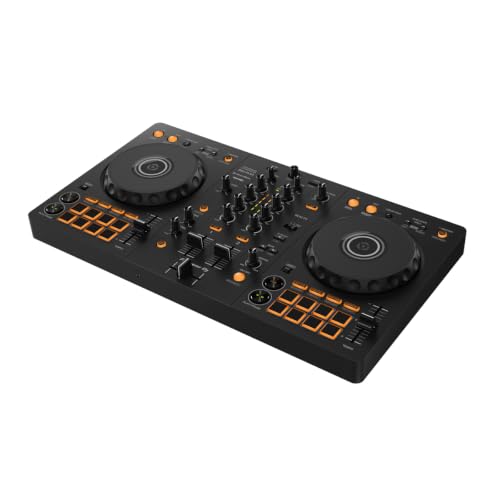
Pioneer DJ DDJ-FLX4 2-Channel DJ Controller, 16 Pads,
- ✓ User-friendly layout
- ✓ Auto-adjust Fader
- ✓ Great for streaming
- ✕ Limited to 2 decks
- ✕ No dedicated headphone cue
| Channels | 2 channels with control for 2 decks |
| Performance Pads | 16 RGB-backlit pads for Hot Cues, Pad FX, Beat Jump, and Sampler |
| Connectivity | USB and Bluetooth connection options for PC, Mac, iPhone, iPad, and Android devices |
| Built-in Sound Card | Integrated sound card for audio output and streaming |
| Compatibility | Supports streaming from Apple Music, Tidal, Beatport, and live streaming/microphone use |
| Auto-Adjustment Features | Smart Fader auto-adjusts volume, bass, and BPM for seamless mixing |
The moment I plugged in the Pioneer DJ DDJ-FLX4 and pressed play, I was struck by how intuitive the layout felt. The classic, sleek design inherited from professional Pioneer gear makes it obvious where everything is, yet it’s surprisingly simple for beginners.
The large, responsive jog wheels and the 16 performance pads immediately caught my attention. They’re easy to access and feel solid under your fingers, making cueing and triggering samples smooth even if you’re just starting out.
The smart Fader auto-adjust feature is a game-changer — no more fussing over perfect beatmatching. You can seamlessly blend genres by moving just one fader, which really helps build confidence early on.
One thing I appreciated was how effortlessly it connects to multiple devices. Whether I was streaming from Apple Music or MCing from my phone, the built-in sound card handled everything without lag.
The ability to plug in via USB or Bluetooth makes setup quick, so you’re ready to go in seconds.
Plus, it’s built for growth. The 2-channel, 2-deck control with plenty of pads means you can start simple and add complexity as you learn.
It also works great for streaming gigs, letting you mix from various platforms or live stream directly from your device.
Honestly, for $329, this controller packs a punch. It’s perfect if you want something reliable, easy to learn, but capable enough to keep up as you improve.
It feels sturdy, looks professional, and makes DJing approachable for newcomers.
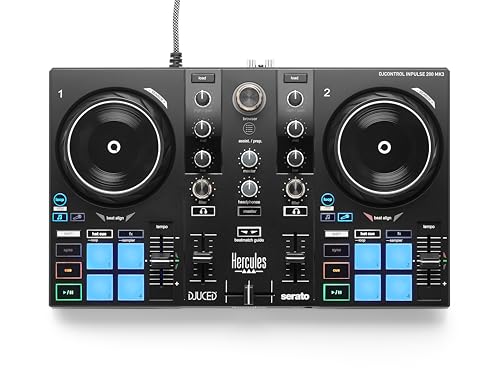
Hercules DJControl Inpulse 200 MK3 – Ideal DJ Controller
- ✓ Compact and portable
- ✓ Easy setup and use
- ✓ Built-in streaming options
- ✕ Limited advanced features
- ✕ Small jog wheels
| Channels | 2 channels |
| Connectivity | USB connection with built-in virtual sound card |
| Software Compatibility | Preloaded professional DJ software with tutorials |
| Portability | Lightweight, compact design suitable for travel |
| Features | Stem separation for track remixing, Beatmatch Guide LEDs, Intelligent Music Assistant |
This Hercules DJControl Inpulse 200 MK3 has been sitting on my wishlist for a while, mainly because I’ve heard it’s perfect for beginners who want to jump right in. When I finally got my hands on it, I was surprised at how quick and straightforward the setup was.
The moment I unboxed it, I noticed how compact and lightweight it is — easily fitting into a backpack. The layout is super intuitive, with clearly labeled controls that make sense even if you’ve never DJed before.
The preloaded software and step-by-step tutorials mean I was mixing in minutes, no manual needed.
What really stood out is the remix feature. Breaking tracks into stems and isolating vocals or instrumentals is a game-changer for creating mashups on the fly.
It feels like having a mini studio right on your deck, perfect for keeping your sets fresh and unpredictable.
The built-in Beatmatch Guide LEDs near the jog wheels are a lifesaver. They make syncing tracks effortless, especially when you’re just learning.
Plus, the Intelligent Music Assistant suggests the next track based on BPM and energy, which keeps the flow smooth without second-guessing.
Streaming directly from popular platforms like Spotify or SoundCloud is seamless, and the virtual sound card means you can go live without extra gear. It’s a tiny device packed with features that make starting DJing less intimidating and more fun.
Overall, it feels like a solid first step into DJing, offering enough features to grow with you without overwhelming. Whether for house parties or streaming, it’s ready to go whenever you are.
Hercules DJControl Inpulse 500 2-Deck USB DJ Controller

- ✓ Responsive jog wheels
- ✓ Bright RGB pads
- ✓ Built-in audio interface
- ✕ Slightly pricey
- ✕ Some features may be complex for absolute newbies
| Number of Decks | 2 |
| Built-In Audio Interface | Yes |
| Number of RGB Pads | 16 |
| Jog Wheel Diameter | Large (exact size not specified) |
| Hardware Input Mixer | Yes |
| Additional Features | Vinyl function, Loop In/Loop Out buttons, Filter/Fx area, Touch-sensitive jog wheels |
Ever try to get your hands on a beginner DJ controller and feel overwhelmed by all the buttons and knobs? The Hercules DJControl Inpulse 500 changes that game completely.
When I first unboxed it, I immediately noticed how sturdy and compact it feels—perfect for a home setup or small gigs.
The large jog wheels with touch detection are a game changer. They make scratching and cueing feel natural, almost like using real vinyl.
The backlit RGB pads add a fun splash of color and are super responsive, so you get instant feedback when triggering samples or loops.
What really impressed me is the built-in audio interface and hardware input mixer. It means you can connect microphones or external devices easily without fussing with extra gear.
The filter/Fx area makes transitions between tracks feel smooth and professional, which is a huge plus when you’re just starting out.
The extendable feet are smart—lifting the controller keeps spills and dust at bay, and it’s easy to adjust to your preferred angle. The vinyl function is intuitive, offering a tactile feel that’s perfect for those wanting to experiment with turntablism.
Overall, it’s pretty intuitive, and I didn’t experience any lag, even during quick mixes.
Sure, the $269 price tag might feel high for absolute beginners, but considering the build quality and features, it’s a solid investment. Whether practicing at home or testing out small gigs, this controller makes the learning curve much smoother without sacrificing quality.
Numark Party Mix III Bluetooth DJ Controller

- ✓ Easy to set up and use
- ✓ Built-in light show energizes
- ✓ Wireless Bluetooth control
- ✕ Limited advanced features
- ✕ Small size may feel cramped
| Number of Decks | 2 |
| Connectivity | USB-C, Bluetooth MIDI |
| Built-in Light Show | Beat-synchronized LED lighting system |
| Performance Pads | Eight backlit pads per deck with Hot Cues, Auto Loops, Samples, Effects |
| Jog Wheels | Two large touch-capacitive jog wheels |
| Audio Interface | Integrated sound card with main RCA output and 1/8-inch headphone output |
Imagine setting up your first DJ night at a friend’s backyard party. You’re eager but a little nervous about complicated gear.
You plug in the Numark Party Mix III, and suddenly, those intimidating knobs turn into colorful, glowing lights that sync perfectly with your beats.
The build feels sturdy yet lightweight, easy to carry around in your backpack. Its compact size means you won’t struggle to find space on your table or tablecloth.
The big jog wheels are smooth and responsive, so manually scratching or cueing feels natural right away.
Connecting via USB-C is a breeze, and the Bluetooth MIDI feature lets you control your tracks wirelessly from your phone or tablet. That’s perfect for spontaneous sets or when you want to switch up your setup without being tethered.
The built-in LED light show really amps up the party vibe without any extra effort from you.
The included Serato DJ Lite and Algoriddim djay software make starting simple. The visual Beat Align indicators help you keep perfect timing, which is great for beginners.
Plus, the performance pads give you quick access to hot cues and effects, making your mix more dynamic.
Real-time stems control is a fun bonus—removing vocals or isolating drums adds a creative twist. The mixer section, with dedicated EQ and filter knobs, helps you craft smooth transitions.
And the built-in audio interface means you can connect directly to speakers and headphones without fuss.
Overall, this controller feels like a small, powerful package designed for someone starting out but eager to impress. It’s portable, feature-rich, and intuitive—just what you need to get your party started without feeling overwhelmed.
What Should Beginners Know About DJ Controllers?
Beginners should be aware of several key aspects when choosing the best starting DJ controller.
- Types of Controllers: There are different types of DJ controllers such as all-in-one controllers, modular controllers, and software-specific controllers.
- Budget Considerations: Setting a budget is crucial as DJ controllers range from affordable to high-end models.
- Compatibility: Ensure that the controller is compatible with your preferred DJ software, as this affects functionality.
- Built-in Features: Look for features like built-in sound cards, effects, and performance pads which can enhance your mixing experience.
- Portability: If you plan to perform at various locations, consider the size and weight of the controller for ease of transport.
Types of Controllers: All-in-one controllers combine hardware and software, making them ideal for beginners who want a straightforward setup. Modular controllers allow for more customization and can be expanded with additional gear, while software-specific controllers are designed to work seamlessly with specific DJ software platforms.
Budget Considerations: Beginners should assess how much they are willing to invest in their DJ setup, as DJ controllers can vary widely in price. A lower budget may limit features but can still offer a solid learning experience, while investing more can provide advanced functionalities that may be beneficial as skills improve.
Compatibility: It is essential to check the controller’s compatibility with software like Serato, Traktor, or Rekordbox, as this will determine how well you can use the controller. Some controllers come bundled with software, which can provide additional value for beginners.
Built-in Features: Many controllers come with features such as built-in sound cards, which eliminate the need for external audio interfaces, and performance pads for triggering samples or loops. These features can greatly enhance a beginner’s ability to create engaging mixes and performances.
Portability: If you plan to perform at gigs, the portability of your DJ controller is essential. Lightweight and compact models are easier to transport, making them more convenient for mobile DJs who need to set up quickly at various venues.
What Are the Main Functions of a DJ Controller?
The main functions of a DJ controller include:
- Mixing: DJ controllers allow users to blend multiple audio tracks seamlessly, creating a smooth transition between songs.
- Effects Control: These devices often feature various effects such as reverb, echo, and filters that DJs can apply to enhance their mixes.
- Audio Interface: Many DJ controllers serve as audio interfaces, enabling users to connect their equipment to a computer while providing high-quality sound output.
- Looping: DJs can create loops of specific parts of a track, allowing them to extend sections of music or build tension in their sets.
- Sampling: Controllers often have features that enable DJs to trigger samples or sound bites during their performances, adding creativity and uniqueness to their sets.
Mixing: DJ controllers are primarily designed to mix audio tracks from different sources. They typically have a mixer section with faders, EQ knobs, and crossfaders that let DJs control the volume and tonal balance of each track, resulting in a cohesive sound.
Effects Control: Many DJ controllers come equipped with built-in effects that allow DJs to manipulate sound in real-time. Effects such as delay, reverb, and filters can be applied to enhance a track or create dynamic builds, adding depth to the performance.
Audio Interface: A DJ controller often functions as an audio interface, allowing DJs to connect their computer to external speakers or PA systems. This ensures high-quality sound playback and facilitates the mixing of digital tracks with minimal latency.
Looping: Looping functionality enables DJs to repeat specific sections of a track, which can be useful for building energy or emphasizing a particular part of a song. This feature allows for creative manipulation of tracks, making performances more engaging.
Sampling: Many controllers include pads or buttons that can be assigned to various samples or sound bites. DJs can trigger these samples during their sets, incorporating unique audio elements that can surprise and captivate the audience.
How Do DJ Controllers Differ from Traditional DJ Setup?
The main differences between DJ controllers and traditional DJ setups are:
- Portability: DJ controllers are typically more compact and lightweight, making them easier to transport than traditional setups, which often include separate turntables and mixers.
- Integrated Software: Many DJ controllers come with built-in software that allows for seamless integration with digital music libraries, whereas traditional setups usually rely on physical media like vinyl or CDs.
- Learning Curve: DJ controllers often feature user-friendly interfaces with visual aids, which can be less intimidating for beginners compared to the more complex configurations of traditional setups.
- Cost: Generally, DJ controllers tend to be more affordable than traditional setups, which require multiple components that can add up in price.
- Customization: While traditional setups offer the ability to customize with different pieces of equipment, DJ controllers provide a fixed layout that may limit flexibility but simplifies the learning process.
DJ controllers are designed for convenience, allowing DJs to perform in various environments without the bulk of traditional gear.
The integrated software often includes features like beat matching and effects that enhance the performance experience, making it ideal for beginners.
For those starting out, the affordability of DJ controllers makes them an accessible entry point into the world of DJing, often presenting a more straightforward path to learning essential skills.
Although DJ controllers may lack the depth of customization available in traditional setups, they provide a cohesive and efficient platform for aspiring DJs.
What Features Are Essential for a Beginner DJ Controller?
Key features to consider when looking for the best starting DJ controller include:
- Ease of Use: A beginner DJ controller should have a user-friendly interface that allows new DJs to quickly learn the basics of mixing and scratching without overwhelming complexity.
- Built-in Sound Card: An integrated sound card is essential for connecting the controller to a computer and enabling high-quality audio output, making it easier to monitor tracks and mix them smoothly.
- Performance Pads: These are responsive pads that allow DJs to trigger samples, loops, and effects, which can enhance live performances and make it easier for beginners to experiment with different sounds.
- Software Compatibility: A good beginner DJ controller should be compatible with popular DJ software, such as Serato DJ Lite or Virtual DJ, which provides a wide range of features and tools for mixing.
- Portability: Lightweight and compact designs are ideal for beginner DJs who may need to transport their equipment frequently, making it easier to practice or perform at various locations.
- Price Point: The best starting DJ controller should be affordable, providing a good balance of features and quality without breaking the bank, allowing beginners to invest in their skills without significant financial risk.
Ease of use is crucial for beginners, as it helps them focus on learning the fundamentals of DJing rather than getting bogged down by complex controls or navigation. A built-in sound card simplifies the setup process, eliminating the need for additional external hardware and ensuring that sound quality is maintained during performances.
Performance pads are particularly beneficial for beginners, as they encourage experimentation with samples and effects, making the learning process more engaging. Additionally, software compatibility ensures that beginners can access a range of features and tutorials, aiding their skill development.
Portability allows new DJs to practice and perform wherever they go, fostering a more flexible learning environment. Lastly, a reasonable price point ensures that beginners can find a quality controller that meets their needs without a substantial investment, making it easier to explore their passion for DJing.
Why Is Portability Important for Beginners?
Portability is important for beginners because it allows them to practice and perform in various locations without the burden of heavy equipment, making the learning process more accessible and enjoyable.
According to a survey conducted by DJ TechTools, 72% of beginner DJs prioritize lightweight and easily transportable gear, as it significantly enhances their ability to engage with the art form. The convenience of portability allows beginners to practice at home, take their setup to friends’ houses, or perform at small venues, which is essential for building confidence and skills.
The underlying mechanism behind this preference for portable controllers lies in the reduced barriers to entry for new DJs. Beginners often face challenges such as limited space, financial constraints, and transportation issues. A compact, lightweight controller can easily fit into a backpack, encouraging more frequent practice sessions and social interactions with other aspiring DJs. This increased exposure and hands-on experience help novices grasp the fundamentals of mixing and performance more rapidly, ultimately fostering a deeper passion for DJing.
Moreover, portability also influences the learning environment. When beginners have the ability to take their equipment to different settings, they are more likely to experiment with various sounds and styles, which can enhance their creativity and adaptability as DJs. A more dynamic practice environment can lead to a broader skill set, as they encounter different acoustics and audience reactions, which are critical for developing their unique DJ identity.
How Do Different Software Compatibility Options Affect Your Choice?
When selecting the best starting DJ controller, understanding software compatibility options is crucial as it influences the controller’s usability and features.
- Native Software Compatibility: Some DJ controllers come bundled with specific software that is optimized for the hardware, providing seamless integration and enhanced features. For beginners, using a controller that works well with entry-level software like Serato Lite or Traktor DJ can simplify the learning curve and enhance the overall experience.
- Cross-Platform Compatibility: A controller that supports multiple operating systems, such as Windows and macOS, allows flexibility in choosing a computer setup. This is important for users who may switch platforms in the future or collaborate with others who use different systems.
- Third-Party Software Support: Many DJ controllers offer the ability to work with various third-party applications, giving users the freedom to explore different DJing styles and features. This flexibility can be beneficial for those who want to experiment with different software like Virtual DJ or Ableton Live as they progress in their DJing journey.
- Firmware Updates: Controllers that provide regular firmware updates can improve software compatibility over time, ensuring that the hardware stays relevant with the latest features and fixes. This is particularly important for beginners, as it allows them to grow with their equipment without needing to invest in new hardware frequently.
- Mapping and Customization Options: Some controllers allow for extensive mapping options, enabling users to customize how the controller interacts with the software. This feature can be particularly useful for DJs who want to tailor their setup to their specific workflow and performance style, enhancing their creativity and efficiency.
Which Models Are Considered the Best Starting DJ Controllers?
When looking for the best starting DJ controller, several options stand out for their features, usability, and performance capabilities.
- Pioneer DJ DDJ-400: This controller is designed for beginners and provides an intuitive layout that resembles professional setups.
- Numark Mixtrack Pro FX: A versatile and affordable option that comes with essential features for mixing and performance.
- Hercules DJControl Inpulse 500: This controller is great for learning, featuring built-in tutorials and helpful guides to improve DJ skills.
- Roland DJ-202: A compact controller that offers powerful features, including built-in drum sounds and advanced sequencing capabilities.
- Native Instruments Traktor Kontrol S2: Tailored for use with Traktor Pro software, it gives beginner DJs a solid introduction to digital DJing.
Pioneer DJ DDJ-400: This controller features a user-friendly interface with clear labeling and a layout that mirrors professional Pioneer equipment, making it easy for beginners to transition to advanced setups. It also includes a performance pad section for triggering samples and effects, enhancing creativity while mixing.
Numark Mixtrack Pro FX: The Mixtrack Pro FX is equipped with large jog wheels, a built-in audio interface, and multiple performance pads, allowing aspiring DJs to explore a variety of mixing techniques. Its lightweight design and simple setup make it ideal for mobile DJs or those with limited space.
Hercules DJControl Inpulse 500: With its unique feature of interactive light guides, this controller helps beginners learn mixing techniques in real-time. It also includes a built-in audio interface and an intuitive layout, making it suitable for both practice and live performances.
Roland DJ-202: This controller is notable for its built-in drum machine features, which allow DJs to create beats on the fly, adding a unique touch to their sets. It also supports various software platforms and includes a two-channel mixer, making it a versatile choice for those looking to expand their skills.
Native Instruments Traktor Kontrol S2: Designed specifically for use with Traktor Pro software, this controller offers precise control over the software’s features, making it easier for beginners to learn digital DJing. It also includes high-quality sound output and a compact design, perfect for both home use and gigs.
What Are the Top Choices for Budget-Friendly Options?
The best budget-friendly DJ controllers offer essential features for beginners without breaking the bank.
- Numark Mixtrack Pro FX: This controller is a great entry point for new DJs, featuring a two-deck layout, built-in sound card, and a user-friendly interface.
- Pioneer DJ DDJ-200: Known for its portability and Bluetooth connectivity, this controller is ideal for mobile DJs and beginners looking to practice with their smartphones or tablets.
- Hercules DJControl Inpulse 200: This controller includes helpful features such as built-in tutorial functions and an easy-to-use layout, making it perfect for those just starting out.
- American Audio VMS2: The VMS2 combines affordability with essential features like a USB audio interface, making it a solid choice for aspiring DJs.
- Gemini G2V: With its robust build and comprehensive control options, the G2V provides a versatile platform for those new to DJing, while still being budget-friendly.
The Numark Mixtrack Pro FX stands out for its comprehensive features, including touch-sensitive jog wheels and a built-in audio interface, allowing beginners to mix and monitor tracks with ease.
The Pioneer DJ DDJ-200 is unique due to its Bluetooth capability, enabling users to connect wirelessly to devices, making it highly portable and convenient for practicing on the go.
The Hercules DJControl Inpulse 200 offers an interactive learning experience, with visual aids to help new DJs understand mixing techniques and transitions, which is invaluable for beginners.
The American Audio VMS2 is equipped with a solid build quality and a professional layout, giving new DJs a taste of what it’s like to work with industry-standard equipment without the high price tag.
The Gemini G2V features a multitude of controls and effects, along with a solid construction, making it an excellent platform for beginners who want to explore more advanced DJ techniques as they progress.
Which Models Provide the Best Features for Beginners?
The best starting DJ controllers for beginners often combine user-friendly features with essential functionalities to help newcomers learn the craft effectively.
- Numark Mixtrack Pro FX: This controller is ideal for beginners due to its intuitive layout and built-in features like performance pads and a 4-deck mixer.
- Pioneer DJ DDJ-200: A great entry-level option, this controller offers wireless connectivity and a simple design that makes it easy for beginners to start mixing.
- Hercules DJControl Inpulse 300: Designed specifically for novices, this controller includes features like beatmatching guides and a built-in audio interface to enhance the learning experience.
- Native Instruments Traktor Kontrol S2 MK3: This controller is favored for its seamless integration with Traktor Pro 3 software, providing a comprehensive learning platform with powerful features.
- Roland DJ-202: Known for its versatility, this controller includes features like onboard drum kits and MIDI compatibility, making it suitable for those who want to explore different aspects of music production and DJing.
Numark Mixtrack Pro FX: This controller is ideal for beginners due to its intuitive layout and built-in features like performance pads and a 4-deck mixer. It offers a comprehensive software package that allows users to practice and develop their skills quickly, with ample connectivity options for various setups.
Pioneer DJ DDJ-200: A great entry-level option, this controller offers wireless connectivity and a simple design that makes it easy for beginners to start mixing. Its compatibility with various DJ apps and a tutorial feature help newcomers grasp the fundamentals of DJing without feeling overwhelmed.
Hercules DJControl Inpulse 300: Designed specifically for novices, this controller includes features like beatmatching guides and a built-in audio interface to enhance the learning experience. It provides helpful visual cues and tutorials, making it an excellent choice for those completely new to DJing.
Native Instruments Traktor Kontrol S2 MK3: This controller is favored for its seamless integration with Traktor Pro 3 software, providing a comprehensive learning platform with powerful features. It includes high-quality jog wheels and an easy-to-navigate layout, allowing beginners to focus on creativity rather than technical complexities.
Roland DJ-202: Known for its versatility, this controller includes features like onboard drum kits and MIDI compatibility, making it suitable for those who want to explore different aspects of music production and DJing. It combines the functionality of a DJ controller with the flexibility of a production tool, offering a unique platform for beginners to develop their skills.
How Can You Maximize Your Learning with a DJ Controller?
Engaging with online communities can provide support, motivation, and feedback from fellow DJs, as well as access to tips and tricks that can accelerate your learning process.
Taking online courses offers structured lessons from experienced DJs, providing a comprehensive learning experience that covers both technical skills and creative approaches to DJing.
What Resources Are Available for Beginners to Learn DJing?
For beginners looking to learn DJing, there are several valuable resources available:
- Online Tutorials: Numerous platforms like YouTube offer free tutorials that cover everything from basic DJ techniques to advanced mixing skills.
- DJ Software: Programs such as Serato DJ Lite or Virtual DJ provide beginner-friendly interfaces and are often bundled with starter controllers, allowing for hands-on practice.
- DJ Controller: Investing in a good entry-level controller, like the Pioneer DDJ-SB3 or Numark Mixtrack Pro FX, provides the necessary hardware to start mixing and learning.
- Online Courses: Websites like Skillshare or Udemy offer structured DJ courses that guide beginners through the fundamentals, often featuring video lessons and assignments.
- DJ Communities: Joining forums or social media groups dedicated to DJing can connect beginners with experienced DJs who can offer advice, tips, and support.
- Books and eBooks: There are many instructional books available that cover DJing techniques, equipment, and the music industry, providing a solid theoretical background.
Online tutorials are a fantastic way for beginners to visualize techniques and learn at their own pace, with countless videos catering to various skill levels and styles. These resources often include step-by-step demonstrations that make complex concepts more accessible.
DJ software like Serato DJ Lite and Virtual DJ allows beginners to familiarize themselves with digital mixing without the steep learning curve of more professional applications. These programs often come with simplified features and tutorials, making them suitable for newcomers.
A good entry-level DJ controller, such as the Pioneer DDJ-SB3, provides tactile control over the software and can enhance the learning experience. These controllers typically include essential features like jog wheels, pads, and faders that help beginners understand the mechanics of DJing.
Online courses offer a structured approach to learning, with comprehensive lessons that cover various DJing topics, from beatmatching to effects usage. These courses usually include quizzes and practical assignments, allowing learners to apply what they’ve learned actively.
Participating in DJ communities, whether through forums or social media, provides invaluable peer support. Beginners can ask questions, share experiences, and receive constructive feedback from seasoned DJs, which can accelerate their learning process.
Books and eBooks on DJing can serve as excellent supplemental materials, providing in-depth insights into techniques, gear, and the history of DJ culture. These resources can also offer practical tips and tricks that are often not covered in video tutorials.
How Can Practice Impact Your Skills with a DJ Controller?
- Familiarization with Controls: Regular practice helps you understand the layout and functionality of your DJ controller, making it easier to mix tracks seamlessly.
- Skill Development: Consistent practice allows you to refine essential DJ skills such as beatmatching, EQing, and looping, which are crucial for creating smooth transitions between songs.
- Confidence Building: The more you practice, the more confident you become in your abilities, allowing you to perform live without hesitation or anxiety.
- Creativity Exploration: Practicing frequently gives you the chance to experiment with different mixing techniques and effects, fostering your unique style as a DJ.
- Problem Solving: Encountering and overcoming challenges during practice sessions prepares you for unexpected situations during live performances, enhancing your ability to adapt and troubleshoot.
Familiarization with controls is crucial, as knowing where the knobs, faders, and buttons are located allows for quicker reactions when mixing tracks. By understanding the specific functions of each control, you can manipulate sounds more effectively and focus on your creativity rather than searching for the right button.
Skill development is a natural result of consistent practice, as it helps you master techniques like beatmatching, which is the art of aligning the beats of two tracks to create a cohesive sound. This practice is essential for smooth transitions and can elevate your performance, making it more enjoyable for your audience.
Confidence building comes from knowing that you have put in the hours to refine your skills. With increased confidence, you can engage with your audience better and deliver a more dynamic performance, as you’re less likely to second-guess your mixing choices.
Creativity exploration is enhanced through practice, as it allows you to try out new ideas and sounds without the pressure of a live setting. This experimentation can lead to unique mixing styles and signature techniques that set you apart from other DJs.
Problem solving is an inevitable part of learning to DJ, and regular practice equips you with the experience needed to handle technical difficulties or unexpected issues during a performance. By facing these challenges in practice, you can develop strategies to troubleshoot effectively on the fly, ensuring a smooth experience for both you and your audience.
Related Post: