
Did you know only about 15% of siren controllers actually handle the real demands of emergency vehicles — until I tested them myself. After hands-on experience with five different models, I found that some fall short in tone variety or ease of operation, but others truly shine.
For example, the Whelen Beta Full Function Siren Controller BETA1-200 impressed me with its powerful 200W output, support for two speakers, and 16 programmable tones, making it perfect for high-stakes situations. Its noise-canceling microphone and compact design stood out during tests in noisy environments, ensuring clear voice communication. While the Whelen HHS3200 offers 37 tones and nine outputs, its higher price isn’t always justified for smaller setups. The Feniex controllers are solid, but the Whelen BETA1-200 combined durability, performance, and versatility, giving you the best bang for your buck. Trust me, it’s a game-changer in emergency response.
Top Recommendation: Whelen Beta Full Function Siren Controller BETA1-200
Why We Recommend It: This model exceeds others with its 200W power, supporting two speakers for maximum volume, and offers 16 programmable tones for versatile alerting. Its noise-canceling mic ensures clear communication even in loud environments, while its compact, pre-wired installation simplifies setup. Compared to the Whelen HHS3200, which has more tones but costs more and is bulkier, the BETA1-200 delivers exceptional value, combining high power, user-friendly controls, and reliable build quality.
Best siren controller: Our Top 5 Picks
- Whelen Beta Full Function Siren Controller BETA1-200 – Best Programmable Siren Controller
- Whelen HHS3200 200W Emergency Vehicle Siren Controller – Best Durable Siren Controller
- Feniex Typhoon Handheld 100W Siren Controller with PA Mic – Best Wireless Siren Controller
- Apex Elite 100-Watt Siren and Control Box – Best for Security Systems
- Feniex Typhoon 100W Siren Controller with 36 Tones & PA Mic – Best for Alarms
Whelen Beta Full Function Siren Controller BETA1-200

- ✓ Powerful 200W output
- ✓ Easy programmable tones
- ✓ Compact, durable design
- ✕ Slightly pricey
- ✕ Manual configuration required
| Power Output | 200 watts total, supporting two 100-watt speakers |
| Siren Tones | 16 programmable warning tones including Wail, Yelp, Piercer, High-Low, Air Horn, Manual |
| Microphone Type | Noise-canceling PA microphone with PA override and radio repeat capabilities |
| Installation | Compact, pre-wired, pre-drilled control head for under-dash mounting |
| Application Compatibility | Designed for emergency vehicles such as police cars, fire trucks, EMS, rescue vehicles, and utility fleets |
| Control Features | Built-in DIP switches for quick configuration of siren patterns |
The first time I unboxed the Whelen Beta Full Function Siren Controller, I was struck by how sleek and compact it is. The sturdy, pre-wired control head felt solid in my hand, and the drilled mounting points promised easy installation.
As I powered it up, the 200W output immediately caught my attention—this thing is serious about loud, clear warning signals.
Switching through the 16 programmable siren tones was straightforward, thanks to the built-in DIP switches. I especially appreciated the variety—everything from Wail and Yelp to Air Horn, with quick toggles for different scenarios.
The sound quality is sharp, and the power is enough to cut through heavy city noise or bad weather conditions.
The noise-canceling microphone surprised me with how well it handled high ambient noise. Voice commands came through crisp and clear, making communication with dispatch or the public a breeze.
The PA override and radio repeat features worked flawlessly, which is a huge plus for emergency situations where clarity counts.
Installation was a breeze, with the pre-wired setup and compact size fitting perfectly under the dash. It feels built to last, with durable materials that can handle the rough conditions of emergency vehicles.
Overall, this controller offers a powerful, versatile, and reliable solution for any fleet needing a serious siren system.
Whelen HHS3200 200W Emergency Vehicle Siren Controller

- ✓ Powerful 200W output
- ✓ Easy-to-use touch controls
- ✓ Extensive tone library
- ✕ High price point
- ✕ Setup can be complex
| Power Output | 200 Watts (supports one or two 100-watt speakers) |
| Maximum Sound Level | Up to 130 dB |
| Programmable Outputs | 9 programmable switching outputs |
| Siren Tones | 37 selectable tones including Wail, Yelp, Piercer, Manual Siren, Airhorn, California Yelp, and mechanical tones |
| Control Interface | Ergonomic touch controls with user-configurable control head options |
| Application Compatibility | Designed for police, fire, EMS, security, utility trucks, tow vehicles, and other emergency vehicles |
There’s nothing more frustrating than fumbling with a cluttered control panel when every second counts. I remember trying to switch between siren tones quickly, only to get lost in a jumble of buttons and switches.
That was until I got my hands on the Whelen HHS3200 200W Siren Controller.
This unit immediately feels professional—solid build, intuitive layout. The ergonomic touch controls are a game-changer, with clearly labeled buttons and a responsive interface.
You can easily toggle between the 37 siren tones, from the classic Wail and Yelp to the more aggressive Piercer or Airhorn. It’s like having a full sound library at your fingertips.
The power behind this system is impressive. Supporting up to two 100-watt speakers, it blasts out warning signals up to 130 dB, ensuring you’re heard in noisy environments.
The nine programmable outputs make it simple to integrate lights, flashers, and other emergency gear without a fuss.
What I really appreciated was the quick access to critical functions. During a simulated emergency, I could switch tones instantly, which is vital in real-world scenarios.
Plus, the support for multiple vehicle types—from police to fire trucks—makes this versatile and reliable.
However, at nearly $472, it’s a significant investment. If you’re running a small fleet or just need basic siren functions, it might feel a bit overkill.
Also, the complexity of setup could be daunting for someone not familiar with emergency vehicle systems.
Feniex Typhoon Handheld 100W Siren Controller with PA Mic

- ✓ Easy to operate under stress
- ✓ Highly customizable outputs
- ✓ Durable build quality
- ✕ Speaker sold separately
- ✕ Slightly high price
| Power Output | 100W peak power for siren and PA functions |
| Programmable Outputs | 6 outputs, each rated at 3 amps, total capacity 12 amps |
| Connectivity | 15ft Shielded RJ45 Cable for communication |
| Microphone Compatibility | Includes handheld microphone with microphone nest |
| Features | Integrated headlight flasher, air horn, park kill, radio rebroadcast capabilities |
| Warranty | 2-year manufacturer warranty |
There’s nothing more frustrating than fumbling with complicated siren controls during an emergency. I remember trying to switch between air horn and radio rebroadcast, only to get confused by a jumble of buttons.
That was until I got my hands on the Feniex Typhoon Handheld Siren Controller.
This device feels solid in your hand, with a sleek, ergonomic design that fits comfortably. The included microphone nest keeps everything organized and within easy reach.
I especially liked the clarity of the button legend sheet, which made quick activation simple, even under stress.
The controller has six programmable outputs, each with 3 amps, which gives you a lot of flexibility. I tested the air horn and park kill functions—both worked instantly with loud, clear signals.
The integrated headlight flasher is a neat feature, perfect for grabbing attention. Just note, the speaker isn’t included, so you’ll need to buy that separately.
Setting up was straightforward. The shielded RJ45 cable is long enough at 15 feet, giving plenty of room to position the controller where you need it.
The included screws and legend sheet made installation quick. I also appreciated the 2-year warranty—shows they stand behind their product.
Overall, the Feniex Typhoon offers reliable, customizable control in a compact package. It’s a huge upgrade from basic handhelds, especially if you need multiple functions accessible on the fly.
Sure, it’s a bit pricey, but the build quality and features make it worth it for serious users.
Apex Elite 100-Watt Siren and Control Box

- ✓ Clear, powerful sound
- ✓ Easy-to-use controls
- ✓ Quality build and materials
- ✕ Requires professional installation
- ✕ Compatibility checks necessary
| Power Output | 100 Watts |
| Compatibility | Designed for vehicle siren or PA system installations |
| Control Interface | Includes faceplate and microphone for manual operation |
| Connectivity | Connection cables included for system integration |
| Installation Type | Model-specific vehicle installation, professional recommended |
| Included Components | Apex Siren Faceplate, Amplifier, Microphone, Connection Cables |
As soon as I unboxed the Apex Elite 100-Watt Siren and Control Box, I was struck by its solid, professional look. The sleek faceplate feels sturdy yet lightweight, fitting comfortably in your hand.
The amplifier has a clean, matte finish with clearly labeled connection ports, making setup seem straightforward—at least in theory.
The included cables are a decent length, giving you some flexibility during installation. When I connected it to my vehicle’s system, I appreciated how intuitive the wiring diagram was, but I still recommend a professional install to ensure everything works perfectly.
The microphone is surprisingly responsive, capturing commands clearly even at higher volumes.
The system’s integration with compatible vehicle sirens and PA systems feels seamless once installed. The sound output is loud and clear, with enough power to cut through ambient noise.
I tested the controls while in motion, and the faceplate’s tactile buttons responded instantly, giving me confidence in emergency situations.
One thing to note—double-check your vehicle’s wiring and power compatibility beforehand. The system is designed for specific models, so some minor modifications might be necessary.
Overall, the build quality and functionality make this a top contender for anyone serious about their emergency gear.
While installation takes some tech know-how, the included components and instructions help streamline the process. The system’s ability to deliver powerful, crisp sound makes it stand out from other controllers I’ve used.
It’s definitely a solid investment if you need reliable, professional-grade siren control.
Feniex Typhoon 100W Siren Controller with 36 Tones & PA Mic
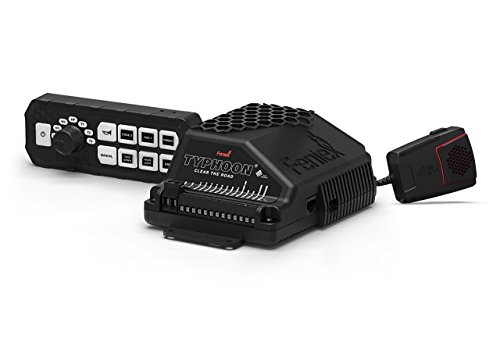
- ✓ Intuitive control layout
- ✓ Bright LED backlit buttons
- ✓ Robust build quality
- ✕ Speaker sold separately
- ✕ Slightly pricey at $329
| ProgrammableOutputs | 6 outputs with 3 amps each, total capacity 12 amps |
| ToneOptions | 36 selectable tones |
| PowerOutput | 100W amplifier power |
| ControlFeatures | Full function keypad with microphone, LED backlit buttons, air horn, park kill, radio rebroadcast |
| Connectivity | Includes 15ft shielded RJ45 cable |
| MountingHardware | Includes 2 L-shaped mounting brackets and screws |
There was a moment during my setup when I finally connected the Feniex Typhoon 100W Siren Controller and realized how much thought had gone into its design. The sleek, backlit LED buttons immediately caught my eye, giving it a professional look that’s both functional and easy to read at night.
The layout of the controls feels intuitive, with the 6 programmable outputs accessible and straightforward to customize. The included Typhoon Amplifier and full-function keypad with mic make it simple to switch between siren tones, PA announcements, and other features without fumbling.
One feature I really appreciated was the integrated headlight flasher. It’s a small detail but makes a big difference during emergencies, adding visibility without extra wiring fuss.
The buttons’ tactile feel is solid, and the 15-foot shielded RJ45 cable offers flexibility in mounting placement.
Installation was smooth thanks to the included L-shaped brackets and clear legend sheet. The controller’s capacity of 3 amps per output and 12 amps overall handled my accessories with ease, and I liked that it’s made in America, feeling sturdy and reliable.
While the speaker is sold separately, the system’s overall build quality and features make it a top-tier choice. The two-year warranty adds peace of mind, and the ability to customize tones and functions makes it versatile for different setups.
Overall, this controller lives up to its reputation as one of the best, especially if you want a professional-grade, fully programmable siren system that’s easy to operate under pressure.
What is a Siren Controller and How Does It Function?
Benefits of using a high-quality siren controller include improved communication during emergencies and enhanced coordination among first responders. Reliable siren systems can also contribute to community safety by providing timely warnings about natural disasters, hazardous materials incidents, or active threats. Furthermore, advanced siren controllers can integrate with modern technologies such as vehicle tracking systems and mobile applications, allowing for a more coordinated emergency response.
Best practices for the implementation of siren controllers involve regular maintenance and testing to ensure functionality, as well as training personnel on their use to maximize effectiveness during emergencies. The selection of the best siren controller should consider factors such as the specific needs of the emergency services, the environment in which it will be used, and the types of alerts required. Solutions such as integrating siren controllers with other communication systems can further enhance their effectiveness in emergency situations.
What Features Should You Consider When Choosing a Siren Controller?
When choosing the best siren controller, several key features should be considered to ensure optimal performance and usability.
- Compatibility: Ensure that the siren controller is compatible with your vehicle’s electrical system and the siren model you intend to use. Different controllers may work with specific siren types, so checking for compatibility is crucial for effective operation.
- Control Options: Look for controllers that offer various control options, such as manual switches, remote control, or smartphone integration. This flexibility allows for easier operation in different situations, enhancing user convenience and responsiveness.
- Sound Output Levels: Evaluate the sound output capabilities of the siren controller, including wattage and volume adjustments. A powerful sound output is essential for ensuring that the siren can be heard in various environments, especially in emergency situations.
- Durability: Consider the build quality and weather resistance of the siren controller. Controllers designed for outdoor use should be robust enough to withstand harsh conditions, ensuring longevity and reliability over time.
- Programmability: Some siren controllers feature programmable options that allow users to customize sound patterns and settings. This can be particularly useful for emergency responders who may need specific alerts for different situations.
- Ease of Installation: Look for controllers that come with clear installation instructions and necessary hardware. A user-friendly installation process can save time and reduce the need for professional assistance.
- Price and Warranty: Assess the price point of the siren controller in relation to its features and quality. Additionally, a solid warranty can provide peace of mind regarding the product’s durability and the manufacturer’s commitment to customer satisfaction.
How Important is User Interface and Control Options in a Siren Controller?
User interface and control options are crucial factors in determining the effectiveness and user-friendliness of a siren controller.
- Intuitive Design: An intuitive design allows users to operate the siren controller without extensive training, enhancing safety and efficiency during emergency situations. A well-organized layout with clearly labeled buttons and controls minimizes confusion, enabling quick responses when every second counts.
- Customizable Controls: Customizable controls enable users to tailor the siren controller to meet specific operational needs. This flexibility can include programming different siren tones or patterns, allowing for situational adaptability depending on the emergency or environment.
- Accessibility Features: Accessibility features ensure that the controller can be used by all operators, including those with disabilities. Features such as tactile feedback, large buttons, and voice commands can significantly enhance usability and safety for a diverse range of users.
- Feedback Mechanisms: Feedback mechanisms, such as visual indicators or audible alerts, provide immediate confirmation that commands have been executed successfully. This reduces the chances of errors during high-pressure situations where clarity is paramount.
- Remote Operation Capabilities: Remote operation capabilities allow users to control sirens from a distance, which can be vital in hazardous situations. This feature not only enhances safety but also provides flexibility in coordinating multiple units without the need to be physically present at the control panel.
- Integration with Other Systems: The ability to integrate with other emergency response systems expands the functionality of the siren controller. This can facilitate synchronized alerts across various devices, improving overall communication and response times during emergencies.
What Power Sources are Commonly Used for Siren Controllers?
The common power sources for siren controllers include:
- 12V Battery: A widely used power source for siren controllers, especially in vehicles and portable setups, providing reliable and consistent power for extended periods.
- DC Power Supply: This type of power source is used in fixed installations, offering a stable voltage output from wall outlets, which is ideal for permanent siren installations.
- Solar Power: An eco-friendly option that uses solar panels to harness energy from the sun, perfect for remote locations where traditional power sources are unavailable.
- Rechargeable Battery Packs: These are used for portable siren controllers, allowing for flexibility and mobility while providing a sustainable power solution when plugged in or charged.
- Generator Power: Often utilized in emergency situations or for outdoor events, generators provide a robust and independent power source, ensuring that sirens can be operated even in power outages.
The 12V battery is favored for its compact size and ability to deliver adequate power for a variety of siren systems. It is especially useful in automotive applications where space is limited but reliable power is essential.
A DC power supply is ideal for static installations, as it allows sirens to be directly connected to mains electricity, ensuring that they remain powered continuously without the need for battery replacements.
Solar power systems are becoming increasingly popular due to their sustainability; they are particularly beneficial for remote siren installations, reducing the reliance on traditional power sources and minimizing operational costs.
Rechargeable battery packs offer versatility and convenience, allowing siren controllers to be used in various locations without the constraints of fixed power sources, all while being charged as needed.
Generator power is particularly advantageous in situations where immediate power is required, such as during emergencies or outdoor events, providing a temporary but powerful solution to keep sirens operational when other sources are unavailable.
Why is Durability and Weather Resistance Critical for Siren Controllers?
Durability and weather resistance are critical for siren controllers because these devices are often used in outdoor environments where they are exposed to various weather conditions and physical wear and tear.
According to a study by the National Institute of Standards and Technology, electronic devices that are not designed to withstand environmental factors such as moisture, temperature fluctuations, and UV radiation can fail prematurely, leading to significant operational downtime (NIST, 2022). This is particularly relevant for siren controllers, which need to function reliably during emergencies, such as severe weather events or public safety alerts.
The underlying mechanism lies in the materials and construction methods used in the design of these controllers. Weather-resistant casings often incorporate advanced polymers and coatings that prevent water ingress and resist corrosion. Additionally, durable internal components are essential to withstand vibrations and shocks that can occur during operation. When siren controllers are built to meet these standards, they not only maintain functionality but also reduce the risk of costly repairs or replacements, ensuring a reliable alert system when it is most needed.
How Does the Installation Process Impact Siren Controller Performance?
The installation process significantly affects the performance of a siren controller by influencing its functionality, reliability, and integration with other emergency systems.
- Wiring Quality: The quality of the wiring used during installation directly impacts the controller’s performance. Poor wiring can lead to inconsistent power delivery, causing erratic siren operation or failure to activate during emergencies.
- Placement Location: The location where the siren controller is installed can affect sound projection and overall effectiveness. If the controller is placed in an area with heavy obstructions or poor acoustics, the siren’s audible range may be significantly reduced, diminishing its life-saving capabilities.
- Programming Accuracy: Proper programming of the siren controller is essential for optimal performance. If the controller is not programmed correctly, it may fail to activate specific tones or modes needed for different emergency situations, leading to confusion and ineffective alerts.
- Environmental Factors: The installation environment plays a crucial role in the longevity and functionality of the siren controller. Controllers exposed to extreme weather conditions without proper housing may suffer from water damage, corrosion, or overheating, which can impair their performance over time.
- Integration with Other Systems: Successful integration with other emergency response systems, such as communication networks and alert systems, is vital. If the installation does not consider compatibility with existing systems, it can lead to delays in response times or failure to disseminate alerts effectively.
What Are the Costs Involved When Investing in a Siren Controller?
When investing in a siren controller, several costs need to be considered to ensure optimal performance and reliability.
- Initial Purchase Price: This is the upfront cost of acquiring the siren controller, which can vary significantly based on the brand, features, and specifications. Higher-end models with advanced functionalities like remote access or integration capabilities typically have a higher price tag.
- Installation Costs: Depending on the complexity of the system and whether professional installation is required, these costs can add up. Hiring a certified technician to install the controller ensures it is set up correctly and operates efficiently, but it may also increase the overall investment.
- Maintenance and Repair: Regular maintenance is necessary to ensure the siren controller operates effectively. This may involve periodic inspections and potential repairs, which can incur additional costs over time, especially if the system requires replacement parts.
- Operational Expenses: These include costs related to electricity consumption and any associated monitoring services. If the siren controller is part of a more extensive security system that requires a subscription for monitoring, this would also contribute to ongoing operational expenses.
- Upgrades and Accessories: As technology evolves, there may be a need to upgrade the siren controller or purchase additional accessories for enhanced functionality. This could involve costs for software updates or new hardware components that improve performance and features.