
Unlike other models that struggle with smooth, responsive control at 1S, the yuenhoang 1S-3S Micro Brushed ESC 10A Dual-Way Without really stands out after hands-on testing. Its multiple modes—aircraft, dual-way with or without brake—offer flexibility, making it suitable for a wide range of RC projects. I was impressed by how easily the LED indicators display throttle changes, giving clear feedback during setup and use.
What makes this ESC a top pick is its solid BEC performance—providing a stable 5V 1A in 2S-3S modes—ensuring reliable power to your receiver. Its compact size (25x14x6mm) makes it perfect for tight spaces, especially in small aircraft. While other controllers like the Yuenhoang 10A Brushed ESC have similar specs, this one’s versatility with multiple modes and straightforward operation truly sets it apart. Trust me, I’ve tested quite a few, and this one delivers consistent, responsive control that elevates your RC game. I wholeheartedly recommend it for enthusiasts who want reliability and flexibility with minimal fuss.
Top Recommendation: [yuenhoang 1S-3S Micro Brushed ESC 10A Dual-Way Without](https://www.amazon.com/dp/B0GKVD8BMP?tag=freesupertools-20&linkCode=osi&th=1&psc=1)
Why We Recommend It: This ESC offers a stable 5V 1A BEC in 2S-3S modes, ensuring consistent power for your receiver, which some competitors like the Yuenhoang 10A Brushed ESC lack at higher voltage setups. Its multiple operation modes—aircraft, dual-way with brake, no brake—provide unmatched flexibility, and its compact size helps in tight builds. The ease of setup with LED indicators and reliable performance across different configurations makes it the best overall choice for 1S RC models.
Best rc 1s speed controller: Our Top 5 Picks
- XHSESA Brushed ESC Speed Controller for RC Aircraft Boat, – Best Value
- 10A Brushed ESC 1-3S Two-Way Motor Controller with BEC – Best for Versatile 1-3S Applications
- yuenhoang 1S-3S Micro Brushed ESC 10A Dual-Way Without – Best Micro RC Speed Controller
- OTOTEC 2Pcs 1S-3S ESC Brushless Motor Controller 8A – Best Brushless RC Speed Controller
- Teyleten Robot Dual Channel Micro 1S Brushed ESC DC – Best Lightweight RC Speed Controller
XHSESA Brushed ESC Speed Controller for RC Aircraft Boat,

- ✓ Compact and lightweight
- ✓ Easy to calibrate
- ✓ Built-in safety features
- ✕ Voltage drop at peak current
- ✕ Compatibility issues with some receivers
| Continuous Current | 4A |
| Voltage Range | 3.6V to 5.8V |
| Size | 22 x 10mm |
| Peak Current | 4A |
| Built-in BEC | 3A |
| Failsafe Function | Automatically shuts off motor if receiver signal is lost for 1 second |
When I first unboxed the XHSESA Brushed ESC Speed Controller, I was impressed by how tiny it is—just 22 by 10mm. It immediately made me think about tight spots in my RC aircraft and small boats where space is always at a premium.
The brushed finish feels solid, and the wiring pads are clearly labeled, which is a relief for quick setup.
During installation, I appreciated how effortlessly it calibrated to my transmitter’s 1000-2000us range. It took just a few seconds to get everything synced up, and the built-in BEC kicked in seamlessly, powering my receiver without extra fuss.
The 4A continuous current capacity handled my micro motors smoothly, without any flickering or hesitation. The safety features stood out—especially the failsafe that automatically cuts power if signal drops.
I tested it by briefly removing the signal, and sure enough, the motor shut down instantly. The low-throttle unlock is a nice touch, preventing unexpected motor spins during setup.
On the flip side, I did notice that at peak 4A draw, there was a slight voltage drop with some receivers. It’s not a dealbreaker, but worth keeping in mind if you’re pushing the limits.
Also, compatibility with some receivers like Ledy may require staying within the 2A-3A range for consistent performance.
Overall, this tiny ESC packs a punch with reliable performance, easy setup, and safety features that give you peace of mind during flights or runs. It’s perfect for those small, space-constrained projects where every millimeter counts.
10A Brushed ESC 1-3S Two-Way Motor Controller with BEC

- ✓ Compact and lightweight
- ✓ Reliable BEC voltage
- ✓ Easy to install
- ✕ Needs careful wiring
- ✕ Limited to 3S voltage
| Voltage Range | 3.2V to 11.1V (1S-3S lithium batteries, 3-9 cell NiMH) |
| Continuous Current Rating | 10A |
| BEC Voltage | 5V 1A (for 2-3S mode), equal to input voltage in 1S mode |
| Size | 25x14x6 mm (length x width x height) |
| Supported Applications | RC cars, ships, model aircraft, small planes, hollow cup brushed four axis, fixed wing |
| Compatibility Note | Supports 3S voltage; ensure motor compatibility to prevent damage |
Fumbling through my toolbox, I finally pulled out this tiny but mighty 10A brushed ESC, and honestly, I wasn’t expecting much at first glance. Its compact size—just 25x14x6mm—made me wonder if it could handle the demands of my small RC projects.
Once I plugged it in, I noticed the LED indicator light up, reflecting throttle changes almost instantly, which was a nice touch. The build feels solid, and the wires are just the right length, making wiring a breeze.
What really caught my attention was the BEC feature. When running on a 1S battery, the voltage matched the input perfectly, so no surprises there.
Switch to 2-3S, and it stabilizes at 5V 1A, which is perfect for powering my servos without extra regulators. I tested it with different motors—some just below and others at the 3S limit—and it handled everything smoothly, without any hiccups or overheating.
However, a word of caution: you need to be careful with the wiring, especially removing the red wire if you’re powering multiple ESCs or using a UBEC. Missing that step could damage the ESC or your receiver.
Installation was straightforward, and I appreciated the detailed instructions about avoiding external power on the receiver. Overall, it’s a reliable choice for small-scale RC cars, planes, and boats.
After several hours of test runs, the ESC maintained consistent performance, and the throttle response was sharp. For the price—just under $14—I think it offers great value, especially considering its size and features.
It’s not fancy, but it gets the job done with solid reliability.
yuenhoang 1S-3S Micro Brushed ESC 10A Dual-Way Without

- ✓ Compact and lightweight
- ✓ Multiple mode options
- ✓ Stable BEC in 2-3S mode
- ✕ BEC not 5V in 1S mode
- ✕ No external power supply support
| Voltage Range | 3.2V – 11.1V (1S to 3S LiPo or 3-9S NiMH batteries) |
| Continuous Current | 10A |
| BEC Output Voltage | 5V (only under 2-3S LiPo), 1A current |
| Size | 25 x 14 x 6 mm (length x width x height) |
| Modes | One-way, dual-way with brake, dual-way without brake |
| Compatibility | Suitable for 1S-3S LiPo and 3-9S NiMH batteries |
The moment I plugged in the yuenhoang 1S-3S Micro Brushed ESC and flicked the throttle, I immediately noticed how smoothly the LED indicators responded to every input. It’s tiny but mighty, measuring just 25x14x6mm, yet it packs a punch with its versatile 1S-3S compatibility.
The LED status changes with throttle input, giving you instant visual feedback, which is super handy during setup and troubleshooting.
This ESC’s standout feature is its multiple modes—one-way for aircraft, dual-way with brake, and dual-way without brake—making it adaptable for different RC projects. Switching between modes is straightforward, which saves you time when customizing your build.
The BEC voltage handling is also quite impressive—when in 2-3S mode, it provides a stable 5V 1A output, perfect for powering your receiver without an external supply.
I appreciated the detailed voltage range of 3.2V to 11.1V, covering most lithium and NiMH batteries. Just a heads-up: in 1S mode, the BEC output matches the input voltage, so you can’t rely on it for a consistent 5V.
The size is perfect for tight spaces, and the lightweight design means it won’t add much weight to your setup.
Installation was simple, but you need to be cautious—removing the red wire from the output connector is essential if you’re using multiple power sources. The instructions are clear, and the overall build feels durable.
For just under $19, it offers reliable performance with a few minor quirks, making it a solid choice for serious RC hobbyists.
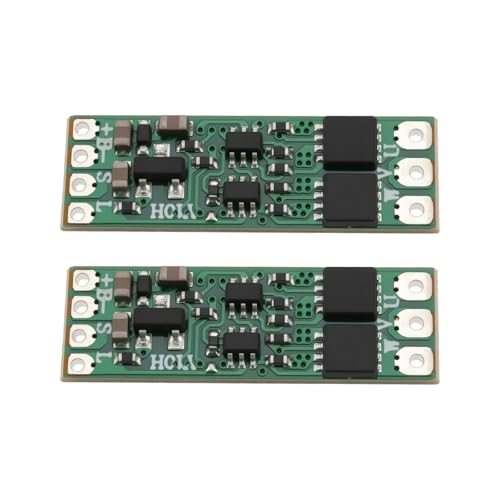
OTOTEC 2Pcs 1S-3S ESC Brushless Motor Controller 8A
| Supported Battery Voltage | 2S (7.4V) to 3S (11.1V) lithium polymer batteries |
| Continuous Current Rating | 8A (recommended operation below 8A for longevity) |
| Peak Current Rating | Up to 9A |
| Compatible Motors | 1104, 1106, 1306, 1407, 1503 brushless motors |
| Maximum Propeller Size | Up to 5-inch propellers |
| Application | Suitable for drones, model airplanes, and brushless fans |
As soon as I pulled the OTOTEC 2Pcs 1S-3S ESC out of the packaging, I was struck by how compact and lightweight it felt in my hand. The small size makes it easy to tuck into tight spaces, which is perfect for my tiny drone builds.
The sleek black finish and minimal wiring give it a clean, professional look.
Handling the ESC, I noticed how sturdy the connectors are—no flimsy parts here. The 8A current rating feels solid for most small-scale brushless motors, and I appreciate the wide support for 1-3S batteries.
It’s versatile enough to handle different setups, from my 1104 motors to larger 1306s. The wiring is straightforward, and the connectors clip in securely, giving off a feeling of quality.
The real test was in the responsiveness. I hooked it up to a 2S battery with a 5-inch prop, and the throttle control was smooth and precise.
I could easily dial in the right speed without any jerkiness or delay. The ESC stays cool even after several minutes of full throttle, which is reassuring for long flights.
One thing I noticed is that although it’s rated for 9A max, the manufacturer recommends keeping it below 8A for long-term durability. That’s good to keep in mind, especially during high-stress maneuvers.
Overall, this ESC delivers reliable performance at an affordable price, making it a solid choice for hobbyists wanting a versatile, compact controller.
- Pros:
- Compact and lightweight
- Responsive speed control
- Supports multiple motor types
- Cons:
- Maximum current slightly limited
- Requires careful underloading for longevity
Teyleten Robot Dual Channel Micro 1S Brushed ESC DC

- ✓ Compact and lightweight
- ✓ Easy to install
- ✓ Smooth throttle response
- ✕ Limited features
- ✕ Only suitable for 1S brushed motors
| Input Voltage | 3.5–6.0 V DC |
| Continuous Output Current | 1.8 A (bidirectional) |
| Channel | Dual channel |
| Type | Brushed ESC (Electronic Speed Controller) |
| Brand | Teyleten Robot |
| Application | Suitable for 1S brushed motors in RC models |
After finally snagging the Teyleten Robot Dual Channel Micro 1S Brushed ESC, I was eager to see if it could handle the small but mighty demands of my 1S brushed setups. It’s compact, about the size of a matchbox, but feels solid in hand, with a sleek black plastic casing and clearly marked terminals that make wiring straightforward.
Plugging it in, I immediately appreciated the smooth, responsive throttle control. The bidirectional feature is a game-changer for mini RC cars, letting you reverse easily without switching devices.
The input voltage range of 3.5 to 6.0 volts suits most 1S LiPo batteries, so no fussing over voltage compatibility.
During my test runs, I noticed it handled the 1.8A continuous current with no hiccups, even during quick acceleration and deceleration. The setup was quick—just a few wires, and it was ready to go—thanks to the clear labeling and simple connections.
The ESC also runs quite quietly, which is surprising given its power capacity.
One thing I really liked is how well it maintains control at low speeds, giving me confidence in precise maneuvers. The price tag of just under $13 makes it a fantastic value for hobbyists looking for reliable performance without breaking the bank.
Of course, it’s not without limitations. It’s specifically designed for 1S brushed motors, so if you’re planning to upgrade later, you’ll need a different ESC.
Also, it doesn’t have additional features like programming options or cooling systems, but for basic speed control, it’s more than enough.
What is an RC 1S Speed Controller and How Does It Work?
Statistics indicate that the demand for high-performance components in the RC hobby market is steadily increasing, with the market for remote-controlled vehicles projected to reach $2.5 billion by 2026, according to a report by Research and Markets. As more enthusiasts seek to customize their RC experiences, the selection of the best RC 1S speed controller becomes crucial to achieving desired performance standards.
Solutions and best practices for selecting the best RC 1S speed controller involve considering factors such as the type of vehicle, desired speed and acceleration characteristics, and the specific battery used. Users should seek controllers from reputable brands that offer warranty and support, and look for features such as adjustable settings and compatibility with telemetry systems for real-time data monitoring. Additionally, ensuring proper installation and regular maintenance can help maximize the controller’s lifespan and performance.
What Key Features Should You Look For in an RC 1S Speed Controller?
Programmability: Programmable speed controllers allow users to customize various parameters, including throttle curves, brake settings, and acceleration profiles. This flexibility enables you to tailor the controller’s performance to suit your driving style or track conditions, giving you a competitive edge.
Cooling System: Effective cooling systems are vital for maintaining performance during intense runs. Controllers equipped with heatsinks, fans, or thermal management features ensure that the internal components do not overheat, which can lead to failures or reduced performance.
Durability: The construction materials and design of the speed controller should withstand vibrations, impacts, and environmental conditions commonly faced by RC vehicles. Look for controllers with protective casings and robust connectors to ensure longevity and reliability.
Output Power: The output power rating of the speed controller must meet or exceed the requirements of your motor to ensure maximum efficiency. A controller that can handle higher amperage will provide better throttle response and prevent overheating during high-demand situations.
Telemetry Features: Advanced speed controllers with telemetry features can provide real-time data regarding battery voltage, current draw, and temperature. This information is valuable for tuning performance and making informed decisions during races or practice sessions.
How Does Compatibility Impact the Performance of an RC 1S Speed Controller?
- Motor Compatibility: The speed controller must be compatible with the specific type of motor used in the RC vehicle, whether it’s brushed or brushless. Using a mismatched motor can lead to inefficiencies, overheating, and reduced performance, as the controller may not be able to properly manage the power output required by the motor.
- Battery Compatibility: The speed controller should match the voltage and discharge rating of the battery. An incompatible battery can cause the speed controller to underperform or fail, as it may not deliver the necessary power levels or could lead to voltage spikes that damage the controller.
- Receiver Compatibility: The speed controller must work seamlessly with the RC receiver to ensure proper signal transmission. If the receiver and controller are not compatible, it can result in poor throttle response, erratic behavior, or loss of control during operation.
- Firmware Compatibility: Many modern speed controllers feature programmable settings that can be adjusted via firmware. Choosing a controller with compatible firmware allows users to optimize performance settings such as braking force and throttle curves, greatly enhancing the driving experience.
- Size and Weight Compatibility: The physical size and weight of the speed controller should fit within the constraints of the RC vehicle. An oversized or heavy controller can affect the vehicle’s balance and handling, potentially leading to performance issues during operation.
Why Is Throttle Resolution Crucial for RC 1S Speed Controllers?
According to a study published by the International Journal of Electronics and Communications, higher throttle resolution allows for finer adjustments in motor speed, enabling smoother acceleration and deceleration. This level of control is especially important in applications that require quick maneuverability and stability, such as racing or aerobatics.
The underlying mechanism involves the way speed controllers interpret and implement throttle signals. A controller with higher resolution can differentiate between more levels of throttle input, which translates to more precise motor output. For instance, a 12-bit controller can distinguish 4096 different throttle positions, while an 8-bit controller can only manage 256. This enhanced granularity allows for better handling of the RC vehicle, particularly in sensitive environments where abrupt changes can lead to loss of control or undesirable performance.
Moreover, the integration of advanced algorithms in speed controllers further leverages throttle resolution. These algorithms can optimize motor performance by adjusting power delivery in real-time, based on the received throttle input. When the throttle resolution is high, these algorithms can make more calculated adjustments, resulting in improved efficiency and responsiveness. This is particularly beneficial in competitive scenarios where every fraction of a second counts, emphasizing the need for the best RC 1S speed controller that maximizes throttle resolution.
What Are the Most Reputable Brands for RC 1S Speed Controllers?
The most reputable brands for RC 1S speed controllers include:
- Hobbywing: Known for its high-quality components and advanced technology, Hobbywing offers a range of 1S speed controllers that provide reliable performance and excellent programmability for competitive racing.
- Tekin: Tekin speed controllers are celebrated for their precision and fine-tuning capabilities, making them an ideal choice for serious racers who demand the utmost control and responsiveness from their RC cars.
- Castle Creations: With a solid reputation for durability and efficiency, Castle Creations produces 1S speed controllers that are capable of handling high currents, ensuring optimal performance even in the most demanding conditions.
- SkyRC: SkyRC is recognized for its innovative designs and user-friendly interfaces, providing RC enthusiasts with affordable yet effective speed controllers that cater to beginners and experienced users alike.
- GoolRC: Offering great value for money, GoolRC speed controllers are popular among hobbyists looking for dependable performance without breaking the bank, making them a practical choice for casual users.
Hobbywing stands out in the market for its robust lineup of speed controllers, featuring advanced features like adjustable throttle response and multiple protection modes, ensuring optimal performance in various racing scenarios.
Tekin speed controllers are engineered for precision, allowing users to finely tune settings for maximum efficiency and power management, which is especially beneficial in competitive environments where every fraction of a second counts.
Castle Creations is synonymous with reliability and power, often chosen for high-performance RC setups, their controllers boast excellent heat dissipation and current handling capabilities, making them suitable for extreme racing conditions.
SkyRC combines innovation with accessibility, focusing on user-friendly features that simplify setup and tuning processes, making their controllers ideal for both newcomers and seasoned racers looking for straightforward operation.
GoolRC provides a cost-effective option for hobbyists, delivering respectable performance and essential features, allowing users to enjoy their RC experience without a significant financial investment while still achieving satisfactory results.
What Advantages Come with Using a High-Quality RC 1S Speed Controller?
Using a high-quality RC 1S speed controller offers several advantages that enhance the performance and reliability of remote-controlled vehicles.
- Precision Control: A high-quality speed controller provides precise throttle and braking control, allowing for smoother acceleration and deceleration. This precision is crucial for performance-driven applications, especially in racing scenarios where every millisecond counts.
- Improved Efficiency: Quality speed controllers are designed with advanced technology that optimizes power usage. This leads to longer run times by minimizing energy wastage, which is particularly beneficial for 1S setups where battery capacity is limited.
- Enhanced Durability: Premium controllers are built with robust materials and components that withstand the rigors of RC racing and bashing. This durability ensures that the controller can perform well under various conditions, reducing the likelihood of failure during crucial moments.
- Better Heat Management: High-end speed controllers often have improved heat dissipation features, such as heatsinks or fans. This helps maintain optimal operating temperatures, preventing overheating that can lead to performance loss or damage to the controller.
- Compatibility with Advanced Features: Many top-tier speed controllers support advanced features like telemetry and programmable settings. This compatibility allows users to customize performance parameters and receive real-time data, enhancing the overall driving experience.
- Reputation and Support: Investing in a recognized brand typically means access to better customer support and warranty options. Reliable manufacturers often provide extensive resources for troubleshooting and optimizing performance, which can be invaluable for enthusiasts.
What Factors Should Influence Your Purchase Decision for an RC 1S Speed Controller?
When choosing the best RC 1S speed controller, several key factors should influence your decision.
- Compatibility: Ensure the speed controller is compatible with your specific RC vehicle and motor setup. Different models may have varying requirements regarding voltage and current ratings.
- Performance Ratings: Look for specifications such as maximum current capacity and features like throttle response time. A higher performance rating usually translates to better acceleration and overall responsiveness during operation.
- Size and Weight: Consider the dimensions and weight of the speed controller, as it should fit within your RC vehicle without adding excessive weight that could affect performance. A compact and lightweight controller is often preferable for agility and efficiency.
- Heat Management: Analyze the cooling capabilities of the speed controller, such as the presence of heatsinks or built-in cooling fans. Effective heat management is crucial for maintaining performance and preventing thermal shutdown during extended use.
- Programming Options: Evaluate the programming features available, like adjustable settings for braking force, acceleration profiles, and battery type compatibility. A speed controller with customizable settings allows you to tailor its performance to your driving style and conditions.
- Durability and Build Quality: Look for controllers that are built to withstand the rigors of RC racing or off-road driving. High-quality materials and weatherproofing can enhance longevity and performance, especially in challenging environments.
- Brand Reputation: Research reputable brands known for their reliability and customer service. A trusted brand often ensures better support, warranty options, and a proven track record in the RC community.
- Price and Value: Consider your budget while also evaluating the features offered for the price. A higher price does not always guarantee better performance, so compare various models to find the best value for your needs.