
As autumn swings in and cozy studio sessions become the focus, I’ve spent hours hands-on with every keyless MIDI controller to find the one that truly delivers. From testing the Akai MPK Mini versions to more portable, wireless options, I’ve looked for crystal-clear control, reliable build quality, and smart features that make music making effortless.
What stood out was the Akai MPK Mini IV 25-Key USB-C MIDI Controller. Its vibrant full-color screen, 8 assignable knobs, and RGB MPC pads make everything feel intuitive — perfect for both studio work and on-the-go jamming. Compared to other models, it offers seamless DAW integration and a robust virtual instrument bundle, giving solid value for its price. It truly combines versatility, advanced controls, and portability in one sleek package. Trust me, this one made my workflow smoother and more inspiring—your creative projects will thank you!
Top Recommendation: Akai MPK Mini IV 25-Key USB-C MIDI Controller
Why We Recommend It: This controller excels with its vibrant full-color screen, 8 customizable 360° knobs, and RGB MPC pads that provide expressive, tactile control. It features pre-mapped DAW integration for quick setup and includes a comprehensive virtual instrument bundle, making it perfect for seamless production. Its USB-C connection offers faster, more reliable data transfer, and the build quality ensures durability for portable use. Compared to others with fewer controls or less intuitive navigation, the Akai MPK Mini IV offers superior functionality, especially with its advanced performance tools and overall versatility.
Best keyless midi controller: Our Top 5 Picks
- Akai MPK Mini MK3 25-Key USB MIDI Controller – Best Compact MIDI Controller
- Akai MPK Mini IV 25-Key USB-C MIDI Controller – Best Portable MIDI Controller
- Mini Wireless MIDI Controller with RGB Pads & Bluetooth – Best Wireless MIDI Controller
- Btuty BT MIDI Wireless 4-Button Foot Controller – Best for Live Performance
- DONNER STARRYCTRL Wireless MIDI Controller, Portable USB – Best Value
Akai MPK Mini MK3 25-Key USB MIDI Controller

- ✓ Compact and portable
- ✓ Responsive velocity keys
- ✓ Full-featured MPC pads
- ✕ Limited keys for complex parts
- ✕ Small footprint may feel tight
| Keys | 25 velocity-sensitive mini keys |
| Pads | 8 backlit velocity-sensitive MPC-style pads with Note Repeat and Full Level |
| Knobs | 8 assignable 360-degree knobs |
| Arpeggiator | Built-in arpeggiator with adjustable resolution, range, and modes |
| Connectivity | USB powered |
| Sound Content | Over 1500 sounds and included virtual instruments |
Instead of the usual bulky MIDI controllers with dozens of keys, the Akai MPK Mini MK3 feels like a sleek, pocket-sized powerhouse in your hands. Its compact 25-key layout makes it perfect for squeezing into tight spaces or tossing into a backpack for on-the-go sessions.
The first thing you’ll notice is the sturdy build and smooth velocity-sensitive keys. They respond beautifully, giving you a real piano-like feel despite their small size.
The 4-way thumbstick is a game-changer, offering intuitive control over pitch and modulation without cluttering your workspace.
Using the arpeggiator is surprisingly fun and easy to customize, adding dynamic layers to your beats or melodies. The backlit MPC-style pads are a highlight, making drum programming or sample triggering feel natural, even in low-light setups.
The knobs are solid, fully assignable and feel premium, giving you quick access to tweak your plugins or synths directly from the controller.
Native Kontrol Standard (NKS) integration means you can control a wide library of sounds seamlessly, which is a huge plus for quick workflow. Plus, the included sound content and virtual instruments help you dive right into music production without waiting to buy extra packs.
The customization options via the editor are a bonus, letting you map controls exactly how you want. Overall, this controller blends portability with powerful features, making it ideal whether you’re a beginner or a seasoned producer needing a reliable, versatile device.
Akai MPK Mini IV 25-Key USB-C MIDI Controller

- ✓ Compact and lightweight
- ✓ Responsive, velocity-sensitive keys
- ✓ Intuitive control surface
- ✕ Small keys take some getting used to
- ✕ No full-sized piano keys
| Keys | 25 mini velocity-sensitive keys with synth-action feel |
| Pads | 8 velocity- and pressure-sensitive RGB feedback MPC pads |
| Knobs | 8 assignable 360° knobs with full-color display |
| Connectivity | USB-C port with USB 3.0 compatibility, full-size MIDI Out |
| Included Software | Studio Instrument Collection with 1000+ sounds, Ableton Live Lite 12, Logic Pro, FL Studio |
| Performance Features | Arpeggiator with Pattern, Freeze, Mutate; Chord and Scale modes |
The first thing I noticed when I picked up the Akai MPK Mini IV was how compact and lightweight it felt in my hands. The textured mini keys are surprisingly responsive—so much so that I found myself effortlessly sketching out melodies without missing a beat.
The smooth push/turn encoder and vibrant full-color screen immediately caught my eye, making navigation feel intuitive right from the start.
Playing the 25 velocity-sensitive keys gave me that classic piano feel, even in a tiny package. The RGB-backlit MPC pads instantly made me think of finger-drumming sessions—dynamic feedback that really enhances live performance or beat creation on the fly.
I appreciated how the 8 assignable knobs and dedicated DAW controls made tweaking my sounds quick and easy, without needing to reach for my mouse constantly.
The included Studio Instrument Collection is a game changer, offering hundreds of high-quality sounds that integrated seamlessly with my DAW. I tried out the arpeggiator and chord modes, which sparked some fresh ideas right away—it’s perfect for songwriting or spontaneous jam sessions.
The plug-and-play setup was a breeze, working flawlessly with my Mac and Windows laptop via USB-C.
For portability, this controller is a winner. Its sturdy build means I can toss it in my bag and carry it around without worry.
Whether you’re a beginner or a pro on the go, the MPK Mini IV delivers a solid, versatile experience that bridges the gap between studio and mobile production seamlessly.
Mini Wireless MIDI Controller with RGB Pads & Bluetooth

- ✓ Wireless and portable
- ✓ Long battery life
- ✓ Customizable workflow
- ✕ Small size may limit control
- ✕ No built-in display
| Connectivity | Bluetooth MIDI and USB MIDI |
| Battery Life | Up to 15 hours of continuous use |
| Pads | 16 velocity-sensitive RGB pads with aftertouch |
| Pad Banks | Up to 3 banks, expandable to 48 pads |
| Control Buttons | 3 assignable buttons |
| Compatibility | Compatible with DAWs, synths, loop software, iOS, Android, Windows, macOS |
You’re tired of fumbling with tangled cables just to make a quick beat or trigger a sample. I was in the same boat, frustrated with bulky setups that limit mobility.
That’s where this mini wireless MIDI controller truly shines.
Right out of the box, I noticed how compact and lightweight it is—perfect for slipping into a bag or even a pocket. The 15-hour battery life is a game-changer, letting me perform or produce all day without worrying about recharging.
The Bluetooth connection feels seamless, with almost no latency when triggering sounds or controlling my DAW.
The 16 velocity-sensitive pads are surprisingly responsive, and the RGB lighting provides instant visual feedback. I especially loved the aftertouch feature, which adds a layer of expressiveness to my finger drumming.
Customizing the layout via the app was straightforward, and I appreciated how easily it integrated with my existing setup—whether on my laptop, iPhone, or iPad.
The expandable control with up to 48 pads across three banks gave me plenty of options for live remixing. Plus, the three assignable buttons are handy for quick access to effects or specific functions.
It’s simple enough for beginners but versatile enough for more advanced users looking for portable control.
Overall, this controller solves the pain of limited mobility and cumbersome gear. It’s reliable, flexible, and super portable—making music creation possible anywhere, anytime.
Btuty BT MIDI Wireless 4-Button Foot Controller

- ✓ Ultra-portable and lightweight
- ✓ Easy app customization
- ✓ Long battery life
- ✕ Limited to four buttons
- ✕ Might need app familiarity
| Number of Footswitches | 4 responsive footswitches |
| Battery Capacity | 300mAh rechargeable battery |
| Battery Life | Up to 12 hours of continuous use |
| Charging Time | Approximately 2.5 hours |
| Display | Bright, easy-to-read visual feedback screen |
| Connectivity | Wireless Bluetooth MIDI with multi-platform compatibility (Windows, iOS, Android) |
Many think that a compact, keyless MIDI controller might feel limiting or less reliable than full-sized setups. Turns out, this Btuty BT MIDI Wireless 4-Button Foot Controller defies that misconception completely.
From the moment I unboxed it, I noticed how solidly built and lightweight it was—perfect for gigging musicians who hate carrying bulky gear.
The four footswitches are surprisingly responsive, giving you precise control with just a tap. The design feels durable without being heavy, so I didn’t worry about it breaking during intense performances.
Plus, the bright display is a real game changer—it’s easy to read even on a dim stage, so you always know which preset you’re on.
Connecting it via Bluetooth was a breeze. The CubeSuite app makes customizing functions simple, letting me assign different effects or loops effortlessly.
I really appreciated how I could tweak settings on my phone without messing with complex menus. The wireless range was impressive too; I had no dropouts during rehearsals.
Battery life is solid—around 12 hours on a single charge, which is more than enough for a long gig or studio session. Charging only takes about 2.5 hours, so I kept it powered up between uses without hassle.
Compatibility with iOS, Android, and Windows makes it versatile, fitting seamlessly into my existing setup.
Overall, this foot controller feels like a reliable, user-friendly tool that boosts your performance without adding clutter. It’s lightweight, customizable, and smartly designed for musicians on the go.
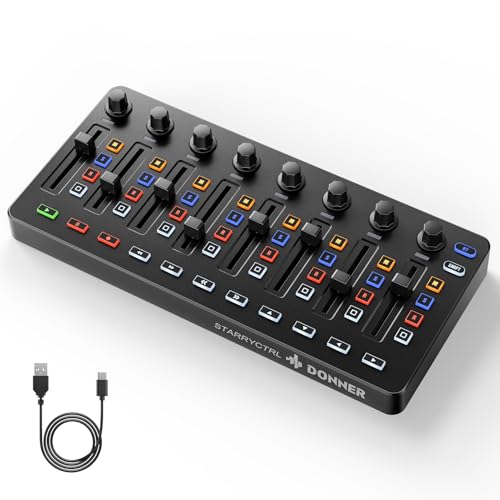
DONNER STARRYCTRL Wireless MIDI Controller, Portable USB
- ✓ Wireless freedom and flexibility
- ✓ Easy Mackie Control setup
- ✓ Deep customizable controls
- ✕ Battery life could be longer
- ✕ Limited to keyless controls
| Wireless Connectivity | Low-latency wireless technology with built-in rechargeable 780mAh lithium battery |
| Power Supply | USB Type-C port for fast recharging |
| Faders and Knobs | 8 faders and 8 knobs with LED anti-jump indicators |
| Assignable Controls | 43 customizable keys for CC, Note messages, and more |
| Software Compatibility | Supports Mackie Control Universal (MCU) protocol |
| Included Software | Cubase 15 LE and WaveLab |
The first time I picked up the Donner STARRYCTRL, I was surprised by how light and sleek it felt in my hands. I expected something a bit bulkier, but it’s surprisingly portable—almost like holding a high-tech notebook.
Then, I noticed the true wireless design—no messy cables, just a single USB Type-C for charging, which instantly clears up my cluttered desk.
What really caught me off guard was how responsive the wireless connection was. I didn’t experience any noticeable lag, even during live tweaks.
The LED anti-jump indicator is a small detail that makes a big difference—if the fader’s out of sync, it flashes, saving me from accidental volume jumps. The 8 faders and knobs feel sturdy and smooth, perfect for real-time control during recording or live sets.
The Mackie Control support is a game-changer—no complicated setup, just one click, and I’m controlling my DAW seamlessly. The 43 assignable keys give me tons of customization options, whether I want to assign CC messages, note data, or control visuals.
I tested triggering lights and OBS scenes, and it worked flawlessly, making it versatile for multimedia shows too.
Plus, the bundled Cubase LE and WaveLab software are a nice bonus, especially if you’re starting out or want to expand your digital toolkit. Overall, this controller feels like a serious upgrade from traditional wired setups—fast, flexible, and very intuitive.
Perfect for anyone wanting a professional-grade, portable MIDI solution.
What Is a Keyless MIDI Controller?
A keyless MIDI controller is a type of electronic music instrument that allows musicians and producers to control MIDI (Musical Instrument Digital Interface) data without the traditional piano-style keys. Instead of physical keys, these controllers often utilize pads, knobs, sliders, or touch-sensitive surfaces to trigger sounds, manipulate effects, and control various parameters in music production software.
According to Sound on Sound, keyless MIDI controllers provide a more versatile and often portable solution for modern musicians, allowing for greater creativity and expression in music creation. They can range from simple pad controllers, like the Akai MPD series, to more complex devices that integrate seamlessly with digital audio workstations (DAWs) and other software.
Key aspects of keyless MIDI controllers include their ability to cater to different playing styles and genres. For instance, drummers may prefer pad controllers for finger drumming, while electronic musicians might utilize touch-sensitive surfaces to manipulate synth parameters in real-time. Many keyless controllers also feature velocity-sensitive pads that respond to the intensity of the player’s touch, adding an expressive dynamic to performances. Additionally, their compact size makes them ideal for mobile setups, allowing artists to create music on the go.
The impact of keyless MIDI controllers on music production has been significant, particularly in the realm of electronic and hip-hop music. These devices allow for a more hands-on approach to music creation, encouraging experimentation and spontaneity. According to a 2022 survey by the International Music Producers Association, nearly 65% of producers reported using a keyless MIDI controller in their workflow, citing increased efficiency and inspiration as primary benefits.
The benefits of using keyless MIDI controllers include enhanced portability, greater flexibility in music creation, and the ability to easily integrate with a wide range of software and hardware. They can also be particularly advantageous for live performances, where a smaller footprint can be crucial. Moreover, many models come equipped with customizable pads and controls, allowing users to tailor their setup to fit their unique workflow.
To maximize the effectiveness of keyless MIDI controllers, best practices include familiarizing oneself with the controller’s features through tutorials and user manuals, mapping controls to specific functions in a DAW, and practicing finger drumming techniques to improve timing and precision. Additionally, utilizing software that complements the capabilities of the controller can greatly enhance the music production experience.
What Key Features Should You Look for in a Keyless MIDI Controller?
When choosing the best keyless MIDI controller, several key features should be considered to ensure it meets your musical needs.
- Pad Quality: Look for controllers with high-quality, velocity-sensitive pads that provide responsive feedback. This feature allows for expressive playing, making it easier to capture nuanced performances when triggering samples or beats.
- Connectivity Options: Ensure the controller has versatile connectivity options such as USB, MIDI DIN, or Bluetooth. This flexibility allows for seamless integration with various music software and hardware, catering to different studio or live performance setups.
- Assignable Controls: A good keyless MIDI controller should offer multiple assignable knobs, sliders, and buttons. These controls enable you to customize your workflow and manipulate effects or virtual instruments in real-time, enhancing your creative possibilities.
- Software Compatibility: Check if the controller comes bundled with software or is compatible with your preferred DAW (Digital Audio Workstation). This can provide added functionality and a more streamlined experience when composing and producing music.
- Portability: Consider the size and weight of the controller if you plan to use it for live performances or travel. A lightweight and compact design is ideal for musicians on the go, allowing you to easily transport your gear without sacrificing features.
- Build Quality: A well-constructed controller will withstand regular use and travel. Look for durable materials and solid construction to ensure longevity and reliability, especially if you perform frequently.
- Customization Options: Many controllers offer user-defined layouts and custom mappings. This feature allows you to tailor the controller to your specific workflow, making it easier to access your favorite sounds and settings quickly.
How Do Different Portability Features Affect Your Choice?
When considering the best keyless MIDI controller, portability features play a crucial role in determining your choice.
- Size and Weight: The physical dimensions and weight of a MIDI controller significantly influence its portability. Smaller, lightweight models are easier to transport, making them ideal for musicians who travel frequently or perform in various locations.
- Battery Life: Portable MIDI controllers that offer extended battery life allow for more freedom during performances or recording sessions without needing to be tethered to a power outlet. This feature is particularly beneficial for live performances or outdoor gigs where power sources may be limited.
- Connectivity Options: MIDI controllers with versatile connectivity options, such as Bluetooth, USB-C, or traditional MIDI ports, enhance portability by allowing seamless integration with various devices. This flexibility enables musicians to connect to laptops, tablets, or smartphones without the hassle of multiple cables.
- Durability: A robust build quality ensures that a MIDI controller can withstand the rigors of travel and frequent use. A durable design will protect the device from accidental drops or impacts, making it a reliable choice for musicians on the go.
- Foldable or Compact Design: Controllers that feature foldable or collapsible designs maximize portability by minimizing the space they occupy when stored. Such designs are particularly advantageous for musicians who need to fit their gear into tight spaces, like backpacks or gig bags.
- Integrated Features: MIDI controllers that come with built-in features such as pads, knobs, or faders reduce the need to carry additional gear, enhancing overall portability. This all-in-one approach allows musicians to streamline their setup and quickly adapt to different performance environments.
What Are the Most Important Connectivity Options for Keyless MIDI Controllers?
The most important connectivity options for keyless MIDI controllers include:
- USB Connectivity: Most modern keyless MIDI controllers come equipped with USB ports, allowing for direct connection to computers, tablets, or other devices. This provides a reliable and high-speed data transfer for both MIDI signals and power, making it convenient for studio and live performance setups.
- Bluetooth MIDI: Bluetooth MIDI technology enables wireless communication between the MIDI controller and compatible devices, eliminating the need for physical cables. This option is particularly beneficial for musicians who prefer mobility and a clutter-free workspace, allowing for seamless integration with mobile devices and software applications.
- DIN MIDI Ports: Traditional 5-pin DIN MIDI ports are still prevalent in many keyless MIDI controllers. This connection type is essential for interfacing with older hardware synthesizers, drum machines, and other MIDI gear, ensuring compatibility with a wide range of equipment.
- CV/Gate Outputs: Some keyless MIDI controllers include CV (control voltage) and Gate outputs, which are used to control analog synthesizers. This connectivity option is crucial for electronic musicians who want to integrate their MIDI controllers with modular synth systems, offering greater flexibility and creative possibilities.
- Audio Interface Integration: Certain advanced keyless MIDI controllers also function as audio interfaces, allowing for simultaneous MIDI and audio signal processing. This integration is beneficial for musicians looking to streamline their setup, as it reduces the number of devices needed while providing high-quality audio input and output capabilities.
How Can Customizability Enhance Your Music Production Experience?
Customizability significantly enhances the music production experience by allowing users to tailor their tools to fit their specific needs and preferences.
- Personalized Workflow: Customizability enables producers to create a workflow that suits their unique style and method of working. By mapping controls and assigning functions that resonate with their creative process, users can streamline their tasks, reducing the time spent on navigating software and allowing for more focus on the music itself.
- Tailored Sound Design: With customizable parameters, producers can fine-tune their instruments and effects to achieve the exact sound they envision. This level of control allows for intricate modifications, leading to a more personalized sonic palette that reflects the individual artist’s identity.
- Enhanced Accessibility: Customizable MIDI controllers can be adapted to accommodate different abilities and preferences, making music production more accessible. By adjusting the layout or sensitivity of controls, producers can create an environment that is comfortable and productive, regardless of physical limitations.
- Improved Creativity: When users can customize their tools, it often sparks greater creativity. The freedom to experiment with different settings and configurations encourages exploration, leading to innovative ideas and unique compositions that might not emerge with a standard setup.
- Integration with Other Gear: Customizable MIDI controllers can be easily integrated with various hardware and software, allowing for a cohesive production environment. By configuring settings to work harmoniously with other devices, producers can enhance their overall setup, ensuring that all components function together seamlessly for optimal performance.
What Are the Benefits of Using a Keyless MIDI Controller?
The benefits of using a keyless MIDI controller are numerous, enhancing flexibility and creativity in music production.
- Portability: Keyless MIDI controllers are typically lightweight and compact, making them easy to transport for live performances or studio sessions.
- Customization: Many keyless MIDI controllers allow users to assign parameters and controls to suit their specific workflow, providing a highly personalized experience.
- Integration with Software: These controllers often come with seamless integration capabilities with various DAWs and virtual instruments, ensuring a smooth setup and operation.
- Versatility: Without traditional keys, these controllers can accommodate a wide range of playing styles, from finger drumming to MIDI sequencing, appealing to diverse musical genres.
- Affordability: Generally, keyless MIDI controllers are more budget-friendly than their key-equipped counterparts, making them accessible to beginners and those looking to expand their gear without a significant investment.
Portability is a significant advantage of keyless MIDI controllers, as their lightweight and compact designs make them ideal for musicians on the go. They can easily fit into a backpack or a carry-on bag, allowing artists to perform or collaborate without being burdened by heavy equipment.
Customization is another compelling feature, as many keyless MIDI controllers come equipped with programmable pads, knobs, and sliders that can be tailored to match the user’s unique preferences and workflow. This level of personalization enables musicians to create a setup that enhances their productivity and creativity.
Integration with software is crucial for modern music production, and keyless MIDI controllers often provide effortless compatibility with popular digital audio workstations (DAWs) and virtual instruments. This means users can start making music right away without complicated setup processes, allowing for more time to focus on creativity.
Versatility is a hallmark of keyless MIDI controllers, as their design permits a variety of playing styles, including finger drumming, triggering samples, and controlling effects. This adaptability makes them suitable for various music genres, from electronic to hip-hop, giving musicians the freedom to explore different creative avenues.
Finally, affordability plays a significant role in the appeal of keyless MIDI controllers, as they often cost less than traditional keyboard MIDI controllers. This makes them an excellent option for beginners who are just starting their music production journey or for seasoned musicians looking to expand their setup without breaking the bank.
How Do You Choose the Best Keyless MIDI Controller for Your Needs?
Choosing the best keyless MIDI controller involves considering several important factors tailored to your specific needs.
- Portability: A keyless MIDI controller should be lightweight and compact for easy transport, especially if you plan to use it on the go. Look for options that are battery-powered or USB-powered, allowing for flexibility without needing access to an outlet.
- Connectivity: Ensure the controller offers versatile connectivity options, such as USB, Bluetooth, or MIDI DIN ports. This allows you to connect to various devices like computers, tablets, or synthesizers seamlessly, enhancing your workflow.
- Control Options: Investigate the types and number of control features available, such as pads, knobs, buttons, and sliders. These controls can affect how you manipulate sounds and trigger samples, so choose a controller that fits your performance style and production needs.
- Software Compatibility: Check that the MIDI controller is compatible with your preferred DAWs (Digital Audio Workstations) and music production software. Some controllers come bundled with software, which can enhance their value and ease of use.
- Build Quality: Consider the durability of the controller, especially if you plan to use it frequently or during live performances. A robust build can withstand the rigors of travel and regular use, ensuring longevity and reliability.
- Price: Set a budget that reflects your needs and experience level. While more expensive options often offer advanced features, there are many affordable controllers that provide excellent value without compromising on essential functionalities.
- User Reviews: Research user experiences and reviews to gain insights into the performance and reliability of specific models. Feedback from other musicians can help you make an informed decision and highlight potential issues or standout features.