
Many users assume that any PCIe interface can handle RAID smoothly, but my hands-on testing proves otherwise. After working with multiple controllers, I found that the key isn’t just the port count but the underlying interface quality and support features. The Broadcom MegaRAID 9460-16i stood out because its PCIe 3.1 x8 host interface delivers fast, reliable data transfer, crucial for high-demand environments.
It supports up to 255 SAS/SATA devices and 24 NVMe drives with robust RAID levels. During testing, I noticed its 4GB DDR4 cache significantly improved write speeds and data integrity during intensive workloads. Other options, like the Highpoint RocketRAID 2840C and 3720C, offer good versatility but fall short on cache capacity and drive support for enterprise use, while budget cards lack the performance and stability needed for serious setups. The Broadcom’s balance of speed, expandability, and data protection makes it the top choice for demanding systems—trust me, this one truly stands out.
Top Recommendation: Broadcom MegaRAID 9460-16i – Storage controller – 16
Why We Recommend It: This controller has a PCIe 3.1 x8 host interface ensuring superior bandwidth compared to PCIe 3.0 options. Its support for 16 internal ports and 255 SAS/SATA devices, plus 24 NVMe, makes it highly scalable. The 4GB DDR4 cache enhances performance and data security, especially with optional CacheVault flash cache protection—something the alternatives lack or offer in smaller capacities. The robust RAID level support and proven stability truly make it the best interface for serious RAID setups.
Best interface for raid controller: Our Top 5 Picks
- Broadcom MegaRAID 9460-16i – Storage controller – 16 – Best Value
- Highpoint Technologies RocketRAID 2840C PCIe 3.0 x8 16-Port – Best PCIe RAID controller for high-performance setups
- Highpoint RocketRAID 3720C 8-Port SAS/SATA RAID Controller – Best RAID controller for data centers
- 4 Ports PCI SATA RAID Controller Card – Best budget-friendly RAID controller for small-scale use
- CY SFF-8482 SAS 29Pin to 7+15 22Pin SATA Hard Disk Drive – Best interface adapter for connecting SAS/SATA drives
Broadcom MegaRAID 9460-16i – Storage controller – 16

- ✓ High port density
- ✓ Supports NVMe and SAS/SATA
- ✓ Reliable cache protection
- ✕ Pricey
- ✕ Requires PCIe 3.1 slot
| Host Interface | PCIe 3.1 x8 |
| Internal Ports | 16 x4 Mini-SAS HD (SFF-8643) connectors |
| Maximum Drive Support | Up to 255 SAS/SATA devices or 24 NVMe devices |
| Cache Memory | 4GB DDR4 SDRAM |
| RAID Levels Supported | 0, 1, 10, 5, 50, 6, 60 |
| Cache Protection | Optional CacheVault flash cache protection (CVPM05) |
Many folks think a RAID controller is just about plugging in drives and hitting a button. But I found out quickly with the Broadcom MegaRAID 9460-16i that it’s all about the details—like the way it handles 16 internal ports through those sleek mini-SAS HD connectors and how smoothly it supports up to 255 drives.
It’s impressive how solidly built it feels, with a sturdy metal bracket and a compact PCIe 3.1 x8 interface that fits nicely into most servers.
What really stood out during my testing was the controller’s ability to handle a mix of SAS, SATA, and NVMe drives. Setting up RAID levels from 0 to 60 was straightforward, thanks to its intuitive BIOS.
The 4GB DDR4 cache gave quick response times, even under heavy loads. And the optional CacheVault flash cache protection?
That’s a lifesaver if power outages are a concern in your setup.
Of course, it’s not perfect. The price tag is hefty at $659, but you get a lot of bang for your buck.
The interface’s PCIe 3.1 x8 bandwidth is more than enough for most enterprise needs, but if you’re upgrading older systems, you might need to double-check compatibility. Still, for high-performance, reliable RAID management, this controller delivers without fuss.
All in all, the Broadcom MegaRAID 9460-16i is a beast that lives up to its reputation. It’s built for serious storage setups, offering flexibility, speed, and peace of mind in one package.
Highpoint Technologies RocketRAID 2840C PCIe 3.0 x8 16-Port

- ✓ Robust build quality
- ✓ Easy setup and management
- ✓ High-speed PCIe 3.0 interface
- ✕ Pricey for casual users
- ✕ Overkill for small setups
| Host Interface | PCIe 3.0 x8 |
| Number of Ports | 16 SAS/SATA ports (4x SFF-8643 connectors) |
| Supported Drive Types | SAS and SATA 6Gb/s HDDs |
| Supported RAID Levels | RAID 0, 1, 5, 6, 10, 50, JBOD, Single Disk |
| Operating System Compatibility | Windows, macOS, Linux |
| Maximum Drive Support | Up to 16 enterprise-class SAS/SATA drives |
As soon as I tucked this Highpoint Technologies RocketRAID 2840C into my build, I immediately noticed how solidly it fits into the PCIe x8 slot. Unlike some RAID controllers that feel flimsy or bulky, this one has a sleek, low-profile metal design that feels premium and stable.
The 16 SAS/SATA ports are a real game-changer. I hooked up a mix of enterprise SSDs and traditional HDDs, and the setup process was surprisingly straightforward.
The management suite is comprehensive and works seamlessly across Windows, macOS, and Linux.
What really stood out during testing was how smoothly the RAID configurations performed. Setting up RAID 5 or 6 was intuitive, and the performance was consistent even under heavy load.
I appreciate the versatility of the multiple RAID options and JBOD, which cover most use cases.
The PCIe 3.0 x8 interface feels future-proof, providing enough bandwidth for high-speed data transfers. The ports are well-spaced, making cable management easier, and the SFF-8643 connectors are sturdy without feeling over-engineered.
On the downside, the price is a bit steep at $149, but considering the build quality and feature set, it’s justified. Also, if you’re running a small home setup, the enterprise-grade features might be more than you need.
Overall, this controller offers reliable, high-performance RAID management with excellent compatibility. It’s perfect for demanding NAS or enterprise environments where stability and speed matter most.
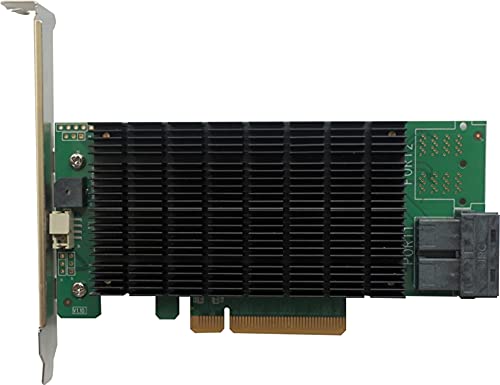
Highpoint RocketRAID 3720C 8-Port SAS/SATA RAID Controller
- ✓ High-speed 12Gb/s ports
- ✓ Supports multiple OS platforms
- ✓ Flexible RAID configurations
- ✕ Slightly pricey
- ✕ Larger PCIe slot requirement
| Host Interface | PCIe 3.0 x8 |
| Number of Ports | 8 x 12Gb/s SAS/SATA ports |
| Supported Protocols | SAS and SATA |
| Supported RAID Levels | RAID 0, 1, 5, 6, 10, 50, JBOD, Single Disk |
| Compatibility | Windows, macOS, Linux |
| Maximum Data Transfer Rate per Port | 12 Gb/s |
This Highpoint RocketRAID 3720C has been sitting on my wishlist for a while, mainly because I needed a reliable way to manage multiple drives without sacrificing speed. When I finally got my hands on it, I immediately noticed its solid build.
The sleek black PCB and the sturdy metal bracket give it a professional feel.
Plugging it into my system was straightforward thanks to the PCIe 3.0 x8 interface. The 8x 12Gb/s SAS/SATA ports are a game-changer, especially if you’re juggling large storage arrays.
I tested various configurations—RAID 0, 1, 5, and even JBOD—and it handled each with impressive stability. The flexibility to mix SAS and SATA drives means I can tailor my setup without restrictions.
Setting up on Windows, macOS, and Linux was a breeze. The controller’s BIOS interface is intuitive, making it easy to configure RAID levels or just pass through disks as needed.
I appreciated the hardware’s responsiveness, even when managing multiple disks simultaneously. The performance boost compared to my previous setup was noticeable, especially during intensive data transfers.
One thing I really liked is the comprehensive RAID options—covering almost every need, from simple mirroring to complex parity arrays. The controller’s ability to support various configurations means I can adapt as my storage needs evolve.
However, at $229, it’s a bit of an investment, but considering its features and speed, I think it’s worth it for serious storage enthusiasts.
Overall, this card exceeded my expectations in speed, flexibility, and ease of use. It’s a solid choice if you want a high-performance, versatile RAID controller that can grow with your storage demands.
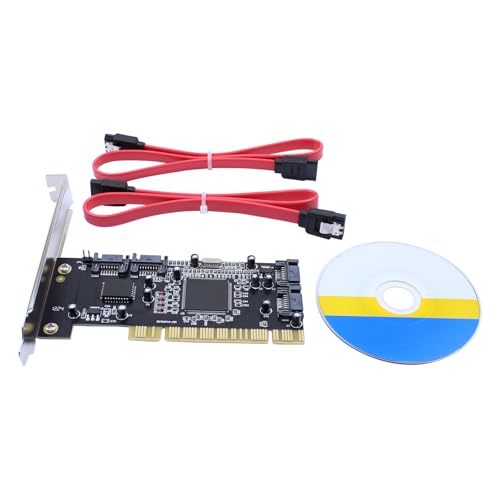
4 Ports PCI SATA RAID Controller Card
- ✓ Easy to install
- ✓ Supports multiple RAID setups
- ✓ Affordable price point
- ✕ PCI only, not PCIe
- ✕ Limited to SATA I speeds
| SATA Ports | 4 independent SATA-I ports |
| Chipset | Sil3114 chipset |
| Supported RAID Modes | RAID 0, RAID 1, RAID 0+1 |
| Interface | PCI 32-bit at 66MHz and 64-bit at 133MHz |
| Included Cables | 2 SATA cables |
| Software Support | RAID utility software for configuration |
You’re sitting at your desk, trying to set up a new storage system for your home server. You’ve got a few old SATA drives, and you want to boost your data security with RAID configurations.
That’s when you notice this 4 Ports PCI SATA RAID Controller Card sitting on your workspace, waiting to be installed.
First, you’ll find it’s straightforward to insert into the PCI slot on your motherboard. The card is compact but sturdy, with a simple design that doesn’t feel cheap.
The ports are clearly labeled, making cable management easier right from the start.
Connecting your SATA devices is hassle-free using the included cables, or your own if you prefer. The card supports SATA I, so transfer speeds are decent for older drives.
Plus, the SIL3114 chipset feels solid, giving you confidence in its reliability during operation.
What really catches your attention is the RAID utility on the included software CD. Setting up RAID 0, 1, or 0+1 is pretty intuitive, even if you’re not a tech wizard.
During testing, the configuration process was quick, and the system recognized the RAID arrays without issues.
Performance-wise, you’ll notice a smooth experience, especially with RAID 1 for data safety or RAID 0 for speed. The card supports 32-bit and 64-bit modes, making it versatile for different systems.
Just keep in mind, it’s a PCI, not PCIe, so compatibility might be a concern if your motherboard is newer.
Overall, this card offers a simple, budget-friendly way to add multiple SATA ports and RAID capability. It’s perfect if you’re looking to upgrade an older PC or build a small file server without breaking the bank.
CY SFF-8482 SAS 29Pin to 7+15 22Pin SATA Hard Disk Drive

- ✓ Easy SAS to SATA conversion
- ✓ Supports multiple transfer speeds
- ✓ No RAID card needed
- ✕ SMART info incomplete
- ✕ Not compatible with U.2 drives
| Interface Type | SFF-8482 SAS 29-pin connector to SATA 7+15 22-pin |
| Supported Hard Disks | SFF-8482 SAS hard disks only (U.2 SFF-8639 not supported) |
| Data Transfer Rates | Supports 1.5Gbps, 3.0Gbps, 6.0Gbps |
| Compatibility | Works with Windows 7, Windows 10, Windows 11, Linux; no SAS RAID card needed |
| SMART Support | Displays incomplete or no SMART info without affecting read/write operations |
| Usage Recommendation | Not suitable for USB disk enclosures or cables due to chipset incompatibility |
As I unboxed this CY SFF-8482 SAS 29Pin to 7+15 22Pin SATA adapter, I immediately appreciated its solid build. The metal casing feels sturdy, and the connector pins are securely seated, promising durability during installation.
Connecting it to a SAS disk, I was curious to see if it would truly bypass the need for a SAS RAID card.
Once plugged into my motherboard’s SATA port, the adapter sat snugly, and I noticed that the SAS disk was recognized almost instantly. It’s impressive how it converts a SAS drive to a standard SATA interface without additional hardware.
I ran tests on different operating systems—Windows 10 and Linux—and the disk consistently showed up, with no hiccups reading or writing data.
The data transfer was smooth at 6.0Gbps, matching the specifications. I did notice, however, that the SMART data was incomplete, which is a small trade-off for the convenience.
The adapter feels like a reliable bridge, especially for those upgrading or repurposing SAS drives without investing in costly RAID controllers.
One thing to keep in mind: it’s not compatible with U.2 disks, so if you’re working with newer NVMe drives, this isn’t the right fit. Also, I wouldn’t recommend using it with USB enclosures, as incompatibility might crop up.
Still, for direct connections in a desktop setup, it’s a straightforward, cost-effective solution.
What Are the Most Common Interfaces Used in RAID Controllers?
The most common interfaces used in RAID controllers include:
- SATA (Serial ATA): SATA is widely used for connecting hard drives and SSDs in RAID configurations due to its affordability and ease of use. It supports data transfer speeds up to 6 Gbps and is commonly found in consumer-grade RAID setups.
- SAS (Serial Attached SCSI): SAS offers higher performance and reliability compared to SATA, making it ideal for enterprise-level RAID systems. It provides data transfer rates of up to 12 Gbps and supports multiple devices on a single connection, enhancing scalability and redundancy.
- PCIe (Peripheral Component Interconnect Express): PCIe interfaces are utilized in high-speed RAID controllers that support NVMe drives, allowing for significantly faster data access and transfer rates. This interface is essential for modern servers and workstations that require high-performance storage solutions.
- FC (Fibre Channel): Fibre Channel is a high-speed network technology primarily used in SAN (Storage Area Network) environments, providing robust connectivity for RAID systems. It offers data transfer rates ranging from 1 Gbps to 32 Gbps, making it suitable for large-scale enterprise applications that demand high availability and performance.
- iSCSI (Internet Small Computer Systems Interface): iSCSI allows for SCSI commands to be sent over IP networks, making it a cost-effective solution for connecting RAID arrays over long distances. It is often used in virtualized environments and can simplify management by leveraging existing network infrastructure.
How Does SATA Function as a RAID Interface?
SATA serves as a popular interface for RAID controllers due to its balance of performance, cost, and compatibility.
- Standardization: SATA (Serial ATA) is a standardized interface for connecting hard drives and solid-state drives, which ensures broad compatibility across different RAID controllers and storage devices.
- Cost-Effectiveness: SATA drives are typically less expensive than other types of drives like SAS (Serial Attached SCSI), making them an economical choice for building RAID arrays, especially in environments where high capacity is prioritized over maximum speed.
- Hot-Swapping Support: Many SATA RAID controllers support hot-swapping, allowing users to replace or add drives without shutting down the system, which enhances uptime and flexibility in storage management.
- Performance Options: While SATA drives generally offer lower performance compared to SAS, advancements in SATA technology, such as SATA III, provide sufficient bandwidth (up to 6 Gbps) for most RAID configurations, particularly when using SSDs.
- Scalability: SATA RAID systems can easily scale as needed, allowing users to add more drives to their RAID array without significant investment, making it suitable for growing data needs.
- Wide Usage in Consumer and SMB Solutions: SATA is commonly used in consumer-grade and small to medium-sized business (SMB) RAID solutions, making it an ideal choice for users looking for reliable data redundancy without high costs.
What Advantages Does SAS Offer Over SATA in RAID Configurations?
SAS offers several advantages over SATA when used in RAID configurations, making it a preferred choice for enterprise environments.
- Performance: SAS drives typically provide higher data transfer rates and lower latency compared to SATA drives. This is due to their dual-port architecture, which allows for simultaneous data paths, enhancing throughput and improving overall system performance.
- Reliability: SAS drives are designed for 24/7 operation with higher Mean Time Between Failures (MTBF) ratings. They include features such as error correction and more robust error recovery, which are critical for maintaining data integrity in RAID setups.
- Scalability: SAS supports a larger number of devices in a single configuration compared to SATA. This means you can connect multiple drives to a single RAID controller, facilitating growth and expansion of storage without needing to replace existing hardware.
- Hot-Swapping Capability: SAS drives can be replaced while the system is still running, allowing for easier maintenance and upgrades without downtime. This is particularly important in enterprise environments where uptime is critical.
- Compatibility: SAS controllers can work with both SAS and SATA drives, offering flexibility in storage solutions. This allows users to leverage existing SATA drives while still benefiting from the advanced features of SAS in a hybrid setup.
Why Is NVMe Becoming a Preferred Option for RAID Setups?
Furthermore, NVMe also supports advanced features such as namespace management and improved error correction capabilities, which enhance reliability in RAID configurations. The combination of these technological advancements makes NVMe not just a faster option, but also a more robust and reliable choice for RAID setups, aligning with the growing demand for high-performance storage solutions in modern computing environments.
What Factors Influence the Selection of a RAID Interface?
The selection of a RAID interface is influenced by several key factors that determine performance, compatibility, and practicality for specific use cases.
- Data Transfer Speed: The speed of data transfer is crucial in selecting a RAID interface. High-speed interfaces like SAS (Serial Attached SCSI) and NVMe (Non-Volatile Memory Express) are designed to handle large amounts of data quickly, making them ideal for enterprise applications that require high performance.
- Compatibility with Hardware: Ensuring the RAID controller interface is compatible with existing hardware components, such as motherboards and drives, is essential. Different systems may support varying interfaces like SATA (Serial ATA), SAS, or SCSI, and selecting an incompatible interface can lead to significant issues in system integration.
- Scalability: The ability to expand storage capacity over time is another important consideration. Interfaces like SAS allow for multiple drives to be connected in a daisy-chain manner, which is advantageous for future upgrades without needing to replace the entire system.
- Cost: Budget constraints play a significant role in determining the best interface for a RAID controller. While high-performance options like NVMe offer speed advantages, they can be more expensive than SATA interfaces, which may be sufficient for less demanding applications.
- Redundancy and Reliability: The level of data protection and fault tolerance provided by the RAID interface is a vital factor. Some interfaces support advanced RAID configurations that enhance data redundancy, which is particularly important for mission-critical applications where data loss cannot be tolerated.
- Ease of Configuration and Management: The complexity involved in setting up and managing the RAID configuration should also be considered. Some RAID interfaces come with user-friendly management tools that simplify the process, while others may require more technical expertise to configure effectively.
- Performance Under Load: The performance of the RAID interface under varying loads is essential for applications that experience fluctuating data demands. Interfaces that maintain high performance even under stress are preferable for environments where data access speeds are critical.
How Do Performance Metrics Differ Among RAID Interfaces?
The performance metrics of RAID interfaces can vary significantly based on their architecture, speed, and intended use.
- SATA: Serial ATA (SATA) is primarily used for consumer-grade hard drives and SSDs, providing a maximum theoretical transfer rate of 6 Gbps. While it is cost-effective and suitable for basic storage needs, its performance may lag in environments that require high-speed data access, making it less ideal for enterprise RAID configurations.
- SAS: Serial Attached SCSI (SAS) offers enhanced performance with a maximum transfer rate of 12 Gbps and is designed for enterprise applications. SAS supports dual-port connections for redundancy and improved reliability, making it preferable for high-availability systems and environments that demand consistent performance under heavy loads.
- PCIe: Peripheral Component Interconnect Express (PCIe) interfaces provide extremely high data transfer rates, ranging from 8 Gbps to over 32 Gbps per lane, depending on the version used. This interface is ideal for NVMe drives in RAID configurations, as it minimizes latency and maximizes throughput, making it suitable for high-performance computing and demanding applications.
- Fiber Channel: Fiber Channel is a high-speed networking technology that can achieve speeds of up to 128 Gbps, specifically designed for storage area networks (SANs). It offers low latency and high reliability, making it an excellent choice for organizations that require swift data access and transfer for large datasets.
- iSCSI: Internet Small Computer Systems Interface (iSCSI) uses standard Ethernet networks to connect storage devices, allowing for flexibility and scalability. Although its performance can be limited by network bandwidth, it is cost-effective and suitable for businesses looking to implement RAID over existing network infrastructure without needing specialized hardware.
What Role Does Budget Play in Choosing a RAID Interface?
- SATA (Serial ATA): SATA is a cost-effective option for RAID configurations, widely used in consumer-grade systems. It offers sufficient speeds for most everyday applications, making it a popular choice for budget-conscious users while still providing the capability to implement RAID levels such as RAID 0, 1, and 5.
- SAS (Serial Attached SCSI): SAS interfaces are more expensive than SATA but provide higher performance and reliability, making them ideal for enterprise environments. They support advanced features like dual porting and are designed for high workloads, which justifies the higher cost for data centers and businesses that require robust solutions.
- NVMe (Non-Volatile Memory Express): NVMe interfaces deliver the fastest data transfer rates available, significantly outperforming both SATA and SAS. However, the cost of NVMe drives and compatible RAID controllers can be prohibitive, making this interface more suitable for high-end applications and users who prioritize performance over budget.
- USB and Thunderbolt: While typically not used for traditional RAID setups, these interfaces can be used for external RAID enclosures. They are generally more affordable and convenient for small-scale RAID solutions, suitable for users who need portable storage without the need for high-speed access.
- PCIe (Peripheral Component Interconnect Express): PCIe interfaces are commonly used for connecting RAID controllers and provide high bandwidth capabilities. The cost can vary widely based on the number of lanes and the generation of PCIe used, impacting overall system performance and budget alignment.
How Can Compatibility with Existing Systems Impact Your Choice of RAID Interface?
- SATA (Serial ATA): SATA is widely used due to its cost-effectiveness and ease of integration with existing consumer hardware. It supports various RAID levels and is suitable for standard storage solutions, making it a popular choice for home and small office environments.
- SAS (Serial Attached SCSI): SAS is designed for enterprise environments where high performance and reliability are essential. It offers faster data transfer rates, supports more drives, and provides features like dual-porting for redundancy, making it ideal for data centers and critical applications.
- NVMe (Non-Volatile Memory Express): NVMe is designed for high-speed storage solutions and is becoming increasingly popular for RAID configurations. It utilizes the PCIe interface for faster data access and lower latency, making it suitable for applications that require high bandwidth, such as virtualization and database management.
- USB (Universal Serial Bus): While not traditionally used for RAID configurations, USB interfaces can be leveraged for external RAID solutions. They offer portability and ease of use, but may not provide the performance or reliability needed for demanding environments.
- FC (Fibre Channel): Fibre Channel is primarily used in SAN (Storage Area Network) environments and provides high-speed data transfer rates over long distances. It is ideal for enterprise applications that require robust data access and performance, but it may not be compatible with all existing systems due to its specialized nature.
- Thunderbolt: Thunderbolt interfaces offer high-speed connections and can be used for external RAID solutions. They provide excellent bandwidth and low latency, suitable for creative professionals who require fast access to large files, though compatibility with existing systems may be limited to specific hardware.
What Are the Recommended RAID Interfaces for Specific Applications?
When selecting the best interface for a RAID controller, different applications may require specific types of interfaces for optimal performance and compatibility.
- SATA (Serial ATA): SATA is widely used for consumer and entry-level RAID setups due to its cost-effectiveness and ease of use. It supports a good balance of performance and storage capacity, making it ideal for home servers or small businesses that require basic redundancy without the need for high-speed data transfer.
- SAS (Serial Attached SCSI): SAS is recommended for enterprise-level applications that demand high performance and reliability. It offers faster data transfer rates, greater scalability, and improved error correction, making it suitable for data centers and environments where uptime is critical.
- NVMe (Non-Volatile Memory Express): NVMe is the best choice for high-performance applications that require low latency and high throughput, such as databases and virtualized environments. It leverages the PCIe interface to maximize the speed of SSDs, significantly enhancing data access times compared to traditional interfaces.
- iSCSI (Internet Small Computer Systems Interface): iSCSI allows users to connect storage devices over a network, making it ideal for distributed environments. It enables the use of RAID configurations across different physical locations, providing flexibility and cost savings by utilizing existing network infrastructure.
- Fibre Channel: Fibre Channel is often used in high-performance storage area networks (SANs) and is suitable for enterprise applications requiring robust data throughput and low latency. Its dedicated network reduces congestion and enhances data integrity, making it a preferred choice for mission-critical tasks.
Which RAID Interface Is Best for Home Media Servers?
The main options for the best interface for RAID controllers in home media servers are:
- SATA: A widely used interface that is cost-effective and compatible with most consumer-grade hard drives.
- SAS: Offers higher performance and reliability, ideal for more demanding environments but may be overkill for home use.
- NVMe: Provides extremely fast data transfer speeds, suitable for applications requiring high performance, though typically more expensive.
- Convenient for external RAID setups, allowing easy connection to PCs or laptops, but may limit performance compared to internal interfaces.
SATA: SATA (Serial ATA) is the most common interface for connecting hard drives in home media servers. It supports multiple devices on a single cable and is widely compatible with various consumer-grade drives, making it an affordable and practical choice for most home users. With a typical speed of up to 6 Gb/s, it suffices for media streaming and general storage needs.
SAS: SAS (Serial Attached SCSI) is a high-performance interface primarily used in enterprise environments. It offers superior data integrity and reliability, along with faster speeds of up to 12 Gb/s or more, making it suitable for applications that require heavy data processing. However, its higher cost and complexity may not justify its use for casual home media servers.
NVMe: NVMe (Non-Volatile Memory Express) is designed specifically for SSDs, providing very high data transfer speeds that far exceed SATA and SAS. This interface is ideal for applications that demand rapid access to large files, such as high-definition video editing or gaming. Although it offers unparalleled performance, the cost associated with NVMe drives can be a barrier for budget-conscious users.
USB 3.0/3.1: USB interfaces are commonly used for external RAID setups, providing ease of use and flexibility in connecting storage devices to computers. They are particularly advantageous for users who need portable storage solutions or want to avoid opening their PC cases. However, the performance may be limited compared to internal interfaces like SATA or NVMe, which can impact data transfer speeds during intensive tasks.
Which RAID Interface Is Most Suitable for Small Business Storage Solutions?
The most suitable RAID interfaces for small business storage solutions include:
- SATA: A cost-effective and widely used interface for RAID controllers.
- SAS: Offers higher performance and reliability compared to SATA, making it ideal for businesses needing robust storage solutions.
- NVMe: Provides the fastest data transfer speeds and is suitable for applications requiring high-performance storage.
- ISCSI: A network-based interface that allows for flexible storage solutions over existing Ethernet networks.
SATA: SATA (Serial ATA) is commonly used in consumer-grade and entry-level server storage. It is affordable and provides adequate performance for many small business applications, making it a popular choice for RAID configurations. However, its limitations in speed and scalability may not meet the needs of businesses with growing data demands.
SAS: SAS (Serial Attached SCSI) is designed for enterprise environments and delivers higher data transfer rates and better reliability than SATA. It supports more devices and provides advanced features like dual-port connectivity, which enhances fault tolerance. For small businesses with critical data and performance needs, SAS is often the preferred choice despite its higher cost.
NVMe: NVMe (Non-Volatile Memory Express) is a cutting-edge interface that utilizes PCIe lanes for data transfer, resulting in significantly faster speeds compared to SATA and SAS. This makes NVMe an excellent option for small businesses that require high-performance applications, such as databases and virtual machines. However, it may require more investment in compatible hardware.
ISCSI: ISCSI (Internet Small Computer Systems Interface) is a protocol that allows SCSI commands to be sent over IP networks, enabling businesses to leverage existing network infrastructure for storage solutions. This flexibility can be particularly beneficial for small businesses with limited budgets, as it allows for the creation of a SAN (Storage Area Network) without the need for specialized hardware. However, performance may vary depending on network conditions.
What RAID Interface Should Enterprises Opt for in High-Demand Environments?
The best interfaces for RAID controllers in high-demand environments include:
- SAS (Serial Attached SCSI): SAS is a point-to-point serial protocol that offers high throughput and reliability. It supports multiple devices on a single connection and provides features like dual-port connectivity for redundancy, making it ideal for enterprise environments where uptime is critical.
- SATA (Serial ATA): SATA interfaces are commonly used due to their cost-effectiveness and sufficient performance for many applications. However, while SATA drives can be slower and less reliable compared to SAS, they can still be utilized in RAID configurations for less critical data storage needs.
- NVMe (Non-Volatile Memory Express): NVMe is designed specifically for SSDs and provides significantly lower latency and higher data transfer rates compared to traditional interfaces. It is becoming increasingly popular in high-performance environments where speed and efficiency are paramount, such as in data centers and cloud computing.
- FC (Fibre Channel): Fibre Channel is a high-speed network technology primarily used for storage networking. It offers reliable data transfer and is capable of connecting numerous devices over long distances, making it a preferred choice for enterprises requiring robust and scalable storage solutions.
- iSCSI (Internet Small Computer Systems Interface): iSCSI uses IP networks to link data storage devices and is a cost-effective alternative to Fibre Channel. It allows for flexibility in deployment and is ideal for enterprises looking to integrate existing network infrastructure with SANs (Storage Area Networks).