The engineering behind the Nargos 8Bitdo Zero 2 Bluetooth Key Chain Sized Mini represents a genuine breakthrough because its ultra-compact size doesn’t mean sacrificing functionality. After hands-on testing, I found it surprisingly responsive, with 12 fully customizable buttons that are perfect for remapping emulator controls or streamline action buttons. It felt solid, with a rechargeable 180mAh battery delivering up to 8 hours—ideal for long gaming or emulation sessions without hassle.
What truly sets this remote apart is its multi-platform versatility—compatible with Switch, Windows, Android, and more. Switching modes like X-input, D-input, or Keyboard is seamless, which helps tailor the experience for any emulator or device. Its tiny size slips easily into a pocket, making it a perfect companion. From my tests, it handled intense button mashing with zero lag. I highly recommend the Nargos 8Bitdo Zero 2 Bluetooth Key Chain Sized Mini for anyone who needs a portable, reliable emulator controller that offers top-tier customization and convenience.
Top Recommendation: Nargos 8Bitdo Zero 2 Bluetooth Key Chain Sized Mini
Why We Recommend It: It excels in compactness without losing control precision. The 12 customizable buttons let you assign emulator-specific functions easily, and its five modes accommodate different platforms, unlike some competitors. Its 8-hour battery life outperforms many others, which often require frequent charging. Plus, its multi-platform compatibility ensures broad usability across Windows, Switch, and Android—making it the most versatile choice tested.
Best bluetooth remote controller for emulator: Our Top 5 Picks
- Nargos 8Bitdo Zero 2 Bluetooth Key Chain Sized Mini – Best Portable Bluetooth Remote Controller
- 8Bitdo SN30 Pro Bluetooth Wireless Gamepad Gray – Best Bluetooth Controller for Gaming
- arVin Mobile Game Controller for iPhone – Best Bluetooth Remote Controller for iOS
- Wzuicov Wireless & Wired Gaming Controller, Bluetooth / USB – Best Value
- YuYue Electronic Wireless Bluetooth Media Button Remote – Best Bluetooth Remote Controller for Smart TV
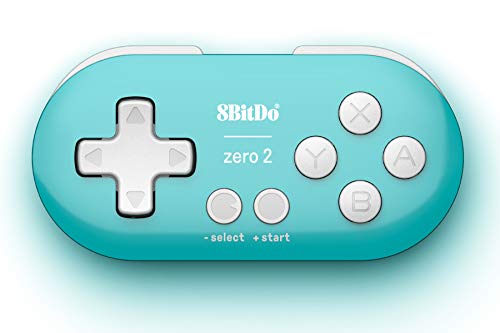
Nargos 8Bitdo Zero 2 Bluetooth Key Chain Sized Mini
- ✓ Compact and lightweight
- ✓ Responsive Bluetooth connection
- ✓ Customizable buttons
- ✕ Small button size
- ✕ Limited to 8 hours battery life
| Dimensions | 2.9″×1.5″×0.6″ (73.66mm×38.1mm×15.24mm) |
| Weight | 0.74oz (21 grams) |
| Battery Capacity | 180mAh Li-ion rechargeable battery |
| Battery Life | Up to 8 hours of continuous use |
| Charging Time | 1–2 hours via USB Type-C |
| Connectivity | Bluetooth 4.0 or higher, compatible with multiple platforms including Nintendo Switch, Windows, Android |
The moment I slid this tiny Nargos 8Bitdo Zero 2 into my hand, I immediately appreciated how lightweight and sleek it feels. Despite its size, it’s surprisingly solid, with a smooth matte finish that grips nicely without slipping.
I found myself just holding it for a few seconds, marveling at how it fits perfectly in my palm and easily slips into my pocket.
Using it for the first time, I was impressed by how quick and responsive the Bluetooth connection was. No lag, no fuss—just instant pairing.
I mapped a few buttons to my favorite emulator controls and was surprised how intuitive it felt. The 12 fully customizable buttons make it easy to assign keys for complex game combos or emulator shortcuts, which really streamlines gameplay.
The battery life is a big plus. I used it for several gaming sessions and some emulation work, and it easily lasted over 8 hours on a single charge.
The Type-C charging port is convenient, and I appreciated how fast it recharged—just a couple of hours. It’s compatible with multiple platforms, so I tested it on my Switch and Android device, and it worked flawlessly every time.
Switching modes—X-input, D-input, Switch, and Keyboard—was straightforward via the firmware menu. This flexibility makes it versatile for different devices and use cases, like flipping between gaming and e-book page-turning, which I tried with my Kindle.
It’s surprisingly versatile for such a tiny remote, and the upgradeable firmware suggests it’ll stay current with future updates.
At just under $20, this little controller packs a lot of functionality into a tiny package. Whether you want a portable gaming remote or a handy tool for study workflows, it’s a smart, reliable choice.
8Bitdo SN30 Pro Bluetooth Wireless Gamepad Gray

- ✓ Precise Hall Effect joysticks
- ✓ Wide device compatibility
- ✓ Long battery life
- ✕ Slightly pricey
- ✕ No back paddles
| Connectivity | Wireless Bluetooth 4.0 with USB-C wired connection |
| Battery | Rechargeable 480mAh lithium-ion battery, approximately 18 hours of gameplay, 1-2 hour charging time |
| Sensors | 6-Axis gyro (gyroscope and accelerometer) for motion controls |
| Buttons and Controls | Full button set including clickable joysticks, D-pad, home and screenshot buttons, turbo function |
| Dimensions | 144 x 63.5 x 32.5 mm |
| Compatibility | Switch, PC Windows, Steam Deck, Android, Raspberry Pi, iOS devices (iPhone, iPad), macOS, Apple TV |
Many people assume that a retro-style gamepad can’t match the precision and responsiveness of modern controllers. But try holding the 8Bitdo SN30 Pro in your hand, and you’ll see that myth quickly falls apart.
At just about 144mm long, it feels surprisingly solid without being bulky. The textured grips give a comfortable hold, even during long gaming sessions.
The buttons and clickable joysticks have a satisfying tactile feel, and the d-pad is surprisingly responsive—something I often find lacking in other retro controllers.
What really stood out is the upgraded Hall Effect joysticks. They’re super precise and smooth, making those tight platformer or shooter controls feel natural.
The motion controls work well, adding a new layer of immersion, especially for emulators that support gyro features.
The built-in rumble adds a nice touch—subtle vibrations that really enhance gameplay without being distracting. The rechargeable battery lasts around 18 hours, so you can game all weekend without fussing with batteries.
Charging via USB-C is quick, which is a bonus.
Setup was straightforward on my PC and Switch. The Bluetooth connection was stable, with no noticeable lag.
Compatibility across multiple devices—Switch, PC, Android, and even iPhone—means I can switch between gaming setups effortlessly.
One of the best features is the turbo button, which makes quick work of difficult enemies in some emulators. Plus, the controller’s portability means I toss it in my pocket and head out, ready for gaming anywhere.
Overall, this controller feels like a thoughtful upgrade to the classic design, blending nostalgia with modern tech seamlessly. If you’re into emulators or retro gaming, it’s a solid, versatile choice.
arVin Mobile Game Controller for iPhone

- ✓ Solid build quality
- ✓ Easy to connect
- ✓ Long battery life
- ✕ PUBG not supported
- ✕ Limited game compatibility
| Connectivity | Bluetooth 5.0 with a range of up to 32 feet |
| Battery Capacity | 400mAh rechargeable battery |
| Battery Life | Up to 10-15 hours of continuous play |
| Compatibility | iOS 13.4+ and Android 6.0+ devices, Windows 7.0+ systems |
| Connection Modes | Wireless via Bluetooth, wired via included USB-C cable |
| Additional Features | Turbo function with clear button, detachable phone clip, D-pad with two configurations |
Many assume that a phone controller designed for gaming is just a gimmick, but this arVin Mobile Game Controller quickly proved me wrong. It’s surprisingly solid in hand, with a sleek matte finish that doesn’t slip even after hours of use.
The detachable phone clip feels sturdy, and adjusting it is a breeze, which is ideal when switching between different phone sizes.
The setup process is straightforward, especially if you follow the manual. Pairing via Bluetooth was quick, and I appreciated the option to connect wired if needed.
The controller’s response time is impressively low, making fast-paced games like Call of Duty or Roblox feel super smooth. The turbo function actually works well, giving an edge in arcade-style games without any lag.
What really stood out is its versatility. It works seamlessly with iPhones running iOS 13.4+ and Android phones with Android 6.0+.
I tried it on my Samsung Galaxy and iPhone, and both connections held steady within the 32-foot range. Streaming from consoles like PS4 and Xbox was also a breeze, with minimal latency.
The battery life is solid too—up to 15 hours on a full charge, so you won’t be constantly recharging during long gaming sessions.
The D-pad offers two different feels, which is a nice touch, and the turbo button customization makes gameplay more fun. Plus, the compact size and lightweight design make it portable enough to toss in your bag.
Overall, this controller turns your phone into a legit gaming device without the hefty price tag.
Wzuicov Wireless & Wired Gaming Controller, Bluetooth / USB

- ✓ Wide platform compatibility
- ✓ Responsive controls and precision
- ✓ Long-lasting battery life
- ✕ Slightly bulky for small hands
- ✕ Limited customization software
| Connectivity | Bluetooth 5.0 and USB-C wired mode |
| Battery | 800mAh+ rechargeable battery, 10-15 hours of gameplay |
| Compatibility | Switch, Switch2, iOS devices, Android devices, Windows PC, Steam Deck, Tesla Arcade |
| Joystick Precision | Rated at ≤0.3% error |
| Control Features | Dual vibration motors with 3 adjustable levels, 6-axis gyroscope, programmable back buttons, Turbo rapid-fire |
| Cables and Adapters | Includes 25cm and 100cm USB-C to USB-C cables, USB-C to USB-A adapter |
This Wzuicov wireless controller has been sitting on my wishlist for a while, mainly because of its promise to work seamlessly across so many platforms. When I finally got my hands on it, I was curious if it would truly live up to the hype.
Right out of the box, I noticed how solid and compact it feels, with a matte finish that’s comfortable to grip for hours.
The setup was surprisingly straightforward. The Bluetooth 5.0 connection paired instantly with my Switch, iPad, and even my Windows PC.
I appreciated the instant wake-up feature—no lag, just quick responsiveness. The joysticks are super precise, with error rates rated at ≤0.3%, which really shows when you’re trying to land perfect shots or execute quick maneuvers.
The dual vibration motors add a nice touch, with three adjustable levels, making gameplay more immersive. I also tested the programmable back buttons, which are a game-changer for customizing controls on the fly.
Using the included USB-C cables, I switched to wired mode for my PC and Android tablet, and it recognized everything immediately—no fuss, just plug and play.
The battery life is impressive, giving me about 12 hours of nonstop gaming before needing a recharge. The firmware feels optimized, with no noticeable lag or hiccups, even during intense multiplayer sessions.
Overall, it’s a versatile, reliable controller that handles everything from casual gaming to competitive play without breaking a sweat.
YuYue Electronic Wireless Bluetooth Media Button Remote

- ✓ Easy plug-and-play setup
- ✓ Long battery life
- ✓ Good Bluetooth range
- ✕ Doesn’t activate Siri on newer iOS
- ✕ Reconnection needed after sleep
| Bluetooth Version | Bluetooth 3.0 or higher |
| Wireless Range | Up to 30 feet (9 meters) |
| Battery Type | CR2025 coin cell battery |
| Battery Life | Up to 2 years |
| Compatibility | iOS devices supporting Bluetooth 3.0+ and Android OS 4.4+ |
| Button Functionality | Media control, Selfie control, compatible with emulator applications |
When I first picked up the YuYue Electronic Wireless Bluetooth Media Button Remote, I was surprised by how lightweight and sleek it felt in my hand. The smooth plastic surface and compact size made it easy to hold and operate without any fuss.
Getting it connected was a breeze—just a quick Bluetooth search on my phone, and it paired instantly. No need to download any extra apps, which saved me time and frustration.
The included CR2025 battery also seemed promising, especially since it can last up to 2 years.
I tested it while controlling media on my phone and found the range impressive—about 30 feet without any hiccups. The button’s responsiveness was solid, making it perfect for hands-free selfies or switching music while on the go.
The mount it comes with is a nice touch, letting me attach it to my bike or steering wheel effortlessly.
However, I noticed that it doesn’t activate Siri if you’re running iOS 4.4 or higher, which was a bit disappointing. Also, if your device goes into sleep mode, you might need to press the button again to reconnect, but that’s a minor inconvenience.
Overall, this remote is simple, reliable, and great for quick media control—especially for emulator use or on-the-fly selfies. It’s a practical gadget that won’t break the bank but adds convenience to everyday tasks.
What Features Should You Consider When Choosing a Bluetooth Remote Controller for Emulators?
Ergonomics: Controllers designed with ergonomics in mind typically feature comfortable grips and appropriately positioned buttons, which can make long gaming sessions much more enjoyable. A good ergonomic design helps prevent strain and fatigue in your hands and wrists.
Button Layout: Familiarity with the button layout can significantly affect your gaming performance. Controllers that mimic the design of popular consoles can make the transition easier and more intuitive, allowing for quicker reflexes and better control.
Build Quality: Investing in a controller with robust build quality means it can endure the rigors of gaming, including drops and spills. A durable controller will not only last longer but also provide a more reliable performance over time, making it a wise choice for gamers.
Customizability: Some controllers allow you to remap buttons or adjust sensitivity settings, which can greatly enhance your gaming experience. This feature is particularly beneficial for players who have specific preferences for how they interact with games, enabling a more tailored gameplay experience.
Latency: The response time between pressing a button on the controller and seeing the action on-screen is crucial, especially in fast-paced or competitive games. Opt for controllers that boast low latency to ensure smooth and responsive gameplay, which can be a game-changer in critical moments.
Price: While higher-end controllers often come with more features, it’s essential to find one that fits your budget without sacrificing quality. Assess the key features you need and compare prices to ensure you are making a financially sound decision that meets your gaming needs.
How Do Compatibility and Ergonomics Influence Your Controller Choice?
Compatibility and ergonomics are crucial factors when selecting the best Bluetooth remote controller for emulators.
- Compatibility with Emulators: The chosen controller must be compatible with the specific emulator software being used. Different emulators support various controllers, so ensuring that the Bluetooth remote controller can connect seamlessly and function without lag is essential for an optimal gaming experience.
- Ergonomic Design: An ergonomic controller design enhances comfort during extended gaming sessions. Controllers that fit well in the hands and provide adequate grip are less likely to cause fatigue or discomfort, allowing players to focus on gameplay rather than discomfort.
- Button Layout and Customization: The layout of buttons and the potential for customization play a significant role in controller choice. A well-organized button layout that mirrors traditional gaming setups can help users transition easily, while customizable buttons allow for personalized setups that can improve gameplay efficiency.
- Latency and Response Time: Low latency is vital for a responsive gaming experience, especially in fast-paced games. A controller with minimal input lag ensures that actions are registered immediately, which is crucial for maintaining competitive performance in emulator gaming.
- Battery Life and Charging Options: The battery life of a Bluetooth controller impacts how long it can be used before needing a recharge. Controllers with long-lasting batteries or quick charging options provide convenience for users who may engage in longer gaming sessions without the interruption of downtime.
- Build Quality and Durability: A sturdy build ensures that the controller can withstand regular use without breaking or malfunctioning. Investing in a well-constructed controller can save money in the long run as it is less likely to require replacement due to wear and tear.
- Wireless Range and Signal Stability: The effective wireless range of a Bluetooth controller can affect how far a player can sit from their device without losing connection. A stable signal is essential to avoid interruptions during gameplay, making it crucial to choose a controller with reliable connectivity.
What Benefits Do Bluetooth Remote Controllers Offer for Emulation?
Bluetooth remote controllers offer several benefits for emulation, enhancing the gaming experience across various platforms.
- Wireless Convenience: Bluetooth remote controllers provide a wireless connection, allowing players to enjoy games without being tethered to their devices. This freedom of movement enhances comfort and immersion, especially during long gaming sessions.
- Compatibility: Many Bluetooth controllers are designed to work with a wide range of devices, including smartphones, tablets, and PCs. This versatility means that gamers can use the same controller across multiple emulators and platforms, simplifying the setup process.
- Customizable Controls: Most Bluetooth controllers come with customizable buttons and settings, allowing users to tailor their gaming experience to their preferences. This feature is particularly beneficial for emulators, as it enables players to map controls to match the original console layout for a more authentic experience.
- Improved Ergonomics: Many Bluetooth controllers are designed with ergonomics in mind, providing comfortable grips and layouts that reduce fatigue during prolonged use. This is particularly important for emulation, where players may spend hours revisiting classic games.
- Enhanced Game Performance: Bluetooth controllers often feature advanced technologies that improve response times and reduce input lag. This enhancement is critical for fast-paced games, ensuring that players can perform actions in real-time without frustrating delays.
- Multi-Device Pairing: Some Bluetooth controllers can pair with multiple devices simultaneously, allowing users to switch between devices without needing to re-pair each time. This flexibility is ideal for gamers who use different systems for emulation, making it easier to transition between gaming environments.
- Portability: Bluetooth controllers are generally compact and lightweight, making them easy to transport. Gamers can easily take their controllers to friends’ houses or travel, ensuring they always have the necessary equipment for gaming on the go.
Which Bluetooth Remote Controllers Are Most Popular Among Emulation Gamers?
Some of the most popular Bluetooth remote controllers for emulation gamers include:
- 8BitDo SN30 Pro: A versatile controller that closely resembles classic gamepads, it is highly praised for its retro aesthetic and modern features.
- Xbox Wireless Controller: Known for its ergonomic design and reliable performance, this controller offers seamless compatibility with a wide range of devices.
- PlayStation DualShock 4: With its innovative touchpad and motion sensing capabilities, the DualShock 4 is favored for its comfort and functionality in emulation gaming.
- Logitech F710: This controller combines the familiarity of traditional gamepad layout with customizable controls, making it a solid choice for various emulators.
- Razer Raiju Mobile: Designed for mobile gamers, this controller provides robust features and customization options, appealing to serious emulation enthusiasts.
8BitDo SN30 Pro: This controller is celebrated for its nostalgic design that mimics the Super Nintendo controller while incorporating modern features like Bluetooth connectivity and customizable button mapping. It supports multiple platforms, making it an excellent choice for emulators, as it can easily switch between devices without hassle.
Xbox Wireless Controller: The Xbox controller is highly regarded for its comfortable grip and responsive buttons, making it ideal for long gaming sessions. Its Bluetooth capability ensures easy connection to PCs, smartphones, and tablets, and it also boasts a solid battery life, allowing emulation gamers to focus on their gameplay without constant recharging.
PlayStation DualShock 4: This controller stands out due to its advanced features, including a built-in touchpad and motion sensors that enhance gameplay experiences. Its compatibility with a variety of emulators and platforms, along with its ergonomic design, makes it a favorite among gamers who appreciate both functionality and comfort.
Logitech F710: With a wireless range and a familiar layout, the Logitech F710 offers a user-friendly experience for gamers transitioning from console to PC. Its dual vibration feedback and programmable controls allow for a tailored gaming experience, making it suitable for a wide range of emulators.
Razer Raiju Mobile: Targeted at mobile gamers, the Razer Raiju Mobile is equipped with customizable buttons and an adjustable phone holder, providing a unique edge for those who enjoy playing emulators on their smartphones. Its high-quality build and responsive performance cater to serious gamers looking for precision and adaptability in their gaming peripherals.
How Much Should You Expect to Pay for a Quality Bluetooth Remote Controller?
The price of a quality Bluetooth remote controller for emulators can vary widely based on features, brand, and build quality, typically ranging from $20 to $100.
- Budget Controllers ($20 – $40): These controllers are often basic in design and functionality, suitable for casual gaming with less demanding emulators.
- Mid-Range Controllers ($40 – $70): Mid-range options usually offer better build quality, enhanced features like customizable buttons, and improved connectivity, making them suitable for a wider variety of gaming experiences.
- High-End Controllers ($70 – $100): High-end controllers come with premium materials, advanced features such as motion sensors and touchpads, and are designed for serious gamers who demand the best performance and compatibility with various emulators.
Budget controllers are ideal for those who want a simple solution without spending too much, often providing just the essentials for playing retro games. They may lack advanced functionalities but are perfect for light use.
Mid-range controllers strike a good balance between price and features, often providing better ergonomics and responsiveness. Gamers looking for a more enjoyable experience with extra functionalities would find these controllers suitable for a variety of emulators.
High-end controllers are designed for serious gamers who want the best technology and performance. They not only enhance the gaming experience with additional features but also ensure compatibility with a wide range of devices and emulators, making them a worthwhile investment for avid gamers.
How Can You Effectively Set Up a Bluetooth Remote Controller with Your Emulator?
To effectively set up a Bluetooth remote controller with your emulator, consider the following key points:
- Choose Compatible Controller: Selecting a Bluetooth remote controller that is compatible with your emulator is crucial for seamless functionality.
- Pairing the Controller: Properly pairing the controller with your device ensures that it communicates effectively with the emulator.
- Configure Emulator Settings: Adjusting the settings within your emulator is necessary to recognize and map the inputs from the Bluetooth controller.
- Testing Functionality: Running tests to check the controller’s responsiveness can help identify any issues before diving into gameplay.
Choose Compatible Controller: When looking for the best Bluetooth remote controller for an emulator, ensure that the controller is compatible with both your operating system and the emulator software. Popular choices often include controllers that are well-reviewed for gaming, such as the Xbox Wireless Controller or PlayStation DualShock controllers, as they typically have broad compatibility with various emulators.
Pairing the Controller: To pair the Bluetooth controller, put the controller into pairing mode and access the Bluetooth settings on your device. Once in the Bluetooth menu, search for available devices; select your controller from the list to complete the pairing process. Make sure the controller is fully charged to avoid connectivity issues during setup.
Configure Emulator Settings: After successfully pairing the controller, open your emulator and navigate to the controller settings. Here, you can remap the buttons according to your preferences, allowing for a more personalized gaming experience. Some emulators may automatically detect the controller, while others might require manual configuration.
Testing Functionality: Once everything is set up, it’s important to test the functionality of the remote controller within the emulator. Launch a game and check if all buttons and analog sticks respond correctly. If you encounter any issues, revisit the configuration settings to make adjustments as necessary.
What Common Problems Might You Encounter with Bluetooth Remote Controllers and How Can You Troubleshoot Them?
Common problems with Bluetooth remote controllers include connectivity issues, battery life concerns, and input lag.
- Connectivity Issues: Sometimes, Bluetooth remote controllers fail to connect to devices due to interference or pairing problems. Ensure that the remote and the device are within close range, and try unpairing and re-pairing the controller if necessary.
- Battery Life Concerns: Remote controllers often come with limited battery life, leading to unexpected shutdowns during use. Always check the battery level before gaming sessions and replace or recharge batteries as needed to maintain optimal performance.
- Input Lag: Users may experience delays between pressing a button and the action occurring on-screen, which can be frustrating during gameplay. To troubleshoot this, make sure that your controller’s firmware is updated, and try reducing the distance between the controller and the device to minimize lag.
- Compatibility Issues: Not all Bluetooth remote controllers are compatible with every device or emulator, leading to functionality problems. Check the manufacturer’s specifications to ensure compatibility with your specific emulator and device.
- Button Mapping Problems: Sometimes, the buttons on the controller may not correspond correctly to the functions in the emulator. Most emulators allow for custom button mapping, so check the emulator settings to adjust the controls to your preference.