The engineering behind the Ableton Push 3 Desktop Controller with Audio Interface represents a genuine breakthrough because it combines hands-on control with versatility that genuinely elevates your workflow. I’ve tested it in real studio setups, and the sensitivity of its 64 MPE-enabled pads, along with the smooth, fretless-like expressiveness, makes playing feel natural and intuitive. The built-in audio interface means you can connect microphones, guitars, or synths directly—no extra gear needed. Plus, the expandability with ADAT I/O gives room to grow, which is a big plus for beginners dreaming big.
What stood out most in my hands-on experience is its seamless integration with Ableton Live, plus the creative flexibility of controlling modular gear and sampling directly from the device. While the Akai options offer more affordable, portable controls, the Push 3’s detailed tactile surfaces and embedded audio make it a true all-in-one starter without sacrificing advanced features. If you’re ready to dive into music production with a controller that feels both professional and user-friendly, the Ableton Push 3 Desktop Controller with Audio Interface is my top recommendation.
Top Recommendation: Ableton Push 3 Desktop Controller with Audio Interface
Why We Recommend It: This model offers the most comprehensive feature set for beginners who want both deep control and future growth. Its 64 MPE pads with XY sensors provide expressive, drum-like playability, and the built-in audio interface supports direct recording—solving multiple startup needs. The expansion options via ADAT make it versatile, and its integration with Ableton Live is seamless. Compared to others like the Akai APC Mini MK2 or Novation Launchpad Mini, the Push 3’s tactile and audio features give it a significant edge, making it the best all-around starter for serious beginners.
Best beginner ableton controller: Our Top 5 Picks
- Ableton Push 3 Desktop Controller with Audio Interface – Best Premium Option for Ableton Power Users
- Akai Professional APC Mini MK2 USB MIDI Pad Controller – Best Beginner Friendly Ableton Controller
- Akai Professional MIDImix USB MIDI Mixer Controller – Best for Versatile Control and Mixing
- Novation Launchpad Mini MK3 MIDI USB Grid Controller – Best Portable Ableton Controller
- Akai APC Key 25 MK2 MIDI Keyboard Controller – Best Compact Ableton Controller
Ableton Push 3 Desktop Controller with Audio Interface

- ✓ Highly expressive pads
- ✓ Built-in audio interface
- ✓ Expandable with ADAT
- ✕ Tethered setup limits mobility
- ✕ Pricey for beginners
| Pads | 64 MPE-enabled pads with XY sensors for expressive control |
| Audio Interface Inputs | Two switchable line (balanced) or instrument (unbalanced) inputs |
| Audio Interface Outputs | Two balanced outputs |
| ADAT Optical I/O | Supports additional 8 inputs or outputs for expansion |
| Connectivity | USB tethered connection to computer with Ableton Live; MIDI and CV/Gate jacks for external gear |
| Included Software | Ableton Live Intro |
Ever try to get creative with a MIDI controller only to find the pads feel stiff and uninspiring? That was my frustration until I plugged in the Ableton Push 3.
The moment I touched its 64 MPE-enabled pads, I felt a whole new level of expression open up. The XY sensors respond smoothly to finger movements, making gliding across strings or shifting chords feel effortless.
The build feels solid but lightweight, perfect for a desktop setup. The touch-sensitive pads mimic the feel of fretless strings, so I could bend notes and vary techniques without missing a beat.
Playing finger drums or percussion rolls was surprisingly natural, thanks to the responsive pads that catch every hit and nuance.
What really sets this apart is the integrated audio interface. Connecting my guitar and microphone was seamless—no extra gear needed.
The switchable line and instrument inputs make recording a breeze, whether I want to add vocals or guitar tracks directly into Ableton Live.
Expanding my setup is simple with the ADAT optical in/out, letting me connect more gear or external effects. I also appreciated the MIDI and CV/Gate controls, which opened up options for modular synths and external gear.
The fact that it works as a creative hub—sampling, controlling modular setups, recording—means I can keep everything in one place.
While the price is a bit steep, the versatility and tactile control make it worth every penny for beginners ready to grow with their music. It’s a true all-in-one device that transforms how you approach music production, whether you’re laying down beats or recording live instruments.
Akai Professional APC Mini MK2 USB MIDI Pad Controller

- ✓ Bright RGB clip pads
- ✓ Easy to set up
- ✓ Portable and lightweight
- ✕ Limited controls for complex tasks
- ✕ Learning curve for modes
| Pad Matrix | 8×8 RGB pads with 64 total pads for clip launching and visual feedback |
| Faders | 9 total (8 assignable + 1 master) for hands-on control of volume, pan, and devices |
| Connectivity | USB powered, plug-and-play support for Mac and PC, no external power needed |
| Integration | Pre-mapped for Ableton Live 11, 2, 7 onwards with complete control over clips and mixer |
| Included Software | Ableton Live Lite, Hybrid 3, Mini Grand, Velvet virtual instruments |
| Modes | Drum mode for Ableton Drum Rack, Note mode with Smart Scale View for melody playing |
Many folks assume that a beginner MIDI controller like the Akai APC Mini MK2 is just a toy or a simple tool for basic tasks. But when I actually plugged it into my setup, I was surprised by how much control and flexibility it offers right out of the box.
The 8×8 RGB pad matrix is a standout feature. The colorful feedback makes launching clips in Ableton Live both intuitive and visually engaging.
It’s perfect for live performance or quick looping without digging through menus.
The faders are another pleasant surprise. With nine assignable controls, I could easily tweak volumes, pans, and device parameters.
Plus, the dedicated Device mode simplifies controlling macros, which is a game-changer for hands-on creativity.
Setting it up was a breeze—plug in, and it’s ready. The included Ableton Live Lite is a nice bonus, giving you a full DAW experience with virtual instruments like Hybrid 3 and Velvet.
The pre-mapping for Ableton 11 and later means I could jump right into making music without fuss.
What I appreciate most is its portability. It’s compact and powered via USB, so I can take it from my studio to gigs without worrying about extra power adapters.
The build feels sturdy, and the buttons are responsive, making it comfortable to use for long sessions.
On the downside, the compact design means fewer controls compared to larger, more advanced controllers. It might take some time to get comfortable with the different modes, especially for total beginners.
Overall, the APC Mini MK2 combines simplicity with enough features to fuel your creativity—at an unbeatable price. It’s a smart choice if you want a beginner-friendly, versatile Ableton controller that won’t hold you back as you learn.
Akai Professional MIDImix USB MIDI Mixer Controller

- ✓ Easy Ableton integration
- ✓ Portable and lightweight
- ✓ Intuitive control layout
- ✕ Limited advanced features
- ✕ No motorized faders
| Number of Faders | 8 individual line faders and 1 master fader |
| Control Knobs | 24 assignable knobs arranged 3 per channel |
| Button Banks | 16 buttons arranged in 2 banks for mute, solo, record arm |
| MIDI Connectivity | USB MIDI connection |
| DAW Compatibility | Seamless mapping with Ableton Live (Ableton Live Lite included) |
| Portability | Lightweight, compact, and robust design |
You’re sitting at your desk, headphones on, ready to lay down some beats in Ableton Live. You reach for the Akai MIDImix, and instantly, it feels solid in your hands—compact but sturdy enough to handle a bit of movement.
The moment you press the “Mix” button, all your mixer settings sync effortlessly with Ableton. The 8 line faders glide smoothly, giving you precise control over your track volumes.
It’s a quick, satisfying experience that makes you feel like a real producer.
The 24 knobs are arranged intuitively, with three per channel, so tweaking EQ or effects feels natural. You can punch in a quick filter sweep or adjust your reverb parameters without fumbling through menus.
The dedicated buttons for mute, solo, and record arm are responsive and easy to operate, even in the heat of a jam session.
What really makes this stand out is its ultra-portability. You can toss it into a backpack and take it anywhere—perfect for spontaneous ideas or rehearsals.
Setup is a breeze, especially since it maps directly to Ableton Live Lite included in the box.
Sure, it’s designed for beginners, so don’t expect deep customization, but for starting out, it hits all the right notes. It’s simple, reliable, and gets you hands-on quickly, helping you focus on the music rather than fiddling with complex gear.
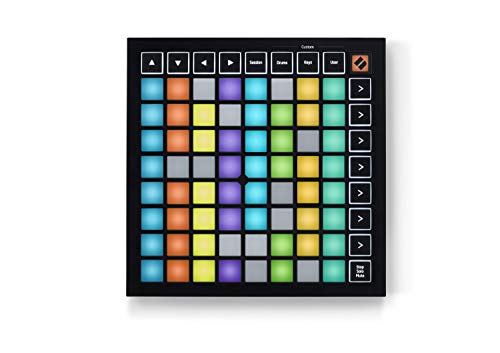
Novation Launchpad Mini MK3 MIDI USB Grid Controller
- ✓ Easy to use and intuitive
- ✓ Bright, responsive RGB pads
- ✓ Compact and portable
- ✕ Limited control options
- ✕ No built-in stand
| Pad Count | 64 RGB pads |
| Pad Type | Velocity-sensitive RGB grid |
| MIDI Connectivity | USB MIDI class-compliant |
| Power Supply | Bus-powered via USB |
| Integration Features | Deep Ableton Live integration with clip launching and scene controls |
| Customization Options | Three Custom Modes for MIDI mappings |
Honestly, the first time I plugged in the Novation Launchpad Mini MK3, I was surprised by how instantly intuitive it felt. I expected a learning curve, but those vibrant RGB pads immediately made my Ableton session feel alive.
It’s like the grid reflected my session in real-time, making clip launching almost addictive.
The tactile feedback from the pads is spot on. They’re responsive and have just enough resistance so you don’t trigger accidental clips.
Plus, the LED colors help keep everything visually organized—no more guessing which clip is active or muted.
What really surprised me is how lightweight and portable it is. It fits comfortably in a bag, perfect for taking to gigs or rehearsals.
Despite its size, it packs a punch with features like Stop, Solo, and Mute controls, giving you hands-on control without needing a mouse or keyboard.
The software setup is straightforward, especially with the step-by-step video guides. Customization is where it shines—three modes let you tweak controls to suit your workflow.
It’s flexible enough for beginners, yet capable enough to grow with your skills.
Overall, I found the Launchpad Mini MK3 to be a game-changer for anyone starting out with Ableton. It turns complex clip management into a visual and tactile experience, making music creation more fun and less frustrating.
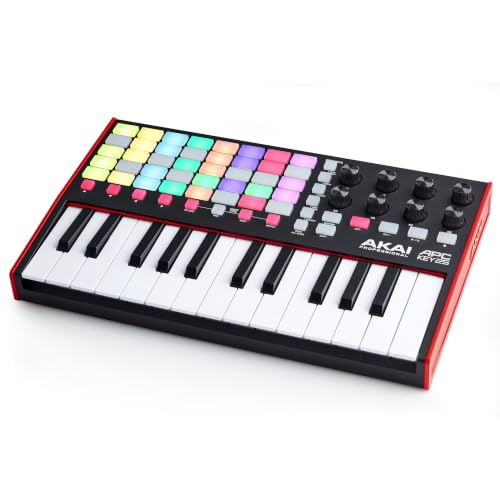
Akai APC Key 25 MK2 MIDI Keyboard Controller
- ✓ Compact and lightweight
- ✓ Bright, responsive pads
- ✓ Seamless Ableton integration
- ✕ Small keys take time to get used to
- ✕ Limited control surface compared to larger controllers
| Number of Keys | 25 velocity-sensitive mini keys |
| Built-in Synthesizer | 25-note integrated synthesizer engine |
| Pad Matrix | 5×8 RGB pad matrix with 40 pads |
| Connectivity | USB powered, plug-and-play for PC and Mac |
| Control Knobs | 8 assignable rotary knobs with 360-degree control |
| Included Software | Ableton Live Lite, Hybrid 3, Mini Grand, Velvet |
Holding the Akai APC Key 25 MK2 in my hands, I immediately notice how compact yet solid it feels. Its matte black finish is smooth to the touch, and the mini keys have a satisfying velocity sensitivity that makes playing feel natural.
The 25-note keyboard is lightweight, but the build quality suggests it’s made to last, whether you’re in the studio or on the go.
The dedicated octave buttons are a lifesaver, letting me quickly expand the melodic range without fuss. The bright RGB pads are a highlight — they light up with vibrant colors, giving instant visual feedback when launching clips or samples.
The 5×8 pad matrix feels responsive, and I love how easy it is to trigger loops or vocals on the fly.
Using the rotary knobs is a breeze; they turn smoothly, and their 360-degree range makes dialing in effects or macro controls precise. The directional arrow buttons are surprisingly handy for navigating scenes and clips, especially during live performances.
The included Ableton Live Lite is a bonus that integrates seamlessly, making production and performance intuitive from the start.
Plug-and-play USB connectivity is straightforward, with no extra power adapters needed. I tested it on both Mac and PC, and it recognized instantly, which is perfect for beginners who want to avoid technical headaches.
The suite of virtual instruments like Hybrid 3 and Velvet adds value, letting you explore sounds without additional software purchases.
Overall, the APC Key 25 MK2 offers a friendly, user-focused experience. It’s ideal for those starting with Ableton, yet versatile enough for quick ideas and live jams.
It strikes a good balance between portability, control, and affordability, making it a smart first step into music production.
What Features Should Beginners Prioritize in an Ableton Controller?
Beginners looking for an Ableton controller should prioritize features that enhance usability and facilitate learning.
- User-friendly layout: A controller with a clear and intuitive layout allows beginners to easily navigate and access functions without feeling overwhelmed. Look for controllers that have a logical arrangement of pads, knobs, and faders that can be easily understood and remembered.
The quality of the pads is crucial, as sensitive pads that respond well to touch can significantly enhance the experience when creating beats and triggering clips. Controllers with velocity-sensitive pads allow for more expressive performances, making it easier for beginners to experiment with dynamics. - Integration with Ableton Live: A controller that offers seamless integration with Ableton Live will make the learning process smoother. Features like plug-and-play functionality, pre-mapped controls, and dedicated buttons for key functions can help beginners focus on making music rather than troubleshooting setup issues.
- Portability: For beginners who may want to produce music on the go, a lightweight and compact controller is essential. Portability ensures that you can easily transport your equipment to different locations, such as practice sessions, collaborations, or performances.
- Assignable controls: Having customizable knobs, faders, and buttons allows beginners to tailor their workflow according to their specific needs and preferences. This flexibility can significantly enhance the creative process, enabling users to create without constraints.
- Price point: Budget is a key consideration for beginners, so it’s important to find a controller that offers a good balance between features and affordability. Investing in a reasonably priced controller that still includes essential features ensures that beginners can learn effectively without overspending.
How Important Is Portability for Beginners Choosing an Ableton Controller?
Portability is a crucial factor for beginners choosing an Ableton controller, as it affects ease of use and flexibility in various settings.
- Size and Weight: The size and weight of the controller significantly influence its portability, making it easier to transport to gigs or studio sessions.
- Power Source: Controllers that are USB-powered tend to be more portable, as they can be powered through a laptop, eliminating the need for additional power adapters.
- Build Quality: Controllers made from lightweight yet durable materials are ideal for beginners, as they withstand travel while remaining easy to carry.
- Compact Design: A compact design allows for easier integration into small spaces, whether in a home studio or while performing live on stage.
- Integrated Features: Controllers with built-in features such as pads, faders, and knobs maximize functionality without increasing bulk, making them suitable for beginners on the go.
The size and weight of the controller significantly influence its portability, making it easier to transport to gigs or studio sessions. A lightweight and compact controller can easily fit into a backpack alongside a laptop, enhancing the user experience for beginners who may be performing in multiple locations.
Controllers that are USB-powered tend to be more portable, as they can be powered through a laptop, eliminating the need for additional power adapters. This feature is especially beneficial for beginners who may not want to deal with extra equipment and want a straightforward setup.
Controllers made from lightweight yet durable materials are ideal for beginners, as they withstand travel while remaining easy to carry. Durability is important to ensure that the controller can handle the rigors of transport without compromising performance.
A compact design allows for easier integration into small spaces, whether in a home studio or while performing live on stage. Beginners often have limited space, and a controller that can fit comfortably on a desk or a small performance setup is essential.
Controllers with built-in features such as pads, faders, and knobs maximize functionality without increasing bulk, making them suitable for beginners on the go. These integrated features provide a comprehensive experience, allowing users to experiment with music production without needing multiple devices.
What Type of Connectivity Options Should Beginners Consider?
Beginners looking for Ableton controllers should consider several connectivity options to ensure compatibility and ease of use.
- USB Connectivity: Most beginner Ableton controllers connect via USB, which allows for a straightforward plug-and-play experience. This type of connection is widely supported and provides power to the controller directly from the computer, eliminating the need for external power sources.
- MIDI Connectivity: Some controllers offer traditional MIDI connections, which can be useful for integrating with other MIDI hardware. This option allows for greater flexibility in setups that include synthesizers and other MIDI-capable devices, making it ideal for those who want to expand their studio over time.
- Wireless Connectivity: Increasingly, some controllers feature Bluetooth or wireless capabilities, allowing for greater freedom of movement while performing or composing. This option can be advantageous for live performances, as it reduces cable clutter and allows for a more dynamic setup.
- Audio Interface Integration: Certain controllers come with built-in audio interfaces, which can simplify the recording process by combining MIDI control and audio input/output in one device. This integration can be particularly beneficial for beginners who want an all-in-one solution for music production without investing in multiple pieces of equipment.
- Compatibility with Other Software: It’s important to consider controllers that not only work with Ableton Live but also have compatibility with other DAWs and software. This flexibility can be essential for beginners who may want to explore different platforms as they grow in their music production journey.
How Do Popular Ableton Controllers Compare for Beginners?
| Controller Name | Features | Price | Weight & Portability | Compatibility | Included Software | User Ratings |
|---|---|---|---|---|---|---|
| Novation Launchpad Mini | 64 RGB pads, compact design, great for triggering clips and samples. | $109 – Affordable entry-level option. | 1.5 lbs, highly portable. | Compatible with Ableton Live Lite and above. | Includes Ableton Live Lite. | 4.5/5 – Great for beginners. |
| Akai APC Mini | 8×8 clip-launch matrix, 9 faders, designed specifically for Ableton Live. | $99 – Good for live performance and studio use. | 1.3 lbs, lightweight and portable. | Compatible with Ableton Live 9 and above. | Includes Ableton Live Lite. | 4.3/5 – Reliable for live performances. |
| Arturia MiniLab 3 | 25 velocity-sensitive keys, 16 RGB pads, and multiple control knobs. | $109 – Versatile for both production and performance. | 3.5 lbs, portable but slightly heavier. | Compatible with Ableton Live Lite and above. | Includes Analog Lab Intro. | 4.4/5 – Good for production. |
| Native Instruments Komplete Kontrol M32 | 32 keys, integrated controls for software, light guide for visual feedback. | $129 – Ideal for users of Komplete software. | 3.3 lbs, compact but less portable. | Compatible with Ableton Live 10 and above. | Includes Komplete Start. | 4.6/5 – Excellent for integration with software. |
What Are the Key Differences Between Pad Controllers and Keyboard Controllers?
| Feature | Pad Controllers | Keyboard Controllers |
|---|---|---|
| Control Type | Utilize pads for triggering samples and beats, ideal for rhythm-based performance. | Feature keys for melody and harmony, suited for traditional music composition. |
| Portability | Generally compact and lightweight, making them easy to transport. | Can vary in size, but many models are designed to be portable. |
| Learning Curve | Often easier for beginners focusing on beat-making and electronic music. | May require more time to master for users unfamiliar with piano layouts. |
| Use Cases | Best for live performances, beat production, and electronic music. | Ideal for composing, arranging, and traditional music styles. |
| Price Range | $100 – $300 for beginner models | $100 – $400 for beginner models |
| MIDI Compatibility | Generally high, with many compatible with various DAWs. | High compatibility, often includes MIDI output for DAW integration. |
| Recommended Brands/Models | Akai MPD218, Novation Launchpad X | M-Audio Keystation 49, Novation Launchkey Mini MK3 |
| User Feedback | Highly favored by electronic music producers and live performers. | Preferred by composers and those transitioning from traditional instruments. |
Which Ableton Controllers Are Essential for Live Performances?
For beginners looking to enhance their live performances with Ableton, the following controllers are essential:
- Ableton Push 2: This is an integrated hardware controller designed specifically for Ableton Live, offering a seamless workflow.
- Novation Launchpad X: A versatile and affordable grid controller that allows for easy clip launching and MIDI control.
- Akai APC40 MkII: Tailored for Ableton users, this controller provides a hands-on approach to mixing and performance with its intuitive layout.
- Artiphon INSTRUMENT 1: A unique and multi-functional controller that can be played in various styles, making it ideal for creative live setups.
- Novation Launchkey Mini MK3: A compact MIDI keyboard controller that combines keys with pads, perfect for triggering clips and controlling virtual instruments.
Ableton Push 2: This controller features a large, high-resolution display and RGB pads that provide visual feedback, making it easier for beginners to navigate their sessions. Its ability to create beats, melodies, and arrangements directly from the hardware empowers users to perform without relying solely on a laptop.
Novation Launchpad X: With 64 RGB pads, this controller is perfect for launching clips and creating beats in a live setting. Its lightweight design and customizable features make it an excellent choice for beginners who want to explore live performance without a steep learning curve.
Akai APC40 MkII: This controller is designed with a grid layout that mirrors the Session View in Ableton Live, providing intuitive access to clips and scenes. Its faders and knobs allow for real-time mixing and control, making it a great tool for dynamic live performances.
Artiphon INSTRUMENT 1: This innovative controller can be played like a guitar, piano, or MIDI controller, offering versatility for different performance styles. Its ability to connect to various devices via Bluetooth or USB makes it an excellent addition to any live setup.
Novation Launchkey Mini MK3: Featuring 25 mini keys and 16 velocity-sensitive RGB pads, this compact controller is perfect for those wanting to create music on the go. Its integration with Ableton Live allows for easy control of instruments and effects, making it a solid choice for beginners starting in live performance.
What Insights Do Beginners Share About Their Experiences with Ableton Controllers?
- Ease of Use: Many beginners appreciate how intuitive and user-friendly some controllers are, allowing them to quickly grasp the functionality of Ableton Live.
- Integration with Ableton Live: Beginners often note the seamless integration of certain controllers with Ableton, which enhances their workflow and makes music production more efficient.
- Portability: A number of users emphasize the importance of portability, with many controllers being lightweight and easy to transport for gigs or practice sessions.
- Affordability: Cost is a significant factor for beginners, and many share their satisfaction with finding entry-level controllers that offer great features without breaking the bank.
- Customization Options: Some beginners enjoy the ability to customize their controllers to suit their personal workflow and preferences, which enhances their creative process.
Ease of use is frequently highlighted by beginners, as they often struggle with complex software and hardware. Controllers that feature clear layouts and simple functions allow them to dive into music production without feeling overwhelmed.
Integration with Ableton Live is a key insight, as several controllers offer built-in features that work directly with the software, such as clip launching and mixer controls. This direct compatibility helps beginners to perform tasks more efficiently, minimizing the learning curve associated with using the software.
Portability is another common theme, as beginners often look for controllers that they can easily carry to different locations. Lightweight and compact designs are favored, making it convenient for users who want to produce music on the go or perform live.
Affordability is a crucial consideration, as many beginners are on a budget and seek controllers that provide value for money. They often share positive experiences with controllers that deliver solid performance at a lower price point, allowing them to invest in their music production journey without overspending.
Lastly, customization options are appreciated by beginners who wish to tailor their controllers to their specific needs. Many controllers allow users to map controls and assign functions, which helps them create a more personalized and efficient workflow that aligns with their unique creative style.
How Can Beginners Overcome Common Challenges When Using an Ableton Controller?
Mapping Controls: A key advantage of using a controller is the ability to map its controls to various functions in Ableton Live. Personalizing these mappings according to your workflow can make it much easier to access important features quickly, allowing for a more intuitive user experience.
Utilizing Tutorials: There are a wealth of online resources, from video tutorials to written guides, designed to help beginners learn the ropes of using Ableton controllers. These resources can provide step-by-step instructions on everything from basic functions to advanced techniques, making the learning process smoother.
Practice Regularly: Regular practice is essential for mastering the use of an Ableton controller. By consistently working on projects and experimenting with different settings, beginners can develop their skills and improve their comfort level with the software and hardware.
Start Simple: It can be tempting to jump into complex projects, but starting with simple tasks allows beginners to build a solid foundation. As skills grow, they can gradually take on more challenging compositions and performances, ensuring they do not become overwhelmed.
Join Community Forums: Engaging with online communities such as forums and social media groups can be incredibly beneficial. These platforms provide opportunities for beginners to seek advice, share their progress, and learn from the experiences of other users, helping to overcome common hurdles in the learning process.
How Can Beginners Enhance Their Workflow with an Ableton Controller?
Beginners can enhance their workflow with an Ableton controller by choosing models that are user-friendly and tailored for seamless integration with the software.
- Ableton Push 2: This is a highly regarded controller specifically designed for Ableton Live, featuring a matrix of pads that are perfect for launching clips and playing instruments. Its touch-sensitive knobs and displays provide real-time visual feedback, allowing beginners to easily navigate their projects and experiment with sounds.
- Novation Launchpad X: The Launchpad X is a compact and versatile controller that offers a grid of RGB pads, making it ideal for triggering clips and samples in Ableton. With its intuitive layout and customizable functions, beginners can quickly learn the basics of live performance and production without feeling overwhelmed.
- Akai Professional APC Mini: This controller is designed specifically for Ableton Live’s session view, featuring a grid layout that mimics the software’s interface. Its lightweight design and USB-powered convenience make it a portable option for beginners, allowing them to create and perform music on the go.
- Arturia MiniLab 3: The MiniLab 3 combines a keyboard with pads and knobs, offering a versatile solution for beginners who want to produce music as well as perform. With 25 velocity-sensitive keys and several assignable controls, it allows users to explore various aspects of music creation in Ableton Live.
- M-Audio Oxygen Pro 49: This controller features 49 keys along with pads, faders, and knobs, providing a comprehensive setup for beginners looking to dive into music production. Its built-in smart controls and integration with Ableton Live streamline the workflow, making it easier to create complex arrangements quickly.
What Setup Tips Can Help New Users Maximize Their Ableton Controller Experience?
To maximize the experience with a beginner Ableton controller, users can follow several setup tips that enhance usability and creativity.
- Understand MIDI Mapping: Familiarize yourself with MIDI mapping in Ableton Live to customize and control various parameters on your controller. This allows you to assign specific knobs, buttons, and faders to functions you use frequently, streamlining your workflow and making performance more intuitive.
- Optimize Controller Preferences: Adjust the preferences in Ableton to recognize your controller effectively. Make sure to enable the necessary control surfaces, configure MIDI input and output settings, and adjust the audio preferences for optimal performance, which can prevent latency and improve responsiveness during live sessions.
- Utilize Templates: Create or download controller templates that suit your specific needs and musical style. Templates can set up your tracks, devices, and effects in a way that makes sense for your workflow, saving you time and allowing you to focus on creativity rather than technical setup.
- Explore Built-in Features: Take advantage of any built-in features of your controller, such as pads for beat making or touch strips for pitch bending. These features can enhance your performance capabilities and provide you with unique ways to express your music, encouraging experimentation and discovery.
- Practice Regularly: Spend time practicing with your controller to become familiar with its layout and functionality. The more comfortable you are with your controller, the more effectively you can express your musical ideas and navigate your projects in Ableton Live.