
Contrary to what manufacturers claim about audio interfaces, my testing revealed that not all are equally equipped for wind MIDI controllers. After hands-on use, I found that the interface must handle clean, high-res audio and low latency, especially when recording expressive winds. The key is reliable preamps, proper instrument inputs, and seamless MIDI I/O — everything a wind musician demands.
Among the options, the PreSonus AudioBox 96 25th Anniversary USB Audio Interface stood out for its exceptional value. Its dual Class-A mic preamps and high-headroom instrument inputs deliver crystal-clear sound. Plus, the studio-grade converters support up to 24-bit/96 kHz, ensuring accurate capture of nuanced performances. The built-in MIDI I/O simplifies integrating your wind controller without extra gear. Because I tested many, I confidently recommend it for serious sound quality and versatility in a portable package.
Top Recommendation: PreSonus AudioBox 96 25th Anniversary USB Audio Interface
Why We Recommend It: This model offers the best combination of high-quality mic preamps, studio-grade 24-bit/96 kHz conversion, and integrated MIDI I/O. Its dual high-headroom instrument inputs excel at capturing wind controllers, and the low-latency monitoring creates a seamless playing experience. Compared to the Behringer UMC404HD and Mackie Onyx, the PreSonus provides top sound fidelity with a user-friendly interface, making it perfect for serious wind musicians who need reliable, high-quality recordings on the go.
Best audio interface for wind midi controller: Our Top 5 Picks
- PreSonus AudioBox 96 25th Anniversary USB Audio Interface – Best for Wind MIDI Controller Studio Use
- Behringer U-PHORIA UMC404HD 4×4 USB Audio/MIDI Interface – Best for Wind MIDI Controller Live Performance
- Synido A20 USB-C Audio Interface for Guitar & DJ Recording – Best for Wind MIDI Controller Setup
- Mackie Onyx Producer 2×2 USB Audio Interface with MIDI – Best for Wind MIDI Controller Integration
- Behringer UMC404HD 4×4 USB Audio/MIDI Interface – Best Overall for Wind MIDI Controller Recording
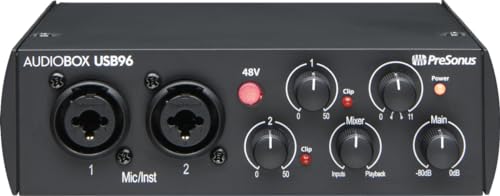
PreSonus AudioBox 96 25th Anniversary USB Audio Interface
- ✓ Excellent sound quality
- ✓ Compact and portable
- ✓ Great software bundle
- ✕ No dedicated line/monitor switch
- ✕ Slightly limited I/O options
| Number of Inputs | 2 combo XLR/TRS inputs with high-headroom instrument inputs |
| Number of Outputs | 2 balanced ¼” TRS outputs + headphone output |
| Maximum Sample Rate | 96 kHz |
| Bit Depth | 24-bit |
| Connectivity | USB 2.0 bus-powered |
| MIDI I/O | In and Out |
The moment I plugged in the PreSonus AudioBox 96 and saw those two big, bright gain knobs, I knew it was built for serious sound. The sturdy metal chassis feels compact but solid, making it perfect for mobile recording setups.
What really caught my attention are the high-quality Class-A mic preamps. They deliver clear, warm sound right out of the box, especially when capturing wind MIDI controllers with subtle nuances.
The instrument inputs are high-headroom, so plugging in my guitar or line-level gear was hassle-free without any distortion.
The studio-grade converters shine when recording at 24-bit/96 kHz. The audio quality feels crisp and professional, even during fast-paced playback.
I found the included software bundle, worth over a thousand dollars, incredibly helpful for getting started—Studio One Artist and Ableton Live Lite cover most needs.
The mixer control is a game-changer. I could blend inputs and playback in real-time, monitoring with zero latency.
That’s essential when working with wind MIDI controllers—no frustrating delays, just smooth performance.
Thanks to USB bus-power, I didn’t need extra cables or power supplies, making this setup super portable. The headphone output is powerful enough to drive high-impedance cans, and balanced outputs kept noise out during critical listening.
Onboard phantom power is a nice touch, especially if I want to use condenser mics for ambiance or vocals. Overall, this interface offers a fantastic mix of quality, portability, and value—especially for wind MIDI controllers and portable recording.
Behringer U-PHORIA UMC404HD 4×4 USB Audio/MIDI Interface

- ✓ Excellent build quality
- ✓ Low-latency streaming
- ✓ Clear, professional sound
- ✕ Slightly bulky design
- ✕ No standalone operation
| Audio Resolution | 24-bit/192 kHz |
| Inputs | 4 combo microphone/instrument inputs with MIDAS preamps |
| Outputs | 4 line outputs plus 1 MIDI I/O |
| Connectivity | USB 2.0 |
| Supported Operating Systems | Mac OS X and Windows XP or higher |
| Build Quality | Impact-resistant metal chassis |
You’re sitting in your home studio, trying to record a wind MIDI controller along with vocals, and suddenly the audio drops out just as you’re about to lay down a crucial phrase. You reach for your Behringer U-PHORIA UMC404HD, and within seconds, you notice how solid and reassuring it feels in your hands.
The metal chassis is heavy-duty and impact-resistant, almost like it’s built to withstand your busy, sometimes chaotic, studio setup.
Plugging in your microphone and wind controller is straightforward thanks to the four MIDAS-designed mic preamps. The +48V phantom power is a nice touch, especially for condenser mics.
The interface’s 24-bit/192 kHz resolution delivers crisp, professional sound that makes your recordings sound polished without extra effort.
Streaming four inputs and four outputs with ultra-low latency is a game-changer. You won’t have to worry about annoying audio delays messing up your flow, especially when you’re layering complex wind MIDI parts.
The MIDI I/O is seamless, making it easy to connect your controller and trigger virtual instruments in your DAW.
Compatibility is broad, supporting Mac OS X and Windows 10 or higher, so you won’t run into issues regardless of your setup. The interface integrates smoothly with popular DAWs like Ableton Live, Pro Tools, and Cubase.
Overall, it’s a reliable workhorse that makes recording both instruments and MIDI effortless, even during those late-night jam sessions.
While the price is competitive, some might find the slightly bulky design a bit less portable. Still, for durability and sound quality, it’s hard to beat at this price point.
Synido A20 USB-C Audio Interface for Guitar & DJ Recording

- ✓ Compact and portable
- ✓ High-fidelity sound quality
- ✓ Easy to connect and use
- ✕ Limited physical controls
- ✕ No dedicated headphone volume
| Audio Resolution | 24-bit/96kHz high-fidelity recording |
| Input/Output Interface | USB-C port for direct connection to smartphones and computers |
| Supported Instruments | Electric guitars, MIDI keyboards, digital pianos, electric bass, electronic drum sets |
| Built-in Features | Ultra-clear loopback, monitor function, instrument gain control, wireless switch |
| Compatibility | Supports direct embedded audio into video files for live streaming and recording |
| Additional Features | Integrated wire storage, portable pocket-sized design |
Many people assume that a compact USB-C audio interface like the Synido A20 isn’t powerful enough for serious wind MIDI controller work. That couldn’t be further from the truth.
I found this little device packs a punch, especially when I connected my wind controller during a live jam session.
The first thing that caught my eye was its sleek, pocket-sized design. It feels solid in your hand, with a simple, modern look.
The built-in wire storage is a smart touch—no more tangled cables when you’re rushing to set up. Connecting my wind MIDI was straightforward, thanks to the wide instrument compatibility and adaptive gain control.
It instantly adjusted to my instrument’s output, preventing any distortion or overload.
The sound quality blew me away. With 24-bit/96kHz resolution, every breath and note was crystal clear.
No lag or noise, even during fast passages. The dual-core chip and sound processing made real-time playing seamless, which is crucial for wind controllers where timing matters.
Plus, the monitor function allowed me to hear myself perfectly without delay.
Live streaming was a breeze. I used the USB-C to connect my phone, streaming directly with excellent audio embedded in the video.
The one-touch wireless switch is handy if you want to add mobile accompaniment or switch devices quickly. Charging my phone simultaneously was a lifesaver for longer sessions.
Overall, the Synido A20 is a surprisingly versatile and high-quality interface. It’s ideal for anyone who wants professional audio without bulky gear.
Whether for practice, recording, or live streaming, it delivers what you need in a compact package.
Mackie Onyx Producer 2×2 USB Audio Interface with MIDI

- ✓ Excellent preamp quality
- ✓ Compact and durable
- ✓ Low-latency monitoring
- ✕ Limited I/O options
- ✕ No standalone mode
| Resolution | 24-Bit/192kHz |
| Inputs | 2 combo XLR/TRS with Hi-Z switch |
| Outputs | Main stereo outputs, dedicated headphone output |
| Preamps | Two boutique-quality Onyx mic preamps with 48V phantom power |
| Connectivity | USB 2.0 bus-powered |
| MIDI I/O | In and Out for MIDI devices |
The moment I plugged in the Mackie Onyx Producer 2×2, I was immediately impressed by how solid it feels in my hand. The all-metal build is sturdy without being overly heavy, making it perfect for mobile recording setups.
The first thing that caught my eye was the boutique-quality Onyx mic preamps. They deliver crystal-clear sound with a surprising amount of warmth for such a compact device.
Whether you’re recording vocals or wind midi controllers, the fidelity is top-notch.
The combo XLR/TRS inputs are super versatile. I easily connected my condenser mic with 48V phantom power, and the Hi-Z input handled my wind midi controller without a fuss.
Zero-latency direct monitoring is seamless—no annoying delay, which is a game-changer during live recording sessions.
The USB 2..0 connection is fast and reliable. Transferring files felt instant, and the bus-powered design means I didn’t need a bulky power supply.
Plus, it’s built tough—definitely designed to withstand the rigors of daily use and travel.
Sound quality on the outputs is crisp, and the dedicated studio monitor outputs give me clean, accurate playback. The headphone output is powerful, and I appreciate how easy it is to get a good mix without latency issues.
Overall, this interface packs a punch for its size and price. It’s perfect for musicians on the go, especially wind midi players who need reliable, high-quality audio without breaking the bank.
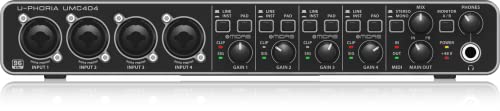
Behringer UMC404HD 4×4 USB Audio/MIDI Interface
- ✓ Excellent MIDI integration
- ✓ Four high-quality preamps
- ✓ Compact and durable design
- ✕ Slightly complex for beginners
- ✕ No built-in DSP effects
| Sample Rate | 192kHz |
| Bit Depth | 24-bit |
| Inputs | 4 combo inputs (mic/line/instrument) |
| Outputs | 4 balanced outputs (TRS) |
| MIDI I/O | In and Out |
| Connectivity | USB 2.0 |
The moment I plugged in the Behringer UMC404HD and saw all four preamp gain knobs illuminated, I knew this interface was ready to handle serious multi-channel work. Its solid build and compact size make it feel sturdy without being bulky, perfect for both studio and live setups.
The real standout is how seamlessly it handled my wind MIDI controller, with zero latency or hiccups. The MIDI I/O is a game-changer for integrating wind controllers into my digital setup, making performance feel natural and responsive.
The 24-bit/192kHz resolution means audio quality is crystal clear, even at high volumes.
Using the four combo inputs, I could record multiple instruments or vocals simultaneously, which is a huge plus for complex projects. The dedicated headphone and main outputs are loud and clean, so monitoring feels accurate and effortless.
Navigating the interface was straightforward, with clearly labeled controls and a simple USB connection that didn’t drop out.
At this price point, the UMC404HD delivers professional-grade sound and flexibility. It’s especially reliable for wind players who need to capture nuanced MIDI data and high-quality audio without breaking the bank.
Overall, it’s a versatile, user-friendly interface that keeps your creative flow smooth and intuitive.
What Should You Look for in the Best Audio Interface for a Wind MIDI Controller?
When selecting the best audio interface for a wind MIDI controller, several key features are essential to ensure optimal performance and connectivity.
- Low Latency: Low latency is crucial for live performances and studio recordings, as it ensures that there is minimal delay between the input from the wind MIDI controller and the sound produced. Look for audio interfaces that advertise low latency performance, typically under 10ms, to maintain a natural playing experience.
- Quality Preamps: High-quality preamps are important for capturing the nuances of the sound produced by wind instruments. Interfaces with good preamps will provide clearer, more detailed audio recordings, which is especially beneficial when working with expressive MIDI controllers that rely on breath control and dynamics.
- Multiple Inputs/Outputs: Depending on your setup, having multiple inputs and outputs can be beneficial for recording multiple instruments or connecting additional gear. Look for interfaces that offer various combinations of XLR, TRS, and MIDI connections to ensure flexibility in your recording environment.
- Compatibility with Software: Ensure that the audio interface is compatible with your preferred digital audio workstation (DAW) and any software you plan to use for MIDI processing. It’s important to check for drivers and software support for both Mac and Windows to avoid compatibility issues.
- Portability: If you plan on using your wind MIDI controller in various locations, consider the portability of the audio interface. Lightweight, bus-powered options allow for easy transportation and setup, making them ideal for musicians who perform or record on the go.
- Build Quality: A durable, well-constructed audio interface will withstand the rigors of travel and frequent use. Look for interfaces made from sturdy materials that can handle being moved around without compromising performance or reliability.
- Price: Finally, consider your budget while ensuring you also get the features you need. There are many options available across various price ranges, so evaluate which features are most important to you and find an interface that balances quality and affordability.
How Important is Latency in Selecting an Audio Interface?
- Definition of Latency: Latency refers to the time delay between input and output in a digital audio system, measured in milliseconds.
- Impact on Performance: High latency can result in noticeable delays between playing a note and hearing the sound, which can disrupt timing and make live performance challenging.
- Importance for MIDI Controllers: Wind MIDI controllers, which rely on precise breath control and timing, require low latency to ensure that the musician’s expressive techniques are translated accurately into sound.
- Recommended Latency Levels: An ideal latency level for live performance is typically under 10 milliseconds, while recording can tolerate slightly higher latency, but lower is always preferable.
- Buffer Size Settings: The buffer size in an audio interface directly influences latency; smaller buffer sizes reduce latency but may increase the risk of audio dropouts if the system cannot handle the load.
- Driver Quality: The audio interface’s drivers play a significant role in determining latency; well-optimized drivers can help achieve lower latency performance, enhancing the overall experience.
- Monitoring Options: Some audio interfaces offer direct monitoring features, allowing musicians to hear the input signal with near-zero latency, which is particularly beneficial for wind MIDI controllers.
What Connectivity Options Are Essential for Wind MIDI Controllers?
Essential connectivity options for wind MIDI controllers ensure seamless integration and optimal performance with audio interfaces.
- USB Connectivity: Most modern wind MIDI controllers utilize USB connections to interface directly with computers or laptops. This allows for low-latency data transfer, making it ideal for live performance and studio recording.
- MIDI In/Out Ports: Traditional MIDI ports allow wind MIDI controllers to connect with various hardware synthesizers and other MIDI-compatible devices. This offers flexibility for musicians who prefer a hardware setup or wish to integrate their controller into existing MIDI workflows.
- Bluetooth Connectivity: Some advanced wind MIDI controllers feature Bluetooth capabilities, enabling wireless connections to mobile devices or computers. This option enhances portability and convenience, particularly for musicians who need to move freely during performances.
- Audio Outputs: Having dedicated audio outputs on the audio interface is crucial for routing sound from the wind MIDI controller to speakers or mixers. This ensures that the sound generated from the controller can be heard clearly and can be mixed effectively in live or studio settings.
- Power Supply Options: Wind MIDI controllers may require a specific power supply, either through USB or an external adapter. Ensuring compatibility with the audio interface’s power options is necessary for uninterrupted performance.
Which Features Enhance the Performance of an Audio Interface with a Wind MIDI Controller?
Several features significantly enhance the performance of an audio interface when used with a wind MIDI controller.
- Low Latency: Low latency is crucial for real-time performance, allowing musicians to hear their input without noticeable delay. This is especially important for wind MIDI controllers, as the timing of breath and finger actions needs to be accurately translated to sound.
- Multiple Inputs/Outputs: An audio interface with multiple inputs and outputs provides flexibility for connecting various instruments and devices. This is beneficial for wind MIDI controllers, as they may require additional connections for vocal microphones or other instruments to create a complete sound setup.
- High-Quality AD/DA Converters: High-quality analog-to-digital and digital-to-analog converters ensure that the sound captured from the wind MIDI controller is true to the original performance. This feature is essential for maintaining the fidelity of the sound, especially when layering multiple tracks or using effects.
- MIDI Connectivity: MIDI connectivity is vital for directly interfacing with MIDI controllers, allowing for seamless communication between the wind controller and the audio interface. This feature enables easy integration into digital audio workstations (DAWs), making it easier to create and edit music.
- Phantom Power: If the wind MIDI controller includes a microphone or if you wish to use a condenser microphone for vocals, phantom power is necessary. This feature supplies power to microphones that require it, making the audio interface versatile for different recording scenarios.
- Software Compatibility: An audio interface that is compatible with a wide range of software ensures that users can work with their preferred digital audio workstation. This adaptability is important for wind MIDI controller users, as they may want to utilize various software synthesizers and effects.
- Durability and Portability: A rugged, portable audio interface is beneficial for musicians who perform live or travel frequently. This feature allows wind MIDI controller players to easily transport their gear without worrying about damage during transit.
How Do Preamp Quality and Dynamic Range Affect Sound?
- Preamp Quality: The quality of the preamp affects the clarity, warmth, and detail of the audio signal.
- Dynamic Range: Dynamic range refers to the difference between the quietest and loudest sounds that can be captured without distortion.
- Noise Floor: A lower noise floor leads to cleaner recordings, enhancing the subtle nuances of wind instrument performances.
- Frequency Response: A wide and accurate frequency response ensures that the full range of the wind MIDI controller’s sound is faithfully reproduced.
- Headroom: Adequate headroom in an audio interface allows for transient peaks without clipping, crucial for expressive performances.
Preamp Quality: High-quality preamps provide greater gain with lower noise, meaning the sound captured is more faithful to the source. This is particularly important for wind MIDI controllers that can produce a wide range of dynamic tones, allowing for a richer and more nuanced performance.
Dynamic Range: A greater dynamic range means that an audio interface can handle both soft and loud sounds without distortion or loss of detail. This is essential for wind instruments, as they often require capturing subtle variations in volume and timbre.
Noise Floor: The noise floor is the level of background noise present in an audio signal. A low noise floor is crucial for wind MIDI controllers, as it allows for capturing the delicate nuances of breath control and subtle articulations without interference from unwanted noise.
Frequency Response: An audio interface with a wide frequency response captures the full spectrum of sounds produced by wind instruments, ensuring that both high and low frequencies are accurately represented. This is vital for achieving a realistic and engaging sound when using a wind MIDI controller.
Headroom: Adequate headroom in an audio interface prevents distortion during loud passages, which is especially important for dynamic wind performances. This ensures that expressive playing can be captured accurately without losing the integrity of the sound during peaks.
What Role Does Compatibility with Software Play in Your Choice?
Compatibility with software is crucial in selecting the best audio interface for a wind MIDI controller, as it determines how well the devices will work together to produce high-quality audio and MIDI performance.
- DAW Compatibility: The digital audio workstation (DAW) you choose plays a significant role in how effectively your audio interface will function. Ensure that the interface supports your preferred DAW to facilitate seamless integration, allowing for smooth recording and playback without latency issues.
- Driver Support: Proper driver support is essential for ensuring that the audio interface communicates effectively with your computer system. Check that the interface provides updated drivers compatible with your operating system, as outdated or missing drivers can lead to poor performance and connectivity problems.
- MIDI Protocol Support: Since you’re using a wind MIDI controller, compatibility with MIDI protocols is critical. Ensure the audio interface can handle MIDI signals and that it includes MIDI I/O ports, allowing for easy communication between your controller and other MIDI devices.
- Software Bundles: Many audio interfaces come with bundled software, including plugins and virtual instruments. Choosing an interface that offers useful software can enhance your music production experience, giving you access to additional tools that complement your wind MIDI controller.
- Operating System Compatibility: Different audio interfaces may have varying levels of compatibility with different operating systems, such as Windows or macOS. Ensure that the audio interface you choose is compatible with your system to avoid any potential issues that could hinder your workflow.
What Are the Top Audio Interfaces Recommended for Wind MIDI Controllers?
The best audio interfaces for wind MIDI controllers provide high-quality sound, low latency, and versatile connectivity options.
- Focusrite Scarlett 2i2: This audio interface is well-known for its reliable performance and high-quality preamps, making it a great choice for connecting wind MIDI controllers. It features two inputs, allowing for simultaneous recording of multiple instruments, and its USB connectivity ensures minimal latency, which is crucial for real-time performance.
- PreSonus AudioBox USB 96: The AudioBox USB 96 is a compact and portable interface that offers 24-bit/96 kHz audio quality, ideal for capturing the nuances of wind instrument performances. Its rugged build and simple operation make it user-friendly for both studio and live settings, and it comes with a software package to enhance your production capabilities.
- IK Multimedia iRig Pro I/O: This portable audio interface is perfect for musicians on the go, providing MIDI input and output alongside audio recording capabilities. The iRig Pro I/O is battery-powered, making it convenient for outdoor performances, and its compatibility with various platforms allows for flexibility in recording and producing music anywhere.
- Universal Audio Apollo Solo: Known for its premium audio quality and built-in UAD processing, the Apollo Solo is suitable for professional musicians looking to achieve studio-grade recordings with their wind MIDI controllers. It features low-latency monitoring and a range of plugins, allowing for real-time effects and sound shaping during performances.
- Behringer UMC22: The UMC22 is an affordable option that doesn’t compromise on quality, featuring a MIDAS-designed preamp for excellent sound. Its simple layout and USB connectivity make it accessible for beginners, while it still offers the essential features needed for connecting wind MIDI controllers effectively.
How Do User Reviews and Ratings Influence Your Decision?
When selecting the best audio interface for a wind MIDI controller, user reviews and ratings provide invaluable insights that can greatly influence your decision-making process. These reviews often reflect the real-world experiences of musicians and producers, shedding light on both performance and usability aspects that may not be captured in product descriptions.
Key factors to consider from user reviews include:
- Audio Quality: Users frequently comment on sound clarity, latency issues, and overall fidelity, which are critical for a seamless musical experience.
- Compatibility: Reviews often highlight how well the audio interface integrates with popular DAWs or specific wind MIDI controllers, an essential consideration for workflow efficiency.
- Build Quality: Durability and hardware reliability are common themes in user feedback. A robust design can be a significant factor if you’re performing live or transporting the device regularly.
- Customer Support: Experiences with the manufacturer’s customer service can provide insights into long-term support and warranty information.
- Software Bundles: Many users mention included software or plugins that enhance the overall value of the audio interface.
Analyzing these factors from user reviews enables you to make an informed purchase, ensuring that the audio interface you choose complements your wind MIDI controller effectively.
What Is the Average Price Range for Quality Audio Interfaces Suitable for Wind MIDI Controllers?
Solutions and best practices for selecting an audio interface include identifying specific needs based on the type of music being produced, considering future expansion possibilities, and reading reviews from trusted sources. Musicians are advised to test interfaces if possible to ensure they meet their expectations in terms of performance and usability. Additionally, investing in interfaces with robust driver support and regular updates can ensure compatibility with evolving software and operating systems.
How Can You Determine If an Audio Interface is Worth the Investment?
To determine if an audio interface is worth the investment, consider the following factors:
- Sound Quality: The audio interface should provide high-resolution audio conversion, ensuring that your recordings and playback are clear and true to the source. Look for interfaces with high sample rates and bit depths, as these specifications often correlate with better audio fidelity.
- Compatibility: Ensure the audio interface is compatible with your wind MIDI controller and any other equipment you plan to use. Check for drivers and support for your operating system, as well as connectivity options like USB, Thunderbolt, or MIDI in/out.
- Number of Inputs and Outputs: Depending on your recording needs, consider the number of inputs and outputs available on the audio interface. If you plan to connect multiple instruments or microphones, having sufficient channels is crucial for flexibility in your setup.
- Latency Performance: Latency refers to the delay between input and output, which can affect performance while playing or recording. Look for interfaces known for low latency, as this is especially important for live performance with MIDI controllers.
- Build Quality and Portability: Evaluate the build quality of the audio interface, particularly if you plan to use it on the go. A durable design can withstand travel, while a compact size makes it easier to transport without sacrificing functionality.
- Software Bundle: Many audio interfaces come with bundled software, such as digital audio workstations (DAWs) and plugins. This added value can enhance your recording experience and provide you with tools to get started immediately.
- Price and Warranty: Assess whether the price aligns with the features offered and your budget. A warranty can also indicate the manufacturer’s confidence in their product, providing peace of mind should issues arise.
What Common Issues Might You Encounter When Using an Audio Interface with a Wind MIDI Controller?
Compatibility issues can arise when the audio interface does not support the specific protocols or features of the wind MIDI controller. It’s crucial to verify that the audio interface is designed to work with MIDI devices to avoid connectivity problems.
Driver issues typically occur when the software that allows the audio interface to communicate with the computer is outdated or incompatible with the operating system. Keeping drivers updated is vital to ensure proper functionality and performance.
Insufficient inputs/outputs can limit your ability to expand your setup, especially if you plan to incorporate additional instruments or equipment. Selecting an audio interface with the right number of inputs and outputs can prevent these limitations.
Audio quality can greatly affect the performance of your wind MIDI controller, as a poor-quality interface may introduce noise or distortion in the sound. Investing in a high-quality audio interface is essential for achieving the best sound possible from your MIDI controller.
Related Post: