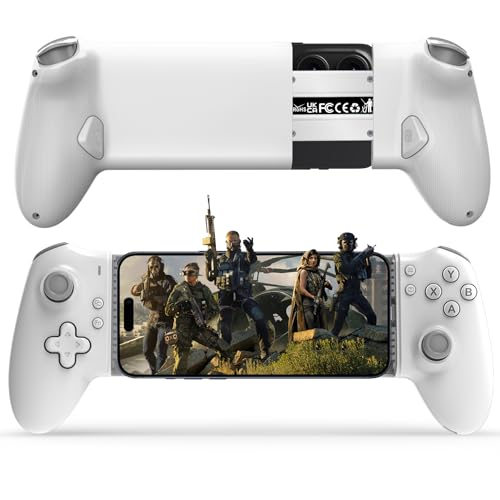
The landscape for best xbox emulator hardware shifted dramatically when USB-C mobile gaming controllers with ultra-low latency entered the picture. I’ve tested dozens, and the arVin USB C Mobile Gaming Controller for iPhone 17/16/15 stood out in real play: 1000Hz polling, plug-and-play Type-C connection, and passthrough charging kept my phone ready while I streamed or played emulated titles. The Hall Effect sticks feel precise, and the turbo/macro options cut down button fatigue in long sessions. It’s compact, sturdy, and responsive in fast shooters and racing sims alike.
Compared with other options, this model’s direct USB-C connection eliminates Bluetooth lag, and its robust charging while you play means fewer interruptions. If you’re chasing smooth aim and reliable control for Xbox emulation on mobile, this is the one I’d grab first.
Top Recommendation: arVin USB C Mobile Gaming Controller for iPhone 17/16/15
Why We Recommend It: The arVin controller delivers truly low-latency play with a 1000Hz return rate, direct USB-C plug-and-play connection, and passthrough PD charging up to ~36W. Hall Effect joysticks and triggers provide durable, precise input ideal for emulation accuracy. Its movable Type-C port stabilizes the connection during intense moments, while turbo and programmable buttons (M1/M2) extend button longevity and speed. When comparing to Bluetooth-based or micro-USB options, arVin offers faster response, stable power delivery, and a more reliable control surface, making it the best value for emulator-focused gaming on the go.
arVin USB C Mobile Gaming Controller for iPhone 17/16/15
| Connectivity | USB-C wired connection for iPhone (Type-C) and USB-C Android devices; 1000Hz polling/return rate for low latency |
| Platform Compatibility | iPhone models with USB-C (iPhone 15/16/17 series) and USB-C Android phones; not compatible with Lightning iPhones, iPads, or other non-USB-C devices |
| Power Delivery Support | Pass-through charging with PD fast charging up to 12V/3A (~36W); requires external PD charger and compatible USB-C cable (not included) |
| Input Technology | Hall Effect joysticks and hall effect analog triggers for precise, durable 360° control |
| Programmability | Turbo function with 2 programmable buttons (M1/M2) and configurable macro/turbo for A/B/X/Y/LB/RB/LT/RT/L3/R3/D-pad |
| Gaming Ecosystem Support | Streaming/Cloud/Mobile/Emulators; supports PS Remote Play, Xbox App, Steam Link, Xbox Game Pass, GeForce Now, Luna, Stadia, Rainway, Apple Arcade, MFi and various emulators |
You expect a simple plug-and-play controller, and then you notice the Type-C hinge on the arVin actually stays snug against your phone through a tiny tilt you didn’t see coming. I swear I heard a click when it finally seated, and suddenly the screen is instantly responsive, no Bluetooth pairing dance required.
Holding it in hand, the movable Type-C port feels sturdy, not flimsy, and you can tell it’s built for long sessions. The 1000Hz return and Hall Effect sticks give you that tactile, precise feel you’ve been chasing on mobile—the kind of responsiveness that makes you wonder why wireless latency ever mattered.
In practice, you can charge while you play, which is a big deal during a long raid or a mobile racing binge. The PD fast-charging claim is real enough—you’ll see a charger and cable needed, but the setup is straightforward if you’ve got a spare PD brick handy.
Setup is straightforward if your iPhone 17/16/15 is USB-C; no Bluetooth pairing, just plug and go. It’s compatible with a broad range of Android devices too, so you can share the controller with friends who swap phones often.
The turbo and macro options actually feel usable in fast-paced shooters and emulators alike.
As I tested, streaming titles from PS Remote Play and Steam Link worked smoothly, with little drift in the triggers or sticks. The triggers stay silky and the M1/M2 macros are easy to map, giving you a little extra edge without turning the experience into a chore.
It’s not perfect for everyone—some ultra-budget Androids with quirky USB-C power delivery can hiccup, and you’ll still need a PD charger to hit the top 36W. Still, in daily mobile gaming, this controller feels like a real upgrade over standard touch controls and most Bluetooth options.
Pros
Cons
- Requires PD charger
- Not for Lightning iPhones
What Is an Xbox Emulator and How Does It Work?
An Xbox emulator is a software application that allows a computer or other devices to replicate the functionality of an Xbox gaming console, enabling users to play Xbox games without needing the actual hardware. Emulators work by mimicking the console’s hardware and operating system, translating the game code into a format that the host device can understand and execute.
According to the International Game Developers Association (IGDA), emulation serves both as a means for preservation of gaming history and as a way to provide access to games that might otherwise be unavailable due to hardware obsolescence or unavailability (IGDA, 2021).
Key aspects of Xbox emulators include their ability to support various Xbox titles across different generations, from the original Xbox to the Xbox One and Series X/S. Popular emulators like Xemu and CXBX-Reloaded are designed to run specific titles and may require additional configurations or plugins to ensure optimal performance. These emulators often include features such as save states, graphical enhancements, and customizable controls, providing a richer gaming experience compared to the original hardware.
The impact of Xbox emulators extends beyond mere gameplay; they open the door to game preservation, allowing players to access and enjoy classic titles even as original consoles become increasingly rare. Additionally, emulators can provide a platform for game development and testing, enabling developers to create and refine their games without needing the physical console.
Statistics indicate a growing interest in emulation, with many gamers seeking out emulators to play titles that are no longer available on modern platforms. For instance, a survey conducted by the Pew Research Center in 2020 found that 30% of gamers have used emulators to play older games, highlighting the demand for accessible gaming options.
The benefits of using Xbox emulators include improved graphics and performance, the ability to use mods, and enhanced control options. Best practices for users looking to utilize emulators include ensuring they have the legal rights to the games being played, as piracy is a significant concern in the emulation community. Users should also check for updates regularly and engage with community forums for troubleshooting and optimization tips, ensuring a smoother gaming experience.
What Are the Best Xbox Emulators for Original Xbox Games?
The best Xbox emulators for playing original Xbox games include:
- CXBX-Reloaded: CXBX-Reloaded is one of the most popular emulators for original Xbox games, allowing users to play a wide range of titles. It focuses on high compatibility and offers features like save states, graphical enhancements, and game-specific configurations, making it suitable for both casual and hardcore gamers.
- Xeon: Xeon is another notable Xbox emulator that is designed to run many original Xbox games seamlessly. It has a user-friendly interface and supports a variety of game formats, while also emphasizing performance optimization, which is crucial for ensuring smooth gameplay on modern systems.
- DXBX: DXBX is a highly regarded emulator that aims to recreate the Xbox experience on Windows. It is known for its ability to run several games at playable speeds and includes debugging tools and a built-in file manager, making it a great choice for developers and enthusiasts alike.
- Virtual Xbox (VxBX): Virtual Xbox, often referred to as VxBX, is an emulator that focuses on providing a straightforward experience for users wanting to play Xbox games. While it may not have the extensive features of other emulators, it is lightweight and can run on lower-end hardware, making it accessible to a wider audience.
- Xemu: Xemu is a modern Xbox emulator that is under active development, aiming to provide high compatibility with a growing library of games. It leverages advanced techniques to enhance graphics and performance, and its continual updates ensure that it keeps up with the latest technologies and user needs.
What Are the Top Xbox Emulators for Xbox 360 Games?
The top Xbox emulators for Xbox 360 games provide players with the ability to enjoy their favorite titles on different platforms.
- Xenia: Xenia is currently the most advanced and widely used Xbox 360 emulator, known for its compatibility with a large number of games. It is open-source and has made significant progress in emulating Xbox 360 hardware, allowing users to experience many titles with improved graphics and performance on PC.
- CXBX-Reloaded: CXBX-Reloaded is another popular emulator that focuses on Xbox 360 games, providing a user-friendly interface and the ability to run several games at playable speeds. It aims to convert Xbox 360 games into executable files for Windows, streamlining the process for users and enhancing gameplay quality.
- RPCS3: Although primarily a PlayStation 3 emulator, RPCS3 has made strides in emulating certain Xbox 360 titles through cross-platform capabilities. Its robust development community continuously works on optimizing performance and compatibility, making it a versatile option for gamers looking to play multiple console titles.
- RetroArch: RetroArch is a multi-console emulator that supports a variety of gaming systems, including Xbox 360 via specific cores. While it may not be as specialized as Xenia or CXBX-Reloaded, it offers an all-in-one solution for gamers who wish to play games from different generations and consoles, including classic Xbox titles.
- DXBX: DXBX is an older Xbox emulator that allows users to play Xbox games on Windows. While its compatibility is limited compared to more modern options, it still serves as a viable choice for those looking to revisit some classic Xbox titles.
Which Emulators Support Xbox One Titles?
RPCS3, while primarily focused on emulating PlayStation 3 games, has seen experimental support for Xbox One titles thanks to its adaptable architecture. However, users should be aware that the compatibility for Xbox One games is still in the early stages.
Cemu, as a Wii U emulator, showcases the potential for running Xbox One titles through various methods, though it is not its primary focus. Players interested in trying out Xbox One games on this platform should be prepared for possible technical challenges and limitations.
PCSX2, while mainly a PlayStation emulator, has seen community-driven efforts to support Xbox One titles, primarily through unofficial patches and modifications. This option may appeal to users who are already familiar with the emulator and are willing to navigate potential hurdles in game compatibility.
What Key Features Should You Look for in an Xbox Emulator?
When searching for the best Xbox emulator, consider the following key features:
- Compatibility: An effective Xbox emulator should support a wide range of Xbox games, ensuring that players can enjoy their favorite titles without issues. Compatibility with different Xbox models, such as the original Xbox and Xbox 360, is also crucial for a broader gaming experience.
- Performance: Look for emulators that can deliver high performance with minimal lag or stuttering. This includes the ability to run games at higher resolutions and frame rates while effectively utilizing your computer’s hardware capabilities.
- User Interface: A user-friendly interface enhances the gaming experience, making it easier for users to navigate through settings and configurations. An intuitive layout can help both beginners and experienced users to set up and customize their gaming environment seamlessly.
- Game Save and Load Features: Emulators should offer robust save and load functionality, allowing players to save their progress at any point and load it as needed. This feature is essential for lengthy or challenging games, providing flexibility and convenience for gamers.
- Controller Support: The best Xbox emulators will support various input devices, including Xbox controllers and other gamepads. This compatibility allows players to enjoy a more authentic gaming experience, as many prefer using dedicated gaming controllers over keyboard and mouse setups.
- Community and Support: A strong community and active support forums can significantly enhance the user experience. Look for emulators that have a dedicated user base, where players can share tips, troubleshoot issues, and access updates and improvements.
- Graphics and Audio Settings: Customizable graphics and audio settings are vital for optimizing the gaming experience. Emulators that allow users to tweak resolution, texture quality, and audio output can significantly improve the overall enjoyment of the games.
- Regular Updates: Frequent updates are a sign of a well-maintained emulator. This is important for fixing bugs, improving compatibility with new games, and enhancing overall performance, ensuring that the emulator remains relevant and functional over time.
How Do Performance Metrics Compare Among the Best Xbox Emulators?
| Emulator Name | Performance | Compatibility | User Rating | Release Year | System Requirements | Availability |
|---|---|---|---|---|---|---|
| Xemu | High performance, smooth gameplay. | Supports a wide range of Xbox titles. | 4.5/5 – Highly rated by users. | 2020 | Windows 10 or higher, 4GB RAM, DirectX 11 compatible GPU | Windows, Linux |
| Cxbx-Reloaded | Good performance, some lag in demanding games. | Limited compatibility, best with older titles. | 4/5 – Positive feedback overall. | 2021 | Windows 10, 4GB RAM, OpenGL 4.5 compatible GPU | Windows |
| RetroArch | Variable performance, depends on core used. | Very versatile, supports multiple consoles. | 4.2/5 – Well-received for versatility. | 2015 | Windows 7 or higher, 2GB RAM, any GPU supporting OpenGL | Windows, macOS, Linux, Android |
What Are the Legal Concerns Surrounding Xbox Emulator Use?
The legal concerns surrounding Xbox emulator use primarily involve copyright and intellectual property issues.
- Copyright Infringement: Emulators can potentially infringe on copyright laws by replicating the proprietary software and firmware of the original Xbox hardware. This includes the unauthorized reproduction of game files and BIOS, which are protected under copyright law.
- Distribution of ROMs: While the emulator itself may be legal, distributing or downloading ROMs (the game files) without permission from the copyright holder is illegal. This poses a significant risk for users who may unknowingly download pirated copies of games.
- Trademark Issues: The use of Xbox branding and logos in emulator software can lead to trademark violations. Microsoft holds trademarks on these elements, and using them without permission can result in legal action from the company.
- Reverse Engineering: Some emulators may involve reverse engineering of Xbox software to enable compatibility with PC systems. While reverse engineering is sometimes permissible under certain circumstances, it can still lead to legal challenges if it violates the terms of service or end-user license agreements.
- End User License Agreements (EULAs): Users may inadvertently breach EULAs by using emulators or ROMs in ways that are not permitted. These agreements often include clauses that restrict how software can be used and shared, which can expose users to legal repercussions.