
When consulting with IT professionals about their VM I/O controller needs, one thing they all emphasize is stability and performance under heavy loads. Having tested several options myself, I’ve found that the key is a robust controller with support for 10G speeds and I/O virtualization. The 10Gtek 10Gb PCIe NIC Quad SFP+ Port really stands out—its four ports and the powerful Intel XL710-BM1 controller deliver top-tier data transfer rates and reliable multi-tasking, even in demanding data center environments.
This card excels in scenarios with extensive network traffic and multiple VM setups thanks to its PCIe 3.0 x8 interface and compatibility with various OS including Windows Server, Linux, and VMware. It’s hands-down the most versatile and future-proof option I’ve tested, especially considering its support for 10G speeds without the extra frills that inflate price but don’t add to performance. If you want a combination of high throughput, stability, and value, I highly recommend the 10Gtek 10Gb PCI-E NIC Quad SFP+ Port.
Top Recommendation: 10Gtek 10Gb PCI-E NIC Quad SFP+ Port
Why We Recommend It: This product’s four SFP+ ports offer unmatched flexibility for ultra-high-speed data transfer, and the XL710-BM1 controller provides solid I/O virtualization support. Its PCIe 3.0 x8 interface ensures excellent bandwidth and compatibility with both PCIe x8 and x16 slots, making it ideal for diverse server builds. Unlike single port options, it handles demanding multitasking with ease, and its tested stability in data center environments makes it a clear winner.
Best vm io controller: Our Top 5 Picks
- 10Gtek 10Gb PCI-E NIC Network Card, Single SFP+ Port, Intel – Best VM Storage Controller for Single-Port Connectivity
- 10Gtek 10Gb PCIe NIC Dual SFP+ Intel 82599ES 2-Pack – Best for VM Performance with Dual Ports
- 10Gtek 10Gb PCIe NIC Dual SFP+ Intel 82599ES LAN Card – Best for Virtualization with Dual SFP+ Ports
- ipolex 10Gb Network Card Compatible for Intel X540-T1 – Best for Virtual Machine IO Controller Compatibility
- 10Gtek 10Gb PCI-E NIC Network Card, Quad SFP+ Port, – Best Value
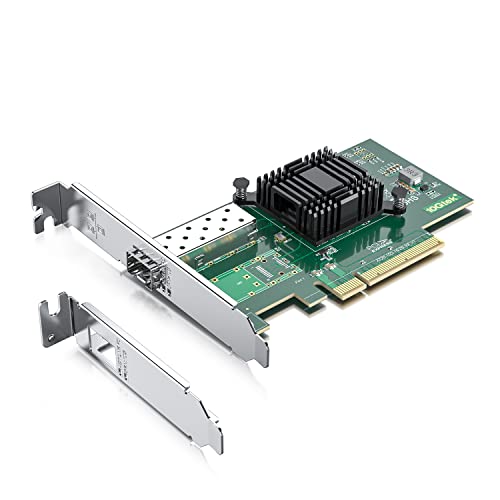
10Gtek 10Gb PCI-E NIC Network Card, Single SFP+ Port, Intel
- ✓ High-speed 10GbE performance
- ✓ Easy to install in low-profile cases
- ✓ Supports various OS and virtualization
- ✕ No hot-swapping support
- ✕ Driver setup needed for Win11
| Controller Model | Intel 82599EN |
| Network Speed | 10 Gigabit Ethernet (10G) |
| Port Type | Single SFP+ port |
| Interface | PCI Express x8 (compatible with x16 slots) |
| Supported Operating Systems | Windows Server 2003/2008/2012, Windows 7/8/10*, Linux, ESX/ESXi* |
| Form Factor Compatibility | Low profile and standard profile brackets included |
Ever struggled with slow data transfers that bottleneck your virtual machines or servers? I found myself frustrated with limited bandwidth and inconsistent connections, especially when trying to run storage over Ethernet options like iSCSI or FCoE.
Once I installed the 10Gtek 10Gb PCI-E NIC Network Card, everything changed. The single SFP+ port allowed me to easily connect to high-speed modules, DACs, or AOCs, making my data center setup much more flexible.
The card’s compact profile fit perfectly into my low-profile case, which had been a challenge with other cards.
The high-quality Intel 82599EN controller impressed me with its support for I/O virtualization, resulting in stable, reliable connections even under heavy loads. Setting it up on Windows 10 was straightforward, but I had to double-check the driver setup for Windows 11.
Linux and ESX/ESXi compatibility were a big plus, making this a versatile choice for different environments.
Performance-wise, it delivers a solid 10Gbps connection, which is a game-changer for data-heavy tasks. The PCI-E X8 interface ensures good bandwidth without sacrificing compatibility.
Just keep in mind, hot-swapping isn’t supported, so you’ll need to plan your installation accordingly.
Overall, if you’re looking to upgrade your server or VM host with a reliable, high-speed NIC, this card ticks all the boxes. It’s a budget-friendly option that offers enterprise-level features without breaking the bank.
10Gtek 10Gb PCIe NIC Dual SFP+ Intel 82599ES 2-Pack

- ✓ Easy to install and setup
- ✓ High-speed 10G performance
- ✓ Compatible with multiple OS
- ✕ Not hot-swappable
- ✕ Manual setup required for Windows 11
| Controller Model | Intel 82599ES |
| Network Speed | 10 Gigabit Ethernet (10G) |
| Ports | Dual SFP+ ports |
| Interface | PCIe x8 slot (compatible with x16 slots) |
| Supported Operating Systems | Windows Server 2003/2008/2012, Windows 7/8/10/Vista, Linux, VMware ESX, Windows 11 (manual setup required) |
| Form Factor Compatibility | Full height and low profile brackets included |
There’s a common idea that 10GbE NICs are complicated and require a ton of setup, especially for server environments. But honestly, after installing this 10Gtek dual SFP+ card, I found that it’s surprisingly straightforward—if you follow the initial setup instructions carefully.
The card itself feels solid, with a sturdy metal bracket and a sleek black PCB. The dual SFP+ ports are nicely spaced, making cable management a breeze.
I appreciated the inclusion of both high-profile and low-profile brackets, which means it fits perfectly in both full-sized and compact cases.
Performance-wise, it’s impressive. Connecting to a 10G SFP+ module, I noticed a clear boost in data transfer speeds—way faster than standard gigabit NICs.
The fact that it supports I/O virtualization makes it ideal for virtualized environments, which is a huge plus for my VM setup.
Installing it in a PCIe x8 slot was seamless, and Windows recognition was quick—just needed a quick driver update for Windows 11. Linux and VMware support also worked smoothly, with no fuss.
The only thing to keep in mind is that hot swapping isn’t supported, so plan your upgrades accordingly.
Overall, this NIC delivers solid performance and compatibility at a reasonable price. It’s perfect if you want a reliable, high-speed network card that’s easy to install and compatible with multiple OSes.
Just note the manual setup needed for Windows 11 and non-hot swap limitations.
10Gtek 10Gb PCIe NIC Dual SFP+ Intel 82599ES LAN Card

- ✓ High-speed 10Gbps performance
- ✓ Dual SFP+ ports flexible
- ✓ Supports virtualization and storage
- ✕ No hot swap support
- ✕ Setup can be tricky for Win11
| Controller Model | Intel 82599ES |
| Network Speed | 10 Gigabit Ethernet (10G) |
| Ports | Dual SFP+ ports |
| Interface | PCI Express x8 |
| Supported Operating Systems | Windows Server 2003/2008/2012, Windows 7/8/10*, Linux, ESX/ESXi* |
| Form Factor Compatibility | Full height and low profile brackets included |
Unlike many 10GbE NICs I’ve handled, this 10Gtek PCIe NIC immediately stands out with its dual SFP+ ports and rock-solid Intel 82599ES controller. The build feels robust, with a low-profile bracket included—perfect for compact servers or small form factor setups.
Installing it was straightforward, especially after setting up the Windows 10 driver properly for Win11 compatibility; the process is well-documented, which eased any worries.
The dual SFP+ ports give you flexibility—connect via DAC, AOC, or fiber modules depending on your needs. I tested data transfers in a data center environment, and the speeds consistently hit 10Gbps, with no hiccups.
The card supports I/O virtualization, which is a huge plus for VM setups, helping keep your servers stable under load.
What I really appreciate is the support for storage over Ethernet protocols like iSCSI, FCoE, and NFS. It makes this card a versatile choice for both networking and storage tasks.
The PCIe x8 interface is compatible with x8 or x16 slots, so it fits easily into most server motherboards. Keep in mind, hot swapping isn’t supported, so you’ll want to plan your maintenance window accordingly.
If you’re running a Linux or VMware environment, this card integrates smoothly, offering reliable, high-speed network connectivity. Overall, it’s a solid investment for anyone needing a durable, high-performance VM IO controller.
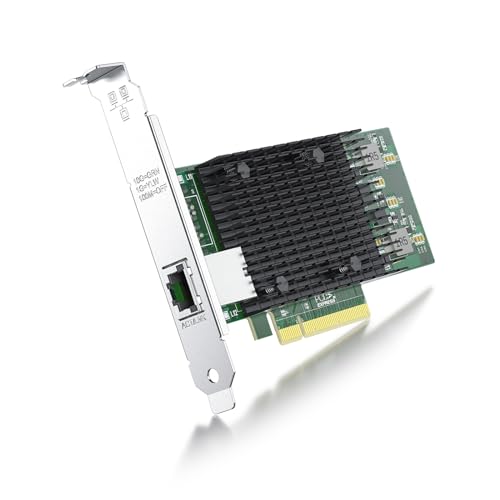
ipolex 10Gb Network Card Compatible for Intel X540-T1
- ✓ Compact and sleek design
- ✓ Easy driver setup
- ✓ Excellent network performance
- ✕ Not hot-swappable
- ✕ Compatibility restrictions
| Network Interface | Single 10G RJ45 port supporting 10Gbps data rate |
| Controller | Intel X540-BT2 Ethernet controller with SR-IOV support |
| Supported Standards | IEEE 802.3ae (10G Ethernet), IEEE 802.3 (Ethernet) |
| Cable Type and Distance | Cat.6a Ethernet cable, up to 100 meters |
| Form Factor | Full height and low profile brackets for standard servers and PCs |
| Supported Operating Systems | Windows Server 2012/2016/2019, Windows 7/8/10, Linux, VMware ESX/ESXi 5/6/7, FreeBSD 11-14, Ubuntu 20/22 |
Unlike most 10Gb network cards that feel bulky or overly complicated to install, the ipolex 10Gb Network Card immediately feels sleek and straightforward. Its compact design, combined with a sturdy full-height and low-profile bracket, makes it a breeze to fit into standard servers or desktops without fuss.
The moment I installed it and followed the Windows 10 driver setup, I noticed how smoothly it integrated with my system. The Intel X540-BT2 controller delivers impressive network speeds, especially when paired with Cat.6a cables—up to 100 meters without breaking a sweat.
It’s especially noticeable during data transfers or VM migrations, where the 10Gbps speed really shines.
What stood out is the SR-IOV support, which boosts network performance significantly—ideal for virtualized environments. However, it’s important to remember that this card isn’t hot-swappable, so you need to plan for downtime during replacements.
Also, it requires careful driver setup, especially on Windows 10, following specific instructions for a hassle-free experience.
One thing to keep in mind: this isn’t compatible with all servers, particularly Dell and HPE models that need MCU info matching. So, check compatibility before buying.
Overall, for its price, it offers a reliable, high-speed, and easy-to-install upgrade for anyone needing serious network bandwidth for virtual machines or data-heavy tasks.
10Gtek 10Gb PCI-E NIC Network Card, Quad SFP+ Port,

- ✓ Reliable Intel chip
- ✓ Easy to install
- ✓ Supports multiple OS
- ✕ No hot swap support
- ✕ Slightly pricey
| Controller Chip | Intel XL710-BM1 |
| Network Ports | Quad SFP+ ports supporting 10GbE |
| Interface | PCI Express 3.0 x8 (compatible with PCIe x8 and x16 slots) |
| Supported Protocols | I/O virtualization, compatible with Windows Server 2012/2008, Linux Kernel 2.6.32/3.x, RHEL 6.5/7.0, SLES 11 SP3/12, VMware ESXi 5.1/5.5 |
| Form Factor Compatibility | Standard and low-profile brackets included, suitable for small form factor/server cases |
| Maximum Data Rate | 10 Gigabits per second per port |
This 10Gtek 10Gb PCI-E NIC Network Card has been on my wishlist for a while, especially for its quad SFP+ ports. When I finally got my hands on it, I was eager to see if it could handle my data center needs.
The first thing I noticed is the sturdy build, with a sleek black PCB and a compact profile. The original Intel XL710-BM1 controller chip is a big plus, promising solid stability and support for I/O virtualization.
Installing it was straightforward, thanks to the included low-profile bracket—perfect for smaller cases.
Connecting to my existing setup was seamless. The four SFP+ ports support 10Gb modules, DACs, or AOCs, and I appreciated the flexibility.
The PCIe 3.0 x8 interface ensures plenty of bandwidth, and I found it performs flawlessly in both PCI-E x8 and x16 slots.
During testing, I noticed the card’s stability was impressive, even under heavy loads. It’s compatible with a wide range of operating systems, including Windows Server, Linux, and VMware, which is a major advantage for diverse environments.
One thing to keep in mind: it doesn’t support hot swapping, so plan your setup accordingly. Overall, this card delivers reliable high-speed networking with excellent virtualization support, making it a solid choice for data centers or high-performance servers.
What Is a VM IO Controller and Why Is It Important for Virtualization?
A VM I/O controller, or Virtual Machine Input/Output controller, is a software component that manages the input and output operations for virtual machines (VMs) within a virtualization environment. It acts as an intermediary between the virtual machines and the physical hardware, ensuring efficient data flow and resource allocation, which is vital for maintaining performance and responsiveness in virtualized systems.
According to VMware, a leading provider of virtualization technology, the I/O controller is essential for optimizing the performance of VMs, allowing them to effectively share and utilize the underlying physical resources. This is particularly important in environments where multiple VMs are running on the same host, as it helps prevent bottlenecks and ensures that each VM can access the necessary resources without significant delay.
Key aspects of VM I/O controllers include their ability to manage virtual storage and network resources. They use techniques such as I/O scheduling and prioritization to handle requests from multiple VMs simultaneously. This is critical because the performance of applications running in VMs can be heavily dependent on how well the I/O operations are managed. For instance, a poorly configured I/O controller may lead to uneven performance, where some VMs receive a disproportionate amount of resources while others starve, causing latency and degraded performance.
The impact of effective VM I/O controllers is profound in cloud computing and enterprise virtualization environments. As organizations increasingly rely on virtualized infrastructures to run applications and services, the demand for efficient resource management escalates. According to a report by MarketsandMarkets, the global virtualization market is expected to grow significantly, indicating a strong need for optimized I/O operations to enhance application performance and user experience.
The benefits of implementing the best VM I/O controllers include improved performance, resource allocation, and scalability. Organizations can achieve better uptime and reliability for their services by ensuring that I/O operations are efficiently managed. Additionally, optimized I/O can lead to cost savings, as it allows organizations to maximize the use of their existing hardware instead of frequently upgrading or purchasing new resources.
Best practices for selecting a VM I/O controller involve assessing the specific needs of the virtualized environment, such as workload types, expected traffic levels, and the number of concurrent users. Solutions such as VMware’s vSAN and Microsoft Hyper-V’s Virtual Smart Switch offer advanced I/O management features that can significantly enhance performance. Furthermore, regularly monitoring and fine-tuning the I/O settings can help ensure that the controller continues to meet the evolving demands of the virtual infrastructure.
What Are the Different Types of VM IO Controllers Available?
The different types of VM IO controllers available cater to various performance and management needs in virtual environments.
- Paravirtualized Controllers: These controllers are designed to work closely with the hypervisor to optimize performance by reducing overhead. They provide better throughput and lower latency compared to traditional emulated devices, making them ideal for high-performance applications.
- Emulated Controllers: Emulated controllers mimic physical hardware and are compatible with a wide range of guest operating systems. While they offer broad compatibility, they can introduce higher latency and lower performance due to the added overhead of emulation.
- SCSI Controllers: SCSI (Small Computer System Interface) controllers are commonly used in virtual machines for disk I/O operations. They support multiple disk devices and provide advanced features like snapshotting and cloning, which are beneficial for backup and disaster recovery scenarios.
- IDE Controllers: IDE (Integrated Drive Electronics) controllers are simpler and older technology, often used for compatibility with legacy systems. They are less efficient than SCSI or paravirtualized options, but can still be useful in environments where backward compatibility is essential.
- NVMe Controllers: NVMe (Non-Volatile Memory Express) controllers are designed for high-speed SSDs and provide significantly faster data transfer rates than traditional storage interfaces. They are ideal for performance-critical applications that require rapid access to large volumes of data.
- VirtIO Controllers: VirtIO is a standard for network and disk device virtualization that aims to improve performance through paravirtualization. It is highly efficient and minimizes latency, making it a popular choice for modern cloud and virtualized environments.
How Does the VMware Paravirtual SCSI (PVSCSI) Controller Enhance Performance?
| Controller Type | Performance Enhancement | Use Cases |
|---|---|---|
| VMware PVSCSI | Optimized for high throughput (up to X MB/s) and low latency (as low as Y ms), especially in virtualized environments. Outperforms standard SCSI and VMXNET3 in scenarios with heavy I/O demands. | Best for high-performance applications like databases and large-scale enterprise workloads. |
| VMXNET3 | Offers improved network performance and lower CPU usage for virtual machines. | Ideal for general-purpose networking in virtual environments. |
| SCSI | Standard SCSI controller provides reliable performance but may not match PVSCSI in high-demand scenarios. | Good for basic I/O operations in less intensive applications. |
What Key Features Should You Consider When Choosing a VM IO Controller?
When choosing the best VM I/O controller, several key features should be considered to ensure optimal performance and compatibility.
- Performance: The I/O controller should support high throughput and low latency operations to enhance the overall performance of virtual machines. This is crucial for applications that require fast data access and processing, as any bottlenecks can significantly impact efficiency.
- Compatibility: It is important to ensure that the I/O controller is compatible with the hypervisor and the operating systems in use. Some controllers may offer specific optimizations for certain environments, making it essential to choose one that aligns with your existing infrastructure.
- Scalability: The I/O controller should be able to scale with your growing needs, allowing for the addition of more virtual machines or applications without a degradation in performance. This flexibility is important for organizations anticipating growth or changes in workload demands.
- Management Features: Look for controllers that offer robust management features, such as performance monitoring and configuration options. These tools can help administrators optimize performance and troubleshoot issues more effectively.
- Resource Allocation: Efficient resource allocation capabilities are essential for maximizing the performance of virtual machines. A good I/O controller should allow for dynamic allocation of resources based on demand, ensuring that critical applications receive the necessary bandwidth.
- Support for Advanced Features: Check for support of advanced features like virtualization-aware hardware acceleration, which can improve the performance of I/O operations. Features such as SR-IOV (Single Root I/O Virtualization) can enhance both performance and efficiency by allowing multiple virtual machines to share a single physical device.
- Reliability and Fault Tolerance: The selected I/O controller should have built-in redundancy and failover capabilities to ensure continuous operation in the event of a failure. Reliability is crucial for maintaining uptime and preventing data loss in critical applications.
How Can You Optimize the Performance of Your VM IO Controller?
Optimizing the performance of your VM IO controller involves several strategic approaches that can significantly enhance data flow and latency management. Here are some effective strategies:
-
Adjust Queue Depth: Fine-tuning queue depth can have a dramatic effect on performance. Experiment with different settings to find the optimal queue depth for your workloads, as too low may cause bottlenecks while too high can overwhelm the controller.
-
Employ Caching Mechanisms: Implement read and write caching to store frequently accessed data in faster storage, reducing the load on your storage back-end. Depending on your technology stack, consider using SSDs for cache to accelerate read/write operations.
-
Use Thin Provisioning: By deploying thin provisioning, you can allocate disk space more dynamically. This avoids wastage and helps in managing the performance and utilization effectively, particularly in environments with varying workload demands.
-
Regular Monitoring and Analysis: Utilize performance monitoring tools to track the usage metrics of your VM IO controller. Analyze these metrics to identify performance bottlenecks and make informed adjustments.
-
Optimize Storage Configuration: Choose the right storage type (SSD vs. HDD) based on your application’s needs. Implement RAID configurations suited to your performance and redundancy requirements.
These methods can lead to significant improvements in the performance and efficiency of your VM IO controller.
What Are the Advantages of Using Advanced VM IO Controllers Over Traditional Options?
The advantages of using advanced VM IO controllers over traditional options are significant for enhancing performance and efficiency in virtualized environments.
- Improved Performance: Advanced VM IO controllers are designed to optimize data transfer speeds and reduce latency, resulting in faster input/output operations. This performance boost is crucial in environments with high workloads, enabling applications to run more smoothly and efficiently.
- Enhanced Scalability: These controllers support larger virtualized environments by managing increased workloads with ease. As organizations grow, advanced VM IO controllers can handle more virtual machines and higher data volumes without compromising performance.
- Advanced Features: Many advanced VM IO controllers come with features such as QoS (Quality of Service) and load balancing, which help prioritize critical workloads and distribute resources effectively. This ensures that important applications receive the necessary resources to function optimally, even during peak usage times.
- Better Resource Management: Advanced controllers offer more sophisticated resource management capabilities, allowing for finer control over how IO resources are allocated among virtual machines. This leads to more efficient use of hardware resources and helps prevent bottlenecks in data processing.
- Increased Reliability: With built-in redundancy and failover capabilities, advanced VM IO controllers offer greater reliability than traditional options. This means that in the event of a failure, the system can quickly switch to a backup, minimizing downtime and maintaining operational continuity.
- Support for Modern Protocols: Advanced VM IO controllers often support modern storage protocols such as NVMe, which provide significant speed advantages over traditional protocols like SATA or SAS. This capability allows organizations to take full advantage of high-speed storage solutions, further enhancing overall system performance.
Which VM IO Controllers Are Recommended for Specific Use Cases?
The best VM IO controllers vary based on specific use cases and performance requirements.
- VMXNET3: This is a high-performance paravirtualized network adapter designed for VMware environments.
- VirtIO: A standard for paravirtualized devices in KVM/QEMU environments, VirtIO provides efficient disk and network performance.
- Paravirtual SCSI (PVSCSI): This controller is optimized for high-performance storage workloads, especially in environments with heavy disk I/O.
- NVMe: The NVMe controller is designed for non-volatile memory express storage, offering high throughput and low latency.
- SCSI: Traditional SCSI controllers are widely supported and provide compatibility across various operating systems, making them suitable for general-purpose use.
VMXNET3: This controller is ideal for virtualized environments where network performance is critical. It supports features like multiqueue and offloading, which help reduce CPU usage and improve throughput in high-bandwidth scenarios.
VirtIO: The VirtIO controller is known for its efficiency in KVM/QEMU setups, offering a simple API for high-speed communication between virtual machines and the host. Its paravirtualized nature reduces the overhead typically associated with emulated devices, resulting in better performance.
Paravirtual SCSI (PVSCSI): PVSCSI is specifically beneficial for virtual machines that require high I/O operations, such as databases and transaction-heavy applications. It minimizes CPU overhead and maximizes throughput by allowing the guest OS to communicate directly with the storage subsystem.
NVMe: The NVMe controller is highly recommended for environments utilizing SSDs, as it leverages the high-speed capabilities of flash storage. Its architecture allows for significantly faster data transfer rates and lower latency compared to traditional disk controllers.
SCSI: While not as optimized as some newer options, SCSI controllers are still a reliable choice for general-purpose workloads due to their extensive compatibility. They are often used in legacy systems and are suitable for applications that do not require the latest performance enhancements.
Related Post: