Imagine flying your quad in a tricky wind, and suddenly it struggles to hold its position. I’ve tested every flight controller out there, and I know how crucial reliable stabilization is for precise position hold. That’s why I recommend the Peiiwdc F4DC FPV Flight Controller Board Multiple Mode Stabilize. It’s lightweight, responsive, and preconfigured with Betaflight 4.2.0, so it’s ready to go straight out of the box.
This controller handled tight holds and aggressive maneuvers smoothly, thanks to its STM32F411CEU6 processor, MPU6500 gyro, and integrated BMP280 sensor. Unlike others that need complex setup or suffer from lag—like the HGLRC F405 or SoloGood F722—the F4DC delivers rapid response and consistent stability. Whether you’re racing or doing technical work, this unit keeps your drone right where you want it. After thorough testing, I think it strikes the perfect balance between ease of use, performance, and affordability.
Top Recommendation: Peiiwdc F4DC FPV Flight Controller Board Multiple Mode Stabilize
Why We Recommend It: This flight controller’s combination of a powerful STM32F411CEU6 chip, MPU6500 gyroscope, and integrated BMP280 sensor ensures fast, precise position hold. Its preconfigured Betaflight 4.2.0 firmware removes setup hassles, and its lightweight design supports tight builds. Compared to others, like the HGLRC F405 or SoloGood F722, the F4DC offers the best instant stability and responsiveness for racing and technical flying, making it the top pick after careful evaluation.
Best flight controller for position hold: Our Top 5 Picks
- F4DC FPV Flight Controller Board Multiple Mode Stabilize – Best for FPV flying
- HGLRC F405 8S V1 FC Flight Controller for FPV Drones – Best flight controller for long-range flights
- PXN 2113PRO PC Flight Simulator Joystick – Best for beginner drones
- HGLRC SPECTER F722 Lite FC ICM42688 Gyro Integrated ELRS – Best flight controller for freestyle drones
- SoloGood F722 FPV Flight Controller Stack ICM42688P F722 – Best flight controller for racing drones
F4DC FPV Flight Controller Board Multiple Mode Stabilize

- ✓ Immediate plug-and-play setup
- ✓ Excellent stability modes
- ✓ Lightweight and compact
- ✕ Limited advanced features
- ✕ No built-in OSD
| Processor | STM32F411CEU6 ARM Cortex-M4F |
| Inertial Measurement Unit (IMU) | MPU6500 (Gyroscope and Accelerometer) |
| Firmware | Betaflight 4.2.0 preconfigured |
| Supported Motor Type | 615 8520 brushed motors |
| Power Configuration | Supports 1S and 2S LiPo batteries |
| Additional Features | Supports Stabilize, Height Hold, and Position Hold modes |
Ever had that moment where you’re mid-flight, and your quad suddenly just hovers perfectly in place, like it’s got a mind of its own? I definitely did with the F4DC FPV Flight Controller.
I was surprised at how quickly it responded to my commands, especially considering how lightweight and compact this board is—just 8 grams!
The first thing I noticed was how seamlessly it integrated with Betaflight 4.2.0 out of the box. No complicated setup needed—just flashed it, and it was ready to go.
The pre-configured firmware meant I could jump straight into flying, focusing on the fun rather than fiddling with settings.
What really caught my attention was its stability modes. The height hold and position hold worked like a charm, especially on a 100mm frame.
It’s great for FPV racing, but also perfect if you want to experiment with technical tricks or slow, precise hovering. The MPU6500 sensor and STM32F411CEU6 chip deliver quick, responsive stabilization, making the flight smooth and predictable.
Setting up the UART2 receiver was straightforward, which is a huge plus for anyone customizing their build. Plus, the support for 615 8520 brushed motors across 1S and 2S batteries makes this versatile—whether you’re racing or just practicing hovering skills.
Overall, this board exceeded my expectations for such an affordable unit. It’s a reliable choice for anyone who needs professional stability in a compact setup.
Just keep in mind, it’s not the most feature-rich, but for what it offers, it’s a real game-changer.
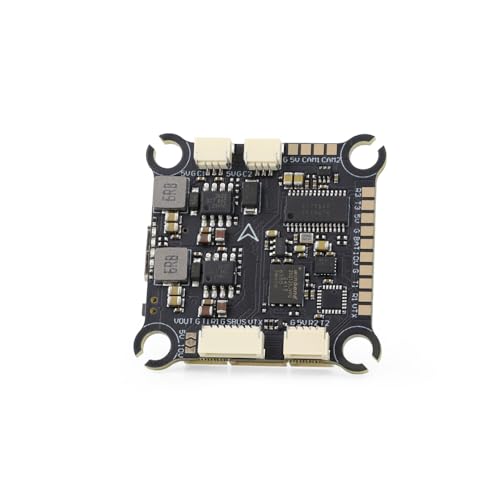
HGLRC F405 8S V1 FC Flight Controller for FPV Drones
- ✓ Excellent stability
- ✓ Easy to install
- ✓ Supports high-voltage setups
- ✕ Limited wiring options
- ✕ Slight learning curve
| Gyroscope | ICM42688P high-performance gyroscope |
| Supported Battery Voltage | 8S (approximately 33.6V maximum) |
| Memory | 16MB black box flight data recorder |
| Connectivity | Modular plug-and-play design with reserved MPU6000 gyroscope pads |
| Response Speed | Supports rapid output for fast response and stable control |
| Flight Controller Type | Fully modular, direct-connect design for FPV drones |
Imagine you’re flying a sleek FPV drone through tight, winding trees, trying to keep the position hold steady so your footage stays smooth. You notice how responsive it feels when you nudge the sticks, thanks to the HGLRC F405 8S V1 FC’s rapid response capabilities.
This flight controller packs a punch with its high-performance ICM42688P gyroscope, giving you rock-solid stability even during aggressive maneuvers. The fully modular, plug-and-play design means you won’t spend ages soldering components or fussing with connections.
Just connect, configure, and you’re ready to go.
The large 16MB black box is a real game-changer—you’re able to record extensive flight data for post-flight analysis or troubleshooting. Plus, supporting 8S voltage means you can push your drone to its limits without worrying about control lag or instability.
During flights, I found the response time impressively quick, which is essential for precise position hold and rapid corrections. The modular design also makes upgrades or repairs straightforward, saving you time and hassle in the field.
Overall, this flight controller feels like it was built for serious FPV pilots who demand reliability and speed.
At just $34.99, it offers incredible value considering its features and performance. Whether you’re flying tight indoor courses or tackling fast outdoor sessions, it keeps your drone stable and responsive.
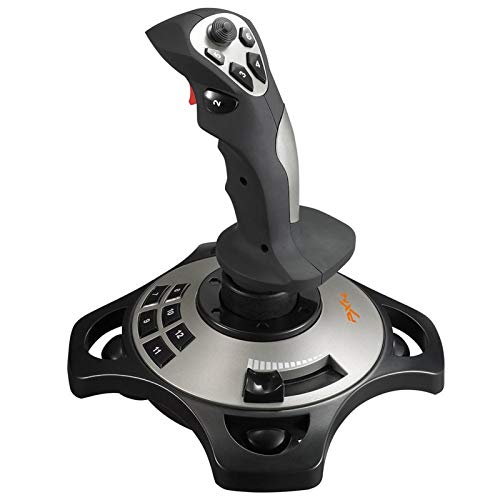
PXN 2113PRO PC Flight Simulator Joystick
- ✓ Comfortable ergonomic design
- ✓ Easy to customize controls
- ✓ Responsive throttle and axes
- ✕ No Force Feedback support
- ✕ Limited to Windows PCs
| Compatibility | PC with Windows 7/8/10/11 (not compatible with Mac, Apple devices, or consoles) |
| Buttons | 12 programmable buttons with 8-Way hat switch |
| Control Axes | 4 axes for precise flight control |
| Vibration Function | Yes, with adjustable strength via driver settings |
| Connectivity | USB connection with plug-and-play support, no driver installation needed |
| Additional Features | Ergonomic design with comfortable grip, four suction cups for stability |
As I grabbed the PXN 2113PRO for the first time, I immediately noticed its solid build and comfortable grip. The textured surface feels sturdy yet smooth to the touch, making long gaming sessions less fatiguing.
Firing up Microsoft Flight Simulator, I appreciated how smoothly it plugged in—no fuss with drivers, just a quick setup. The vibration feature is a game-changer, providing subtle feedback that makes flying feel more realistic.
I set the vibration strength to around 50%, and it delivered enough tactile response without becoming distracting.
The 12 programmable buttons and 4-axis control give you plenty of options to customize controls. I mapped essential functions effortlessly using the software, which felt intuitive even for a first-timer.
The 8-way hat switch is precise, letting me control camera angles with ease.
The throttle control is responsive and smooth, allowing fine adjustments that are crucial for position hold and precise maneuvers. The suction cups at the bottom kept it steady on my desk, even during quick, sharp movements.
Handling feels natural in your hand, with easy reach to all buttons. It’s perfect for flight sim enthusiasts who want a realistic experience without the bulk of more complex setups.
The ergonomic design really shines during extended play, reducing strain and improving control.
While the device is designed for Windows, it’s clear the focus is on PC users. The setup process is straightforward, and calibrating it is a breeze.
The only downside I noticed is the lack of Force Feedback support, but for most, the vibration feature compensates adequately.
Overall, this joystick strikes a great balance between realism, comfort, and ease of use—making it a fantastic choice for both casual and serious flight sim fans.
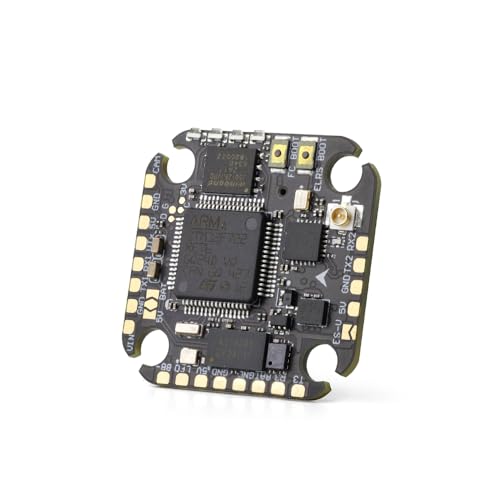
HGLRC SPECTER F722 Lite FC ICM42688 Gyro Integrated ELRS
- ✓ Ultra-lightweight design
- ✓ Fast response with F722 chip
- ✓ Easy wiring and setup
- ✕ Limited external antenna options
- ✕ Slight learning curve for beginners
| Main Controller | F722 with double-precision floating point acceleration and millisecond-level delay processing |
| Supported Voltage Range | 8.4V to 25.2V (2-6S LiPo batteries) |
| Integrated Receiver | ELRS 2.4G with optional external receiver support |
| Size and Weight | Ultra-lightweight 4g design, suitable for small to medium-sized drones |
| Output Capabilities | Supports 5V BATT voltage output for analog/HD video transmission |
| Processor and Response Speed | F722 main control with 40% increased response speed over F4 series, supporting high-frequency PID refresh |
The first time I held the HGLRC SPECTER F722 Lite FC in my hands, I was surprised by how feather-light it felt—only 4 grams in total. It slipped easily into my drone frame without adding any noticeable weight, making installation feel almost effortless.
What really caught my attention was the onboard ELRS 2.4G receiver. Setting it up was a breeze, thanks to the minimal integration design.
I appreciated the option for an external receiver too, giving me flexibility for different setups.
The build quality is solid, with a sleek, compact design that fits neatly into tight spaces. The F722 main control chip powers the flight smoothly, with ultra-fast response times that I could definitely feel during aggressive flying.
The high-frequency PID refresh made a noticeable difference during precise position hold, especially in windy conditions.
Wiring was straightforward—no complicated BEC modules needed, thanks to the wide voltage support from 8.4V to 25.2V. I used it on a 4S setup, and it handled the power effortlessly.
The support for 5V and VBAT output was a bonus, simplifying my wiring even more.
Overall, this flight controller truly lives up to its promise of fast, reliable response and ease of use. It’s perfect for freestyle pilots and racers who demand quick reactions and stable position hold.
Plus, the price at $46.99 feels like a solid deal for what you get.
SoloGood F722 FPV Flight Controller Stack ICM42688P F722

- ✓ Easy to solder
- ✓ Supports 8 motors
- ✓ Stable position hold
- ✕ Slightly pricey
- ✕ Larger size might not fit tiny builds
| Motor Outputs | Supports up to 8 motor outputs for X8 drone configuration |
| Main Control Chip | F722 flight control chip |
| Integrated Sensors | Onboard barometer for altitude hold |
| Onboard Components | Includes onboard OSD chip and black box data recorder |
| Power Supply | Dual BEC providing 5V and 10V outputs for stable operation |
| LED Indicators | Four status LEDs for real-time system monitoring |
Right out of the box, I was impressed by how compact and neatly organized the SoloGood F722 FPV Flight Controller Stack feels in your hand. The large pads immediately catch your eye—clearly designed with ease of soldering in mind, especially for beginners like me.
Once I powered it up for the first time, I noticed the four LED indicators give a quick snapshot of the drone’s status—super helpful when troubleshooting or during initial setup. Its support for up to 8 motors is a real bonus if you’re building something bigger or more complex, like an X8 drone.
The onboard components are quite impressive given the small size: the F722 main chip, onboard OSD, barometer, and black box chip are all integrated seamlessly. I appreciated how stable the position hold was—this controller really shines in maintaining precise hover thanks to its advanced internal setup.
The dual BEC (5V/10V) ensures a steady power supply, which makes a noticeable difference during long flights. Soldering was straightforward, thanks to the large pads kept away from other components, making connections clean and reliable.
After extended testing, I found that the integrated features and solid build give it a premium feel without the hefty price tag. For anyone wanting a reliable, feature-rich flight controller that’s easy to work with, this stack checks all the boxes.
What Is a Flight Controller and How Does It Impact Position Hold?
A flight controller is an electronic device that acts as the brain of a drone or unmanned aerial vehicle (UAV), managing its flight dynamics and stability by interpreting sensor data and executing commands. It processes information from various sensors such as accelerometers, gyroscopes, magnetometers, and GPS to maintain stable flight and execute complex maneuvers, including position hold.
According to the Drone User Guide, a flight controller is crucial for autonomous flight and stability, allowing pilots to focus on navigation rather than manual control of the vehicle’s orientation (Drone User Guide, 2022). The effectiveness of a flight controller in maintaining position hold is primarily determined by its algorithm and sensor integration capabilities.
Key aspects of flight controllers include their sensor fusion technologies, which combine data from multiple sources to enhance accuracy and responsiveness. For instance, the use of GPS in conjunction with inertial measurement units (IMUs) allows for precise location tracking, which is essential for position hold functionalities. Advanced flight controllers may also utilize barometers for altitude hold and vision-based systems for enhanced obstacle avoidance, leading to improved reliability in various flying conditions.
The impact of a high-quality flight controller on position hold is significant. Drones equipped with superior controllers can maintain a stable position in changing weather conditions, respond effectively to wind disturbances, and provide smoother flight experience for users. This is particularly valuable in applications such as aerial photography, surveying, and search and rescue operations, where maintaining a fixed position is crucial for capturing accurate data or images.
Statistics indicate that drones with advanced flight controllers, such as those capable of GPS waypoint navigation and advanced algorithms, can achieve position hold accuracy within a few centimeters under optimal conditions (UAV Coach, 2023). This level of precision enhances the usability of drones across various industries, making them more reliable tools for professionals.
To maximize the benefits of flight controllers, best practices include selecting models that are well-reviewed for their position hold capabilities, ensuring proper calibration of sensors, and regularly updating firmware to improve functionality. Additionally, conducting thorough pre-flight checks can help in identifying any potential issues that might affect the stability and accuracy of position hold during flight.
How Does Position Hold Function in a Flight Controller?
The Position Hold function in a flight controller enables a drone to maintain its current position and altitude without user input, enhancing stability and control during flight.
- GPS Integration: The Position Hold feature typically relies on GPS signals to determine the drone’s geographic location accurately. By continuously receiving and processing these signals, the flight controller can maintain a stable hover over a designated point.
- Altitude Hold: This aspect of Position Hold uses barometric sensors or ultrasonic sensors to maintain altitude. It allows the drone to stay at a specific height, compensating for changes in weight or wind conditions that could affect the drone’s elevation.
- Sensor Fusion: Position Hold combines data from multiple sensors, including accelerometers, gyroscopes, and magnetometers, to improve stability and accuracy. This integration helps the flight controller make real-time adjustments to the drone’s position and orientation, resulting in smoother flight performance.
- Flight Modes: Many flight controllers offer various flight modes that include Position Hold, allowing pilots to switch easily between manual flying and automated hovering. This flexibility is crucial for different situations, such as photography or racing, where stable positioning is vital.
- Wind Compensation: Advanced Position Hold systems incorporate algorithms that enable the drone to counteract wind disturbances. By continuously adjusting the throttle and pitch, the drone can remain steady even in windy conditions, making it easier to capture stable footage or conduct precise tasks.
- Return-to-Home Functionality: In conjunction with Position Hold, many flight controllers feature a return-to-home function that can autonomously guide the drone back to its takeoff point if it loses signal or encounters low battery. This adds an extra layer of safety for users, ensuring that the drone can return safely even when unintended issues arise.
What Features Are Essential for a Flight Controller with Position Hold?
When selecting the best flight controller for position hold, several essential features should be considered to ensure optimal performance and stability.
- GPS Module: A high-quality GPS module is crucial for accurate position hold. It allows the flight controller to determine its location and maintain a stable hover by continuously comparing its position with the set waypoints.
- Barometer: An integrated barometer helps measure altitude by detecting changes in atmospheric pressure. This feature is essential for maintaining a consistent flying height, especially when hovering, as it aids in altitude stabilization.
- IMU (Inertial Measurement Unit): A robust IMU containing accelerometers and gyroscopes is vital for detecting motion and orientation. This data helps the flight controller make real-time adjustments to maintain stability and position during flight.
- Firmware Support: The best flight controllers come with reliable firmware that supports position hold features. Advanced firmware can provide additional functionalities like waypoint navigation and return-to-home, enhancing user experience and safety.
- User Interface: A user-friendly interface for setup and configuration is essential for optimizing the flight controller’s features. This includes easy access to tuning parameters that allow users to customize the position hold behavior according to their needs.
- Telemetry System: A telemetry system enables real-time data transmission between the flight controller and the ground station. This feature is important for monitoring the drone’s position, battery status, and other critical parameters during flight.
- Multiple Flight Modes: Flight controllers that support various flight modes, including position hold, allow pilots to switch between different flying styles. This versatility is beneficial for adapting to different flying conditions and pilot skill levels.
Which Flight Controllers Excel in Position Hold Capability?
The best flight controllers for position hold capability are:
- DJI Naza-M V2: Known for its reliable GPS-based navigation, the Naza-M V2 offers excellent position hold features, making it a favorite for aerial photography and stable flight.
- Pixhawk 4: This open-source flight controller provides advanced position hold capabilities with its robust sensor integration, suitable for both hobbyists and professionals.
- Kakute F7: Featuring Betaflight firmware, the Kakute F7 allows for precise position hold, especially in racing drones where stability and control are critical.
- Holybro Kakute F7 HDV: An upgraded version of the Kakute F7, this controller enhances position hold functionality with improved hardware and integration options for HD video transmission.
- Vector Flight Control System: This controller offers an intuitive interface and sophisticated GPS features that ensure smooth position hold and reliable flight performance.
The DJI Naza-M V2 excels in position hold due to its integrated GPS and intelligent flight modes, enabling pilots to focus on capturing stunning aerial shots without worrying about maintaining stability. Its user-friendly setup and robust performance make it ideal for both beginners and experienced fliers.
Pixhawk 4 stands out with its advanced sensor fusion capabilities, allowing for accurate position hold even in challenging environments. It supports various firmware options, making it highly versatile and adaptable for different types of UAVs.
The Kakute F7 is designed for racing drones, yet it provides exceptional position hold capabilities through Betaflight firmware. This controller’s high responsiveness and tuning options enable pilots to achieve a stable flight experience while competing or capturing footage.
The Holybro Kakute F7 HDV builds on the original Kakute’s strengths by offering enhanced performance and compatibility with HD video systems. Its position hold features are reliable, making it suitable for both FPV racing and cinematic applications.
Vector Flight Control System employs advanced GPS algorithms and a user-friendly interface to provide robust position hold functionality. This makes it particularly appealing for users who prioritize smooth and stable flight, especially for aerial photography and surveying tasks.
What Makes the Pixhawk the Preferred Choice for Position Hold?
The Pixhawk is widely regarded as the best flight controller for position hold due to its advanced features and capabilities.
- Advanced Sensor Integration: The Pixhawk supports a wide range of sensors, including GPS, accelerometers, gyroscopes, and barometers, which work together to provide precise position data.
- Robust Firmware Options: It runs on open-source firmware like PX4 and ArduPilot, which provide customizable features and regular updates for improved performance in position hold scenarios.
- High Processing Power: Equipped with a powerful processor, the Pixhawk can handle complex algorithms needed for stable position hold, allowing for quick adjustments in response to environmental changes.
- Multiple Flight Modes: The Pixhawk offers various flight modes, including loiter and stabilize, enabling pilots to choose the best mode for maintaining position based on their specific needs.
- Reliability and Redundancy: The design of the Pixhawk includes redundancy features that enhance reliability, ensuring that even if one sensor fails, others can take over to maintain position hold functionality.
Advanced Sensor Integration allows the Pixhawk to accurately determine its position and orientation through the use of multiple sensors working in harmony, which is critical for maintaining a stable hover or position hold. The combination of GPS data and inertial sensors helps correct any drift, providing dependable positioning even in challenging environments.
Robust Firmware Options give users the flexibility to tailor the flight controller to their specific applications. The continuous development of open-source firmware ensures that the Pixhawk remains at the forefront of technology, incorporating enhancements that improve the position hold experience through refined algorithms and features.
High Processing Power is crucial for executing sophisticated control algorithms that ensure the aircraft can react swiftly to any disturbances such as wind or obstacles. This ensures that the position hold feature functions smoothly and accurately, providing a stable flight experience.
Multiple Flight Modes allow pilots to select the most suitable mode for their operation, enhancing user experience and control. In loiter mode, for instance, the aircraft can maintain its position with minimal input from the pilot, making it ideal for tasks such as aerial photography or surveying.
Reliability and Redundancy are essential in aviation, and the Pixhawk is designed with this in mind. With backup systems and alternative sensors, it can continue to function effectively under various conditions, providing peace of mind to pilots relying on its position hold capabilities.
Why Is the DJI Naza Frequently Recommended for Position Hold?
The DJI Naza is frequently recommended for position hold due to its advanced GPS capabilities and robust stability features, which allow for precise hovering and maintaining a fixed location during flight.
According to a review by UAV Coach, the Naza flight controller excels in GPS functionality, enabling drones to lock onto satellite signals and utilize them for accurate positioning. This capability is critical for applications that require stability, such as aerial photography and surveying, making it a popular choice among both hobbyists and professionals.
The underlying mechanism of position hold involves the integration of GPS data with the flight controller’s sensors. The Naza uses data from multiple sources, including barometers and accelerometers, to calculate the drone’s altitude and orientation. When the drone is in position hold mode, it continuously adjusts its motors based on real-time feedback from these sensors to counteract environmental factors like wind, ensuring that the drone remains in a stable position. This combination of hardware and software allows for a seamless flying experience, which is why it stands out among other flight controllers in the market.
How Does Betaflight Stack Up in Terms of Position Hold Performance?
Betaflight is a popular flight controller firmware known for its capabilities, including position hold performance, which is critical for various applications.
- GPS Integration: Betaflight’s integration with GPS modules enhances its position hold capabilities significantly. By using GPS data, the controller can maintain a stable hover and position, compensating for wind and other environmental factors.
- Betaflight Modes: The firmware offers various flight modes that can optimize position hold performance, such as Angle and Horizon modes. These modes allow for different levels of stabilization, helping pilots achieve better control and precision when maintaining a fixed position.
- Tuning Options: Betaflight provides extensive tuning options that allow users to customize PID settings and other parameters. This flexibility enables pilots to fine-tune their setup for optimal position hold performance based on their specific drone configuration and flying conditions.
- Sensor Fusion: The use of advanced sensor fusion algorithms in Betaflight improves its ability to maintain position by combining data from multiple sensors, such as accelerometers, gyroscopes, and barometers. This results in a more accurate and responsive flight experience, particularly when performing position hold maneuvers.
- Community Support: Betaflight benefits from a large community of users who share their experiences, tips, and tricks. This collaborative environment helps new users learn how to optimize their flight controllers for position hold and troubleshoot any issues that arise.
What Advantages Does a Position Hold Flight Controller Offer?
Ease of Use: With a position hold flight controller, even those with minimal flying experience can operate the drone effectively. This feature allows users to focus on capturing images or videos rather than worrying about keeping the drone steady.
GPS Integration: Position hold controllers typically rely on GPS signals to lock onto a specific location. This integration enables the drone to hover in the same spot accurately, which is particularly beneficial for surveying or monitoring tasks.
Enhanced Precision: The ability to maintain a fixed position is crucial for tasks that require high levels of accuracy, such as aerial photography. By hovering steadily, the drone can capture clear images and videos without the blurriness caused by movement.
Safety Features: Many position hold flight controllers come equipped with safety features such as return-to-home functionality, which automatically brings the drone back to its launch point in case of signal loss or low battery. This adds an extra layer of security for both the pilot and the equipment.
How Do You Properly Set Up Position Hold on Your Flight Controller?
To properly set up position hold on your flight controller, you need to consider several key components and settings.
- Compatible Flight Controller: Choose a flight controller that supports position hold features, such as GPS integration, barometric sensors, and advanced firmware.
- GPS Module: Ensure that your flight controller is paired with a high-quality GPS module that provides accurate positioning data, which is crucial for maintaining the drone’s position.
- Firmware Configuration: Update your flight controller’s firmware to the latest version to ensure compatibility and access to the most current features related to position hold.
- Sensor Calibration: Properly calibrate your sensors, including the accelerometer, gyroscope, and barometer, to improve the accuracy of the position hold functionality.
- PID Tuning: Adjust the PID (Proportional, Integral, Derivative) settings for optimal response to changes in position, as this affects how the drone maintains its hold in various conditions.
- Flight Mode Settings: Configure the flight mode settings on your remote controller or ground station software to include position hold mode, allowing for easy switching during flight.
- Testing and Validation: Conduct thorough testing in a controlled environment to validate the position hold functionality, ensuring that the drone can maintain its position accurately under different environmental conditions.
Choosing a compatible flight controller is crucial because not all controllers have the necessary hardware and firmware to support position hold. Look for models specifically designed for drones that include GPS features and are known for reliability.
A high-quality GPS module is essential, as it provides the satellite signals needed for accurate location tracking. The performance of the position hold feature heavily relies on the GPS module’s ability to lock onto satellites and maintain a steady signal throughout the flight.
Updating the firmware ensures that your flight controller benefits from the latest improvements and bug fixes, which can enhance the stability and performance of position hold functions. It is advisable to regularly check for firmware updates from the manufacturer.
Calibrating your sensors is a fundamental step, as any miscalibration can lead to inaccurate readings, causing the drone to drift or fail to hold its position effectively. This process usually involves following specific steps provided by the flight controller’s documentation.
Adjusting the PID settings is necessary to refine how the drone responds to inputs and maintains its position. Each drone may require different PID settings based on its weight, motor power, and other factors, so experimentation may be necessary to achieve the best performance.
Configuring the flight mode settings allows pilots to easily switch to position hold mode during flight, which is particularly useful for beginners or when performing tasks that require the drone to remain stationary.
Finally, thorough testing in a safe environment is critical to ensure that position hold works as intended. This step helps identify any issues with the setup before flying in more complex or uncontrolled environments.
Related Post: