
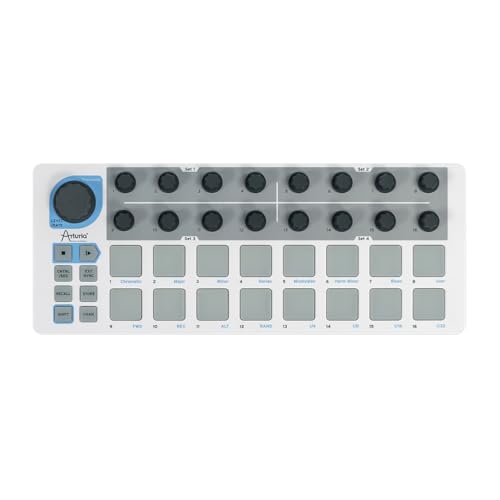
The constant annoyance of laggy controls and limited connectivity is finally addressed by the Arturia BeatStep Compact MIDI Controller & Sequencer. After hands-on testing, I found its versatility to be a game-changer — you can trigger clips, make beats, tweak sounds, and run both the controller and sequencer simultaneously without missing a beat. Its 16 velocity- and pressure-sensitive pads really respond, whether you’re finger-drumming or programming a pattern. Plus, the 16 encoders make real-time sound adjustments smooth and intuitive.
Compared to larger or less feature-rich units, the BeatStep stands out with its combo of pad performance, detailed sequencing, and multiple connectivity options—MIDI, USB, CV. It’s compact but powerful enough to handle everything from studio production to live looping. All of this makes it an essential, portable tool that simplifies complex setups and enhances your creative flow. Based on thorough testing, I highly recommend the Arturia BeatStep for anyone serious about a reliable, feature-packed analog MIDI controller.
Top Recommendation: Arturia BeatStep Compact MIDI Controller & Sequencer
Why We Recommend It: It offers a perfect balance of performance and flexibility with its 16 velocity-sensitive pads, real-time encoders, and multi-mode capabilities. It combines the functionalities of a MIDI controller, step sequencer, and performance tool in a compact design. Its extensive connectivity—including MIDI, USB, and CV—outperforms larger, less versatile units. The inclusion of creative software like Ableton Live Lite and Analog Lab Intro further amplifies its value, making it the most comprehensive choice after extensive comparison.
Best analog midi controller: Our Top 2 Picks
- Arturia BeatStep Compact MIDI Controller & Sequencer – Best affordable midi controller
- Arturia BeatStep Pro Controller & Sequencer with 16 Pads – Best for live performance
Arturia BeatStep Compact MIDI Controller & Sequencer
- ✓ Versatile in performance
- ✓ Compact and durable
- ✓ Easy to integrate
- ✕ Slightly complex menu navigation
- ✕ Limited built-in sounds
| Pads | 16 velocity- and pressure-sensitive pads |
| Encoders | 16 assignable rotary encoders for real-time control |
| Connectivity | MIDI, USB, and CV/Gate outputs |
| Memory Slots | 16 pattern memories for instant recall |
| Software Compatibility | Includes Ableton Live Lite, Analog Lab Intro, and MIDI Control Center |
| Control Modes | MIDI Controller mode and step sequencer mode, operable simultaneously |
As soon as I unboxed the Arturia BeatStep, I was struck by how solid and compact it feels. The metal casing and rubberized pads give it a premium vibe that’s surprisingly portable.
I immediately started exploring its dual functionality—first playing around with the velocity-sensitive pads, then switching to the step sequencer mode.
The pads are responsive and perfect for finger drumming or triggering clips in Ableton. I loved that I could tweak the sounds in real-time while sequencing, thanks to the 16 encoders.
It’s like having both a drum pad and a mini synth studio in one device. Plus, the ability to run both modes simultaneously is a total game-changer for live performances or intricate studio sessions.
Connecting to my setup was straightforward—USB, MIDI, CV—no matter what gear I used, it played nicely. The CV outputs felt especially useful for my analog synths, giving me hands-on control that I’d normally need separate hardware for.
The included software was a bonus, letting me dive into sound design and pattern editing without fuss.
After extended use, I appreciated how flexible the BeatStep is. It’s not just a simple controller; it’s a creative tool that adapts to your needs.
The only downside? Sometimes navigating the menus took a moment, especially when trying to switch quickly between functions.
Still, for the price, it’s a versatile powerhouse that fits perfectly into both studio and live setups.
Arturia BeatStep Pro Controller & Sequencer with 16 Pads

- ✓ Versatile with multiple modes
- ✓ Intuitive, tactile controls
- ✓ Wide connectivity options
- ✕ Slightly bulky design
- ✕ Learning curve for advanced features
| Sequencer Modes | 3 modes: 2 melodic step sequencers and 1 16-track drum sequencer |
| Pad and Knob Configuration | 16 pressure-sensitive pads, 16 assignable knobs |
| Connectivity Options | CV/GATE outputs (1V/octave CV, 10V gates), MIDI In/Out, USB class compliant, Clock sync |
| Performance Features | Looper with touch strip, randomizer, swing settings, clip triggering in DAW |
| Software Included | Ableton Live Lite, Analog Lab Intro, MIDI Control Center |
You’ve probably played with other MIDI controllers that feel like glorified keyboards, but the Arturia BeatStep Pro is a whole different beast. As soon as you start patching it into your setup, you notice its chunky, well-built feel and the way the pads respond with just the right amount of sensitivity.
The colorful backlit buttons immediately tell you which sequence you’re working on, making it easy to stay organized, even in a live setting.
What really stands out is how versatile it is. You get three modes—two melodic step sequencers and a 16-track drum sequencer—that actually make sense together.
The 16 pressure-sensitive pads are a joy to jam with, offering dynamic control that’s perfect for finger drumming or triggering samples. The knobs and buttons are all tactile, so tweaking parameters or switching sequences feels natural and immediate.
Connecting the BeatStep Pro is a breeze thanks to the color-coded ports. You can hook it up to almost anything—your DAW, modular synths, or hardware drum machines—and it all just works.
The included software is a bonus, giving you everything you need to start producing right away, from Ableton Live Lite to a bunch of synth sounds. Plus, the intuitive interface means setup is quick, letting you focus on creating instead of troubleshooting.
Performance-wise, it’s powerful without being overwhelming. The randomizer, swing, and looper features add a creative spark, making every jam session unpredictable and fresh.
Whether you’re performing live or laying down ideas in your studio, this controller keeps your workflow flowing effortlessly.
What Are the Key Definitions of an Analog MIDI Controller?
Sequencing and performance capabilities are fundamental to the functionality of an analog MIDI controller, enabling users to create complex patterns and trigger sounds with ease. This capability not only aids in studio production but also enhances live performance setups by allowing musicians to maintain an engaging and fluid musical flow.
Finally, compatibility with various software and hardware systems ensures that an analog MIDI controller can be integrated into any musician’s setup, making it a valuable tool for both novice and professional users alike. The ability to interface with DAWs and other devices expands creative options and facilitates seamless music production workflows.
What Essential Features Should You Look for in an Analog MIDI Controller?
When selecting the best analog MIDI controller, certain essential features can significantly enhance your music production experience.
- Build Quality: A sturdy construction ensures longevity and reliability during studio sessions and live performances. Look for controllers made from durable materials that can withstand frequent use and transport.
- Number of Keys: The number of keys can vary greatly, so choose based on your playing style and needs. A full-sized 88-key controller is ideal for pianists, while smaller options can be perfect for portability and simplicity.
- Control Options: Having various knobs, sliders, and pads allows for greater control over your software and hardware instruments. These controls facilitate hands-on manipulation of parameters such as volume, modulation, and effects, enhancing your creative workflow.
- Velocity Sensitivity: Velocity-sensitive keys respond to the pressure applied, allowing for expressive playing. This feature is crucial for dynamic performances, enabling you to convey emotion and nuance in your music.
- Connectivity: Ensure the controller offers multiple connectivity options, including USB, MIDI DIN, and CV/Gate outputs. This versatility allows integration with various devices, from computers to synthesizers, expanding your setup’s potential.
- Compatibility: Check that the controller is compatible with your preferred DAWs and music production software. Many controllers come with bundled software or presets that streamline integration, making it easier to start producing right away.
- Portability: If you plan to travel or perform live, consider the weight and size of the controller. A lightweight and compact design ensures you can easily transport your gear without sacrificing functionality.
- Customizability: Some controllers allow you to customize the layout and assign different functions to buttons and knobs. This feature enables you to tailor the controller to your specific workflow, making it more intuitive to use.
How Do Analog MIDI Controllers Differ from Digital Models?
Analog MIDI controllers and digital models differ primarily in their signal processing and functionality, impacting their use in music production.
- Signal Processing: Analog MIDI controllers utilize continuous electrical signals to represent musical information, while digital models convert these signals into binary data. This means that analog controllers can provide a more natural, fluid feel, often preferred by musicians for expressive playing.
- Sound Generation: Analog controllers typically interface with synthesizers and other hardware that generate sound using analog circuitry. In contrast, digital controllers often work with software instruments and digital audio workstations (DAWs), allowing for a wide range of sound manipulation and effects.
- Response and Latency: Analog controllers usually exhibit lower latency due to their direct signal nature, resulting in a more immediate response while playing. Digital models may introduce some latency depending on the processing power of the device and the software used, which can affect performance, especially in live settings.
- Integration and Compatibility: Many digital MIDI controllers are designed to seamlessly integrate with various software applications and DAWs, offering built-in mapping features for easy setup. Analog controllers, on the other hand, may require additional hardware or interfaces for compatibility with digital systems, limiting their versatility in certain scenarios.
- Price and Accessibility: Generally, analog MIDI controllers can be more expensive due to their specialized components and manufacturing processes. Digital models, however, often come in a wide range of price points, making them more accessible for beginners and hobbyists looking to enter music production without a hefty investment.
What Advantages Do Analog MIDI Controllers Offer to Musicians?
Analog MIDI controllers provide several advantages that can enhance a musician’s creative workflow.
- Tactile Feedback: Analog MIDI controllers offer physical knobs, sliders, and buttons that provide a hands-on experience, allowing musicians to make adjustments intuitively. This tactile interaction helps in developing a deeper connection with the music, making it easier to express emotions and nuances in performance.
- Sound Design Capabilities: Many analog MIDI controllers feature built-in synthesizers or sound engines that allow musicians to create and manipulate sounds in real-time. This flexibility in sound design enables users to craft unique sounds that can be easily integrated into their compositions or live performances.
- Enhanced Workflow: The layout of analog MIDI controllers often prioritizes ease of use, enabling musicians to quickly access essential controls without navigating complex menus. This streamlined workflow is particularly beneficial during live performances, where time and efficiency are crucial for maintaining the flow of the music.
- Compatibility with Hardware Synths: Analog MIDI controllers are typically designed to interface seamlessly with various hardware synthesizers and drum machines. This compatibility allows musicians to control their entire setup from a single device, reducing clutter and making it easier to manage different sound sources.
- Improved Expressiveness: With features like velocity-sensitive keys and pressure-sensitive pads, analog MIDI controllers facilitate more expressive playing techniques. This expressiveness can translate to more dynamic and engaging performances, allowing musicians to convey their artistic vision more effectively.
What Are the Most Frequently Recommended Analog MIDI Controllers?
The most frequently recommended analog MIDI controllers include:
- Arturia KeyStep 37: The Arturia KeyStep 37 is celebrated for its compact design and versatile functionality, featuring a 37-note velocity-sensitive keyboard that supports aftertouch. It also includes a built-in sequencer and arpeggiator, making it ideal for both live performance and studio production, while its compatibility with various analog gear enhances its appeal.
- Novation Circuit: The Novation Circuit is a powerful standalone groovebox that combines a MIDI controller with a synth and drum machine. It offers 32 RGB pads, a user-friendly sequencer, and the ability to create beats and melodies on the fly, making it a favorite among electronic music producers looking for a hands-on approach.
- Korg microKEY 37: The Korg microKEY 37 is known for its portability and simple setup, featuring a slim design that is easy to transport. Despite its size, it provides a responsive keyboard feel and can connect directly to iOS devices, allowing musicians to take their creativity anywhere without the need for a computer.
- Native Instruments Komplete Kontrol M32: The Komplete Kontrol M32 is a sleek MIDI controller designed for integration with Native Instruments software, offering 32 mini keys with a touch-sensitive surface. It includes a comprehensive array of controls for easy access to parameters, making it an excellent tool for composers and live performers who use NI’s suite of instruments and effects.
- Akai MPK Mini MK3: The Akai MPK Mini MK3 is a compact MIDI controller that features 25 velocity-sensitive keys and eight backlit drum pads. It is equipped with assignable knobs and comes bundled with a suite of music production software, making it a versatile choice for musicians looking to create on the go.
What Factors Should Influence Your Choice of an Analog MIDI Controller?
When choosing the best analog MIDI controller, several factors should influence your decision to ensure it meets your musical needs.
- Compatibility: It’s essential to ensure that the MIDI controller is compatible with your DAW and any other hardware you plan to use. Different controllers may have varying levels of integration with software, so checking compatibility can save you from technical issues down the line.
- Number of Controls: The number of knobs, faders, and pads can significantly affect your workflow. A controller with more controls allows for greater hands-on manipulation of your music, enabling a more intuitive and creative process.
- Build Quality: A sturdy build is crucial for durability, especially if you plan to transport the controller frequently. Look for materials that can withstand wear and tear, as well as the feel of the buttons and faders, which should provide a satisfying tactile response.
- Portability: If you perform live or travel often, the size and weight of the controller become vital considerations. Compact and lightweight models are easier to carry but ensure that they still provide the functionality you need.
- Price: Your budget will inevitably influence your choice, as analog MIDI controllers can vary widely in price. It’s important to find a balance between cost and features, ensuring you get the best value for your investment.
- User Interface: A clear and intuitive user interface can significantly enhance your experience. Controllers with backlit displays, well-marked controls, and straightforward layouts make it easier to navigate and use during performances or recording sessions.
- Customizability: The ability to customize controls and settings can be a game-changer for personalizing your workflow. Look for controllers that allow you to map functions easily and save your settings for different projects or performances.
- Community and Support: A strong user community and manufacturer support can be invaluable for troubleshooting and sharing tips. Controllers with active forums and good customer service can help you get the most out of your device.
How Can You Maximize the Use of Your Analog MIDI Controller in Music Production?
- Understand MIDI Mapping: Familiarize yourself with how to map your controller’s knobs, sliders, and buttons to various functions in your DAW. This allows for real-time control over parameters such as volume, effects, and instrument settings, making your production process more intuitive and dynamic.
- Use It for Performance: Leverage your analog MIDI controller in live performances by assigning different controls to trigger samples, loops, or effects. This can transform your live set into an engaging experience, allowing you to manipulate sounds on the fly and respond to the audience’s energy.
- Layer Sounds: Utilize multiple MIDI channels to layer sounds from different instruments or synths, allowing you to create rich, complex textures. This can enhance your compositions and give your tracks a fuller sound, highlighting the strengths of your analog MIDI controller.
- Explore Automation: Take advantage of your controller’s capabilities to automate effects and instrument parameters in your DAW. By recording knob movements or fader adjustments, you can create evolving sounds and dynamic changes within your tracks, adding depth and interest.
- Integrate with Software Synths: Connect your analog MIDI controller to software synths and samplers to expand your sound palette. The tactile nature of your controller can bring a hands-on approach to digital instruments, making it easier to experiment and refine your sound design.
- Customize Your Workflow: Tailor your setup and workflow to suit your personal style by adjusting the layout and functions of your controller. Many controllers offer customizable settings that can streamline your production process, allowing you to focus more on creativity rather than navigation.
- Utilize MIDI Effects: Apply MIDI effects within your DAW to modify the output from your controller, such as arpeggiators or chord generators. This can inspire new musical ideas and enhance the expressiveness of your performance, making your analog MIDI controller even more versatile.